Full disclosure: I was emotionally exhausted and wanted to capture this while it was still fresh, so I stream-of-consciousness dumped everything into ChatGPT and had it help organize my thoughts into a readable post. Usually I write the majority of my content myself and use “Chatty” more for editing, structure, brainstorming, and helping my ADHD brain untangle itself.
There are moments, as a parent of a struggling neurodivergent teen, where you suddenly realize your child has been growing the entire time…just not always in the ways society measures.
Kiddo had her first cardiac stress test today. Which sounds adorable if you phrase it like, “baby’s first stress test,” but apparently cardiology frowns upon that kind of humour.
She came home exhausted. Pale. Achy. Just completely wiped.
Earlier in the day I’d gently suggested maybe she crack open her math book for a bit. Later, when I went downstairs to check on her, there was still no math happening.
Instead, she looked at me with this sad little face and said, “Mom…am I a failure? I want to do school and math. I just can’t.”
And honestly? That sentence punched me directly in the soul.
Because I think a lot of neurodivergent kids eventually start confusing “I can’t right now” with “I am bad.”
And the truth is, this kid has been fighting through exhaustion, chronic nausea, dizzy spells, suspected POTS symptoms, executive dysfunction, anxiety, burnout…all while still trying to figure out who she is as a person.
So I told her there was no pressure. That she was sick. That struggling doesn’t make her a failure.
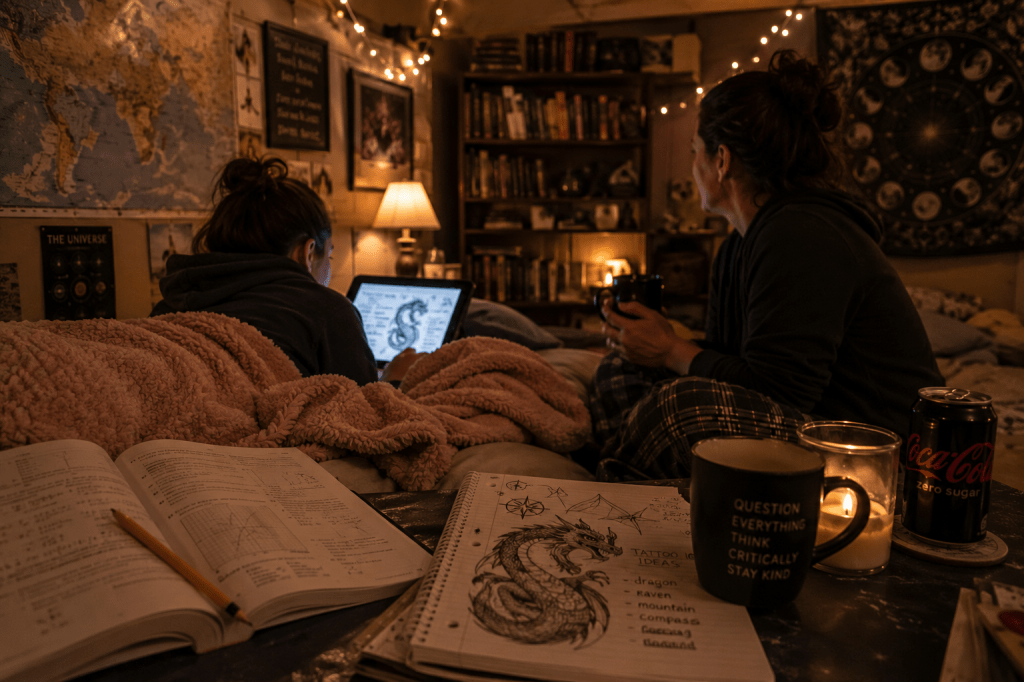
Then somehow, as conversations with teenagers do, we went from discussing math avoidance to tattoos.
Naturally.
She pulled up her tattoo board. We debated what I’d theoretically allow when she turns sixteen. I joked that my bf offered to take her for her first tattoo one day, which honestly feels both sweet and mildly illegal somehow.
At one point she showed me a dragon tattoo, and I said something about spirit animals.
Friends.
When I tell you this child immediately launched into a nuanced discussion about closed Indigenous spiritual practices, colonialism, cultural appropriation, and why my Gen-X “we’re all spiritually connected” worldview maybe wasn’t the progressive masterpiece I thought it was…
Humbled. Absolutely humbled.
At one point I found myself defending things I believed twenty years ago while my chronically ill teenager calmly cross-examined me from under a blanket nest.
We somehow ended up discussing Voodoo, Asatru, comparative religion, archetypes throughout human history, and whether belief systems are universal human attempts to create meaning out of chaos.
You know. Standard post-cardiac-stress-test mother-daughter bonding.
And here’s the thing: She won the debate. (Who am I kidding, she wins every debate!)
Not because I suddenly agreed with every point she made, but because she was thoughtful. Informed. Curious. Nuanced. Passionate.
And because midway through the conversation, when I made a facial expression she didn’t like, she calmly said: “I don’t like when you make that face. It feels condescending.”
No meltdown. No screaming. No escalation.
Just direct communication.
Then she told me she was proud of herself for setting a boundary calmly.
And I realized I was proud too.
Because when your kid is struggling with school, mental health, chronic illness, burnout, executive functioning, or just surviving day to day…it’s very easy to start measuring their worth by productivity.
Did they do math? Did they clean their room? Did they attend class? Did they hand things in? Did they function?
Meanwhile, your child is quietly becoming.
Becoming thoughtful. Becoming articulate. Becoming emotionally aware. Becoming someone capable of critical thinking and self-reflection and ethical nuance.
Those things count too.
Sometimes I think parents like me get so focused on visible milestones that we miss the invisible ones happening right in front of us.
Tonight, my daughter didn’t do math.
But she also politely dismantled her Gen-X mother’s spiritual universalism after a cardiac stress test.
And honestly? That feels like development too.
I’d love to hear about a moment recently where your child surprised you, connected with you, or reminded you who they’re becoming underneath the struggle.
I wasn’t the best version of myself yesterday, and I’m having trouble letting myself off the hook for it.
In the span of about 45 minutes, I lost my temper and spoke harshly to two separate service workers, and I’m deeply ashamed of my behaviour. I pride myself on treating people the way I want to be treated, with kindness, grace, empathy. I’ve spent most of my life trying very hard to be a good person.
Yet in those moments, it was like I was outside myself looking in.
I could feel my cheeks flushing, everything getting hot, my heart rate ramping up. My breathing changed. My thoughts…well, “racing” doesn’t even begin to cover it. I couldn’t hold onto them long enough to put two together coherently. Speaking in full sentences suddenly became difficult.
And here’s the kicker: I lost it over such small, innocent things. Things that most people, and honestly even me on a good day, wouldn’t stress over at all.
But in those moments, all my brain could perceive was:
“Danger! Danger, Will Robinson!”
I was ashamed immediately afterward. I apologized. More than once. Because neither person deserved that.
But I still can’t let it go.
And what I’m beginning to realize is this wasn’t really about McDonald’s or Walmart. This is part of a pattern that stretches throughout my entire life, one that has profoundly affected my mental health, my relationships, and the way I move through the world.
Let me explain.
Already Running on Empty
Yesterday had already been a lot before the cheeseburger meal incident even happened.
I was stressed about money because my car has been making a weird noise and I’m trying to figure out how to cover everything until child support and my next paycheck arrives. Kiddo has been dealing with some ongoing health issues that have been scary, complicated, and exhausting to navigate, and the doctor’s appointment we had just come from required me to do most of the heavy lifting and advocating yet again.
If you’re a parent of a medically complex or neurodivergent kid, you know the drill. You walk in hoping someone will connect the dots, listen carefully, maybe even take some initiative…and instead you leave feeling like you just performed a one-woman TED Talk while simultaneously trying to remember symptoms, timelines, medications, and not sound “too emotional” while doing it.
At the same time, Dad has been very ill for a long time now, and when he has a few bad days in a row, it can feel catastrophic. Mom is exhausted and emotional. I still had work waiting for me at home. The grass needed cutting. My brain already felt like a browser with 47 tabs open and one of them blasting music I couldn’t find.
I’m also starting to realize just how much chronic stress and possible autistic burnout lower my ability to cope with even minor disruptions.
The Cheeseburger Meal
So we stopped at McDonald’s.
Now, for context, kiddo is autistic and likes sameness. Predictability matters. We’ve been ordering the exact same meal for probably a decade. Literally.
Extra Value Double Cheeseburger Meal. No onions. No pickles. Coke. Substitute poutine.
Same order. Same McDonald’s half the time. Often the same employee.
So when the employee suddenly asked, “Did you mean the McDouble?” my brain completely short-circuited.
I said no, the Extra Value Meal, and she said she just wanted to make sure I got the right thing. Which was kind and reasonable. But suddenly I felt confused and flustered and overwhelmed all at once.
Because a few years ago, at another McDonald’s, I had gotten into a weird argument where an employee insisted they didn’t have Extra Value Meals anymore even though I had literally ordered one there the week before. Another voice came over the speaker. They argued with me. I ended up ordering something different, then parked and went inside only to discover the Extra Value Meal still sitting there on the self-order screen like a tiny greasy monument to my growing insanity.
So yesterday, that memory came flooding back instantly.
And suddenly this wasn’t just: “Which burger did you want?”
It was: “You’re confused.” “You’re wrong.” “The script changed.” “You’re not being understood.”
I know how ridiculous that sounds written out. Trust me. But my nervous system did not interpret it as a minor inconvenience. It interpreted it as a threat.
So I clarified I wanted the Extra Value Meal, and when I was answered with, “They’re all Extra Value Meals” I snapped back, “I’ve been ordering this same thing every day for five years, I know you have it.”
Side note: it was probably closer to ten years, but remember…confusion? Racing thoughts? Check and check.
I’m learning that this kind of distress around sudden change and disrupted expectations is actually pretty common in routine disruptions in autism.
By the time I got to the window, I had calmed down enough to apologize. I explained that kiddo is autistic and needs consistency, and the employee was actually lovely about it.
But I drove away thinking: What the hell was that?
Primed
Then came Walmart.
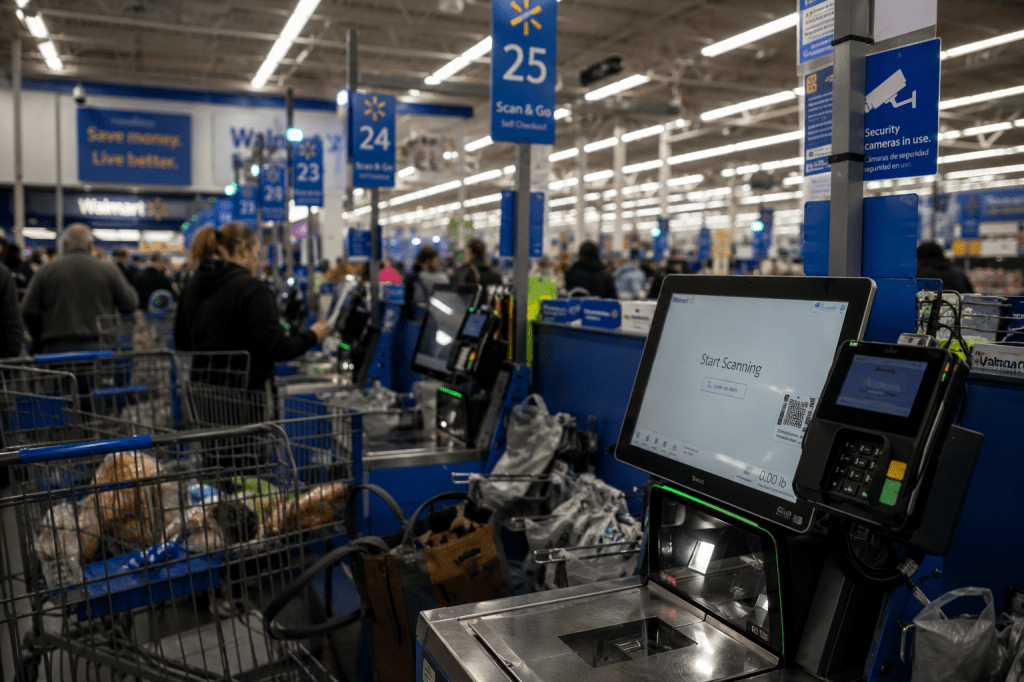
Now let me tell you something about Walmart self-checkout.
I hate it.
Every time I go, my anxiety increases exponentially.
The bustle of people. The carts. The noise. The constant blips from every self-scanner going off at once. I can never tell which sounds belong to my machine and which belong to someone else’s. My brain doesn’t filter them out.
And the heat.
Oh my god, the heat.
I struggle badly with overheating, especially when I’m stressed. It’s not uncommon for me to take off my coat and sweater while scanning groceries because I suddenly feel like I’m boiling alive under fluorescent lighting.
And naturally, I have a system.
Of course I do.
I position the cart just so. Purse on the floor instead of in the cart because someone might take it. Coat off. Sweater off. Scan carefully. Check the screen after every item because with my luck, one won’t scan and I’ll somehow get accused of shoplifting, another weirdly intense fear of mine.
I make little piles after scanning so I know what goes into which bag. Then I bag. Then I reload the cart. Then I double-check the screen. Then I pay.
When I finally walk through those sliding doors into the parking lot and feel the breeze hit my skin, I have NEVER. BEEN. SO. GRATEFUL. to breathe outside air.
Even if it’s a Walmart parking lot.
I’m starting to realize how much of this was probably sensory overload mixed with hypervigilance and an already overloaded nervous system.
So before the interaction even happened, I was already primed. My nervous system was already overloaded, and I still hadn’t recovered from our McDonald’s kerfluffle.
Under Surveillance
Then the scanner glitched.
The first item scanned twice. No problem, I thought. Honest mistake. The employee came over, removed it, and then had to review the video footage to confirm what had happened.
Which, rationally, I understand.
But emotionally? My nervous system immediately clocked it as: You’re under surveillance.
Then later, while scanning cat food, another item accidentally scanned twice. Again.
Only this time, the machine froze and flagged an error. Before I even had time to explain, another employee was there reviewing footage again while I stood there trying to explain that I was literally holding four cans while the screen showed five.
And I could feel the threat response escalating in real time.
Not because anyone was actually accusing me outright, but because my brain had already shifted into hypervigilance mode.
The first video review primed me. The second one confirmed the fear.
By the time the employee kept insisting the scan was correct while I stood there counting cans in my hand like a sweaty, overstimulated Sesame Street character, something in me snapped.
Not in a dramatic screaming way.
But sharply. Harshly.
“What are you not getting? I have four in my hand.”
Even writing that makes me cringe.
Then, because the universe apparently enjoys irony, the machine flagged me again while I was bagging my groceries. Another employee came over and explained the system had become confused by the placement of my reusable bag.
At this point I was internally one blinking fluorescent light away from a full system shutdown.
Later, as I was leaving, I found the first employee again and apologized.
Because she didn’t deserve that either.
The Shame Spiral
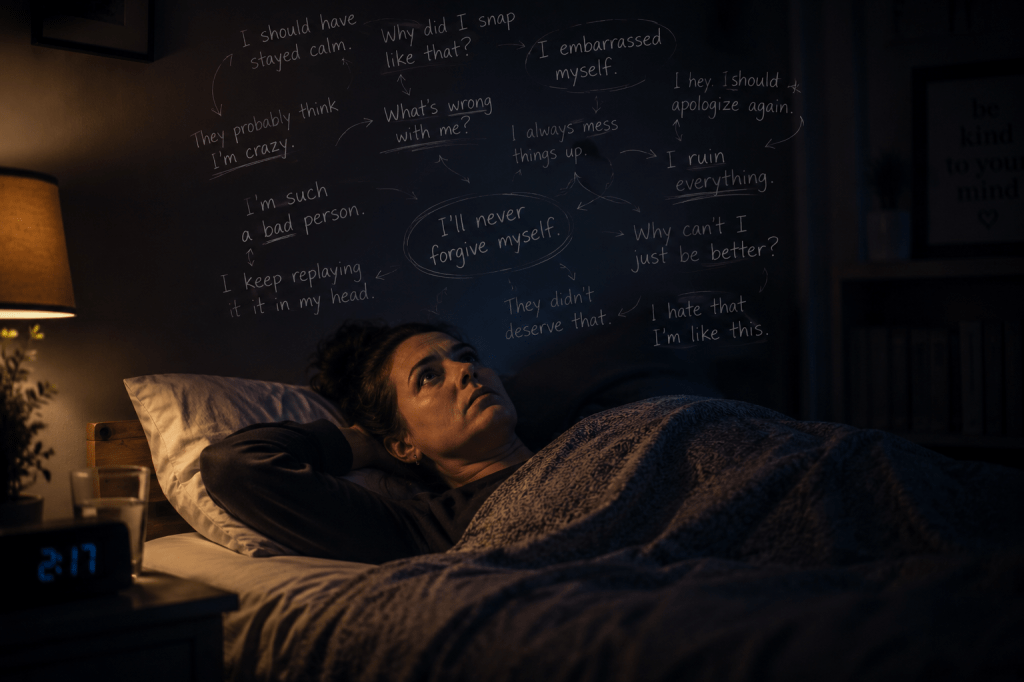
But then came the shame spiral.
And honestly? The shame spiral is the part I know best.
Because this is what I do.
I replay interactions endlessly in my head. I remember coaching moments from years ago where maybe I was too hard on a student. Not abusive. Not cruel. But maybe too intense. Too impatient. Too much.
And I can’t let myself off the hook for it.
Ever.
My brain immediately jumps to:
What’s wrong with me? Why can’t I control myself? Why didn’t I just say this differently? Why am I like this?
And underneath all of it is this terrifying belief I’ve apparently carried my entire life:
If I’m not perfect, I’m bad.
Not imperfect. Not stressed. Not dysregulated.
Bad.
Monster-level bad.
I’m beginning to realize how much rumination and black-and-white thinking have shaped my inner world.
My Map Is Gone
At the same time, I’m also beginning to realize that some of the things I thought were personal failings may actually be connected to being neurodivergent.
Like how deeply routine disruptions affect me.
For example, my mother sometimes tidies or reorganizes my things without asking. She means well. Truly. But it drives me absolutely insane.
Why?
Because I have a system.
I know where things are. It may not look organized to anyone else, but it works for me. So when I go to grab medication or keys or paperwork and it’s suddenly been moved, it doesn’t just mildly annoy me.
It disrupts the entire flow of my day.
It feels like my map is gone.
And if I’m already overwhelmed, that unexpected obstacle can feel enormous.
The same goes for interruptions.
If I’m hyperfocused on something and someone suddenly pulls me away from it, my reaction is almost physical. It feels jarring. Like my brain is being yanked out of one mode and shoved violently into another before I’m prepared.
Apparently distress around interrupted hyperfocus is also pretty common in neurodivergent adults, which honestly made me feel both validated and mildly attacked.
I used to think this just meant I was difficult. Anal. OCD. Controlling.
Now I’m wondering if it’s something else.
Maybe I’ve spent my entire life trying to manage an overloaded nervous system without understanding that’s what I was doing.
Understanding vs Excusing
And maybe that understanding matters.
Not because it excuses hurting people.
It doesn’t.
I am still responsible for how I speak to people. Full stop.
But maybe understanding the wiring underneath it all helps explain why some things feel so disproportionately overwhelming to me. Maybe it explains why I have to work harder than the average person to regulate myself when I’m overloaded.
And maybe, just maybe, understanding that isn’t “playing the victim.”
Maybe it’s finally learning to stop treating myself like a monster every time I struggle.
I don’t have neat answers yet.
I don’t know how to completely let myself off the hook while still holding myself accountable.
I don’t know how much of this is autism. Or ADHD. Or stress. Or perimenopause. Or burnout. Or just being human.
Probably all of the above.
What I do know is this:
I don’t think I was ever really angry about the cheeseburger meal.
This blog is a tag-team effort between me and AI. Think of it as my over-caffeinated intern who spits out ideas and/or helps me organize my thoughts and experiences, while I handle the heavy lifting. I research, fact-check, edit, and fine-tune everything to make sure it sounds like me (not a robot with a thesaurus). AI helps with the grunt work, but the heart, style, and final say? That’s all me.
Last night I went out with a bunch of friends. And it was awesome.I had a few drinks, had a few gummies (my new way to combat anxiety and panic attacks), and danced my face off. Yes, I think that’s a thing.
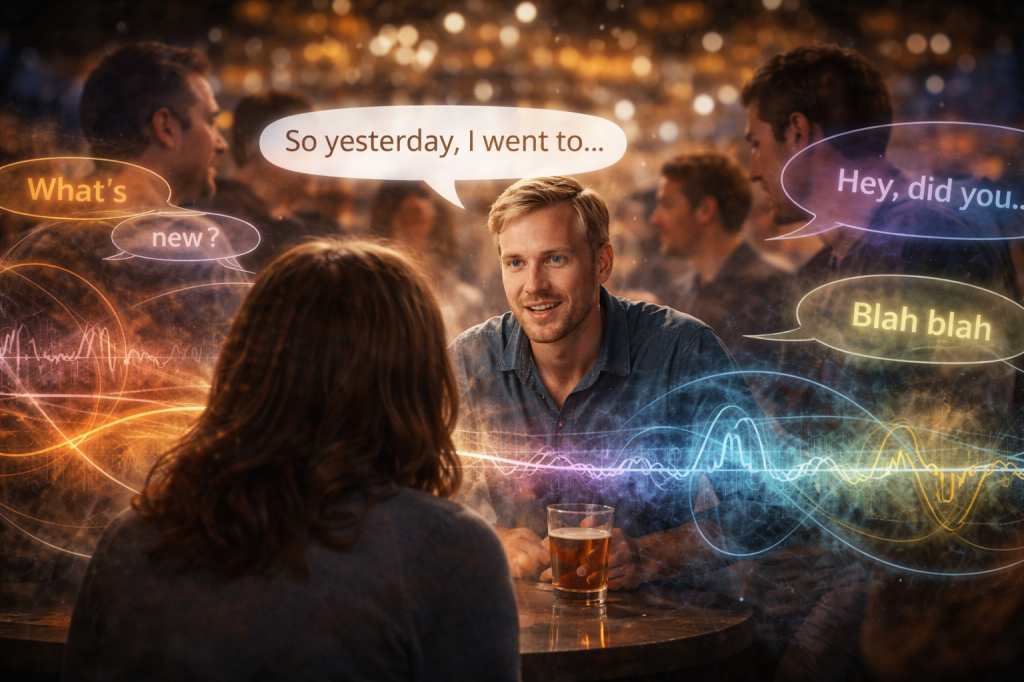
The bar was packed though. And when I say packed, I mean the kind where you have to squeeze sideways between chairs just to get back to your seat.There was live music, people talking everywhere, chairs scraping, glasses clinking. It was loud in that chaotic, joyful Friday-night kind of way.
But when I sat down at the table and tried to join the conversation swirling around me, I suddenly realized something strange.
I couldn’t hear a single conversation.
Not one.
I could see mouths moving. I could hear sound. But it was like every voice blended together into one giant wall of noise.
So I did what I’ve always done in situations like that.
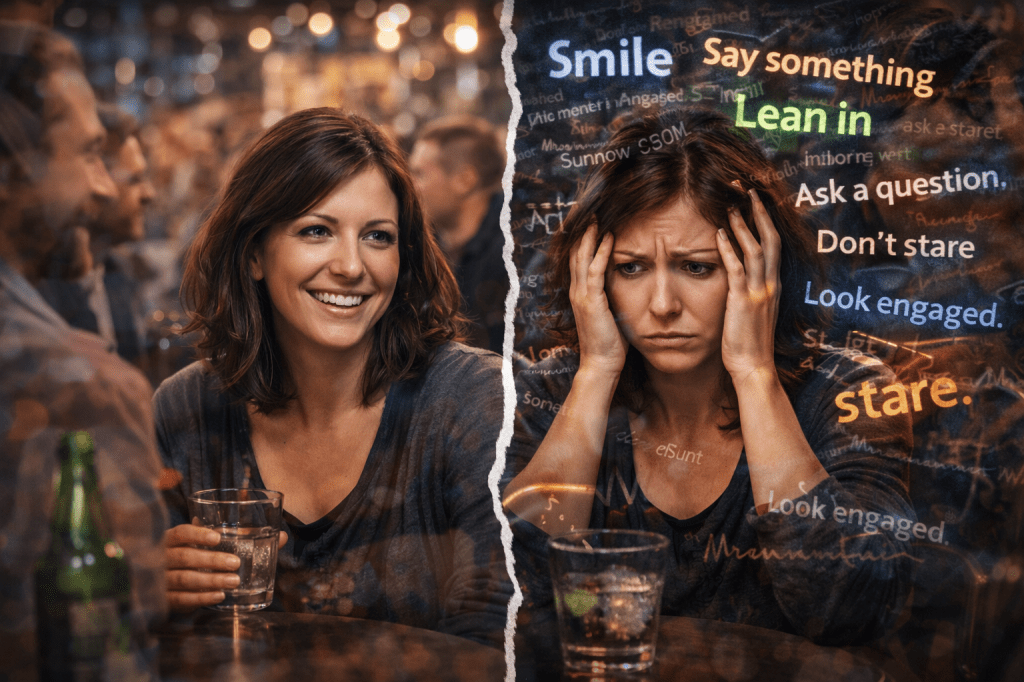
I leaned in. I turned my head so my ear was closer to the person speaking, hoping I’d catch just enough to piece together what they were saying.
Still nothing.
Eventually I just started smiling and nodding when there was a pause in the conversation or someone looked at me like they expected a response. Which means there’s a very good chance I was enthusiastically agreeing with things I had absolutely no context for.
But that’s when something else started happening. In my head, my script got louder. See, I’ve always had a script running in my brain. I just didn’t realize that’s what it was. It’s the little voice reminding me when to change my body posture.
When to lean in. When to smile. When to laugh.
It tells me when I’m making too much eye contact… and when I’m not making enough.
Usually that script runs quietly in the background. Like a low hum I’ve gotten used to. But last night, in that wall of noise and chaos, that hum turned into the loudest thing in the room. Suddenly all I could hear were those thoughts.
You should say something. You’re too quiet. Ask a question. Lean in more. Look engaged. Don’t stare. Smile.
On top of all of that, I started feeling this pressure to make sure the people around me were having a good time. If there was a lull in conversation, I felt responsible for fixing it.
So my brain started cycling through every conversation starter I could think of. Every question. Every social prompt.
Trying to keep things flowing. Trying to keep everyone comfortable. Trying to keep the energy up.
And suddenly it was just… too much.
I couldn’t think. I couldn’t breathe properly. I had this overwhelming urge to put my hands over my ears and hide under the table.
I never let it show.
But under the table, my hands started shaking. Then flapping. It’s something I’ve done my whole life when I’m stressed—shaking out my hands or flicking my fingers to release tension.
Lately though, I’ve noticed I do it more when I’m anxious or overwhelmed. So I ended up doing what I’ve always done.
I sat on my hands.
Trying to make it stop. Trying to make it invisible. And later that night, I started wondering something.
“Now that I’ve realized I’m autistic… is it normal for these things to suddenly feel more obvious?” Or is it that I’m just more aware of them now? Or possibly, because I’ve finally “come out,” in a way, do I feel like I have permission to be more authentic and let the mask slip a little?
Or maybe it’s something else entirely. Maybe after decades of managing the script in my head… I’m just tired. Maybe the older I get, the harder it is to keep covering these things up. Or maybe hormones are part of it too.
Perimenopause has a way of amplifying anxiety, sensory sensitivity, and emotional regulation challenges. So maybe all those coping strategies I relied on for years are just… wearing thin. Whatever the reason, last night made something very clear. The script in my head that I thought everyone had?
Apparently not everyone does.
Why This Happens (And Why You’re Not Alone)
After experiences like that, a lot of late-identified autistic adults start asking the same question:
Why do autistic traits seem more noticeable after we realize we’re autistic?
The answer is usually a combination of several things.
Auditory Processing in Noisy Environments
Many autistic people struggle with something called auditory processing in complex environments. When there are multiple competing sounds—music, clinking glasses, multiple conversations—our brains can struggle to filter out background noise.
Instead of isolating one voice, everything blends together into a wall of sound. Researchers sometimes refer to this as the “cocktail party problem.” Most people’s brains automatically tune into one voice and filter out the rest.
Autistic brains often don’t do this as easily, which is why places like crowded bars or restaurants can quickly become overwhelming.
The Internal Social Script (Masking)
That running commentary in my head? That’s something many autistic adults describe. It’s part of something called masking. Masking happens when autistic people consciously monitor and adjust their behaviour in order to appear more socially typical.
This can include things like:
Monitoring eye contact
Rehearsing responses
Copying other people’s body language
Forcing facial expressions
Scripting conversations in advance
Many autistic women become extremely skilled at masking, often without realizing they’re doing it. But it takes a tremendous amount of energy.
Stimming as Nervous System Regulation
The hand shaking and flapping I mentioned is a form of stimming. Stimming (short for self-stimulatory behaviour), is a natural way many autistic people regulate stress and sensory overload. Common examples include:
Hand flapping
Finger flicking
Rocking
Pacing
Fidgeting
Unfortunately, many autistic kids are taught to suppress these behaviours because they look “different.” Which is why many autistic adults end up hiding them. Like sitting on our hands under a table.
Why Traits Can Feel Stronger Later in Life
A lot of late-identified autistic adults say something similar. Once they understand they’re autistic, it can feel like their traits are suddenly becoming more intense. In reality, several things may be happening.
You’re noticing things that were always there.
You’re becoming aware of how much effort masking requires.
And over time, many people simply become too exhausted to maintain that mask at the same level they did earlier in life.
Hormonal changes during perimenopause and menopause can also increase sensory sensitivity, anxiety, and emotional regulation challenges, which can make masking even harder.
Signs You Might Be Masking Without Realizing It
Many people don’t realize they’ve been masking for years. Some common signs include:
Replaying conversations in your head afterward
Studying other people’s behaviour to copy social cues
Feeling completely drained after social events
Practicing what you’re going to say before speaking
Monitoring your facial expressions and body language constantly
Feeling like socializing is a performance rather than something automatic
For many autistic adults—especially women—masking becomes so automatic that we assume everyone else is doing it too.
Until one day we realize they’re not.
Practical Strategies for Loud Social Environments
If crowded places leave you feeling overwhelmed, a few small adjustments can help.
Choose your seat carefully: Sitting with your back to a wall or closer to the person you want to talk to can reduce sensory input.
Focus on smaller conversations: One-on-one interactions are often easier to process than trying to follow an entire table.
Take short sensory breaks: Stepping outside for a few minutes can help your nervous system reset.
Use subtle regulation tools: Fidget rings, small objects, or even gentle hand movements can help release tension.
Know when it’s okay to leave: Enjoying a social event doesn’t mean you have to stay until you’re completely overwhelmed.
The Realization That Changes Everything
For most of my life, I assumed everyone else had that same script running in their head. That everyone was consciously monitoring their facial expressions, tone of voice, posture, and conversation timing.
Now I’m starting to realize that might not be the case. And that realization changes the way you see a lot of things. Because once you understand how much invisible effort goes into navigating social situations…
You also start to understand why it can be so exhausting. And why sometimes, even when you’re having fun…
Your nervous system still reaches its limit.
If This Sounds Familiar
If you’ve ever:
Struggled to hear conversations in loud places
Felt like you were running a social script in your head
Hidden stimming behaviours to avoid drawing attention
Felt completely drained after social events
You’re not alone. And you’re not broken.Your brain may simply be processing the world a little differently. And understanding that difference can be the first step toward finally giving yourself a little more grace.
Further Reading
If you’re interested in learning more about masking, sensory processing, and autism in adults, these resources are a great place to start: