Category: dance

  • The Hidden Crisis: Autism and Relational Bullying

    The Hidden Crisis: Autism and Relational Bullying

    It’s the second day of school, and my stomach is clenched tight, a cold knot of fury radiating from within and extending through my fingers as I type. Within hours of my daughter’s first day of school, her frenemy, AKA her bully, was at her again.

    I’d like to say I handled it well. I did not.

    You see, this isn’t the first time my daughter has experienced a put-down, slight, or attempt at ostracism from this particular ex-friend. It’s not even the tenth. We’ve gone through two years of dealing with this relational bullying, and the effects on my daughter have been devastating.

    Because my daughter is on the autism spectrum and has ADHD, she is more at risk of being a target of mean girls and queen bees. I’d like to say the data on this is incorrect. I can’t. Throughout her short life, my vibrant, unique, intelligent daughter has always been targeted by those kids for many reasons, but perhaps the biggest cause is that she’s different.

    My daughter is ASD Level 1, which means you wouldn’t know she’s autistic by looking at her. This invisible difference makes it easy for others to target her for being different without understanding the neurological reasons behind those differences.

    And, of course, girls, in particular, are the worst when it comes to cruelty. I experienced mean girl behaviour daily in elementary school, making detachment and objectivity very difficult to find after a lifetime of being targeted myself and observing a lifetime of my daughter being targeted by her tormenters.

    Evidence shows over 60% of children and young adults with autism experience bullying. Among them, high schoolers are most likely to be bullied. School-aged children on the autism spectrum who do not need special health care and those from disadvantaged neighbourhoods are also more likely to be bullied than other autistic children.

    This article will explore the effects of bullying and relational bullying, particularly for children with autism, through an intimate and personal lens. We’ll cover what bullying and relational bullying are, their effects on children, the emotional challenges parents face alongside their bullied tweens, and how to deal with them.

    Together, let’s explore how we can protect children with autism from bullying and help them grow up resilient, confident, and safe. 
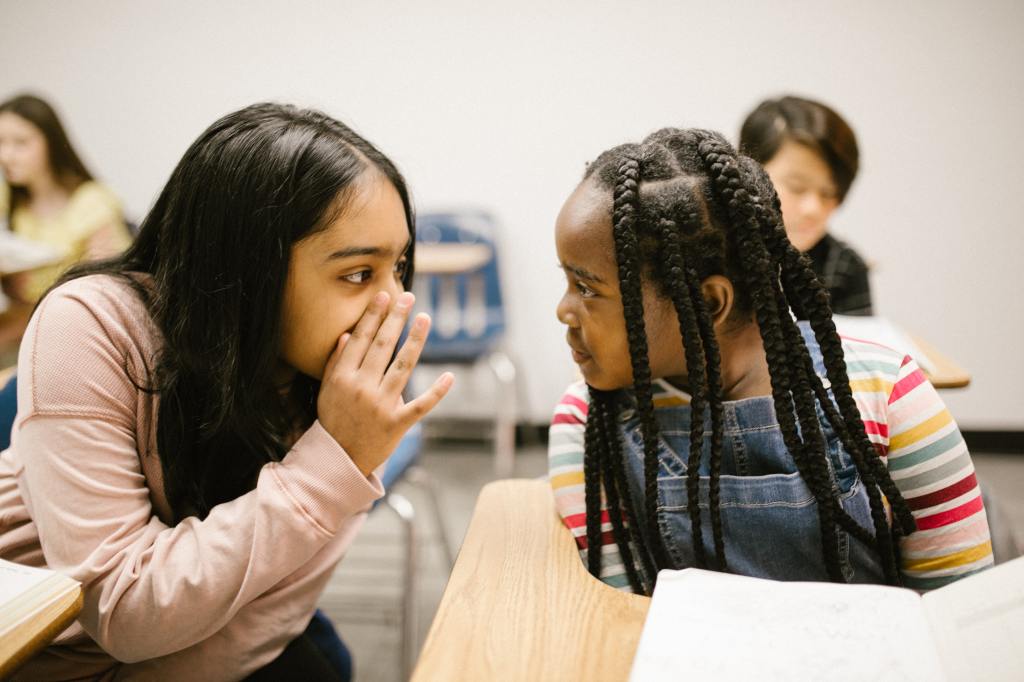
    Two girls sit in a school classrom. One of them is whispering behind her hand to the other.

    Source: Pexels

    How Do We Define Bullying?

    The word “bully” prompts a knee-jerk reaction from parents. After all, no one wants to think their child might be guilty of bullying behaviour. The truth is, many kids are bullies, and many are bullied, and sometimes tweens can fall in between and become both victim and perpetrator.

    So, what exactly is bullying, and how do we know we are using the term correctly? 

    Bullying is defined as aggressive behaviour intended to cause fear, harm, distress, or create an uncomfortable environment for someone. It often involves repeated behaviours and an imbalance of power between the perpetrator and the victim. 

    This power difference could suggest a difference in age, grade or physical size. Bullying behaviour can take on many forms aside from physical or verbal abuse, such as: 

    • Excluding or isolating a person 
    • Spreading rumours or doing things to embarrass someone 
    • Using technology (texts, emails, social media) to harass someone 
    • Taking or damaging property 

    When it comes to girls on the spectrum, they are especially vulnerable to relational bullying or “mean girl” type behaviours due to their difficulty in making friends and their social awkwardness. 

    This dynamic can put them at risk of becoming the target of gossip and exclusion. Girls with autism may also be more susceptible to humiliation or intentional humiliation due to their sometimes associated language and communication difficulties.

    In my daughter’s case, her ex-friend wields her control over her friend group to exclude her and takes every opportunity to dismiss my daughter’s accomplishments, make her feel bad about herself, and stress how no one likes her.

    This type of bullying, called relational aggression, seems to be the weapon of choice in “girl world.” (If you grew up in girl world, I know you can relate). Let’s take a closer look. 

    Defining Relational Aggression

    As a child, I was bullied relentlessly in elementary school. I was an easy target. I wasn’t that cute (I grew into my looks later, fortunately); I was a smartypants who used big words and trained as a competitive figure skater. 

    This meant I missed more school days than I was there for coaching and practice sessions, making it harder for me to fit in or even defend myself on the days I was absent from the rumours created by my nemeses. 

    Of course, add that I was perceived as a – gasp! – goody-goody who didn’t smoke or kiss boys, and I had the perfect combination of traits that made me stand out. 

    And not in a good way.

    It was common to go to school and have not one person talk to me the entire day upon instructions from our “queen bee.” This included my supposed best friend, who would turn her back when I begged her to speak to me. 

    Then there were the whispers behind my back, the giggles and jokes made at my expense, and the put-downs. To this day, I struggle with self-esteem issues and setting boundaries.

    Unfortunately, this incredibly unfair form of bullying is quite common, especially among girls. Also known as “relational bullying,” it is an insidious type of abuse that differs from traditional bullying and involves more subtle forms of aggression, such as exclusion or spreading rumours. 

    This harassment is used to damage someone’s relationships or social status and is often more challenging to detect as it is much less overt. It can be devastatingly effective as these relational behaviours can damage people’s self-esteem and leave them feeling isolated in a way that can be harder to overcome than traditional physical bullying. 

    Children with autism – who may already have difficulty in social situations or picking up on complex social cues – can be especially vulnerable, as they may misread social signals or have a harder time communicating. 

    Peggy Moss at Empowering Parents lists the following as possible types of relational bullying: 

    • Intimidation 
    • Exclusion 
    • Spreading rumours 
    • Putting down others in a group setting 
    • Gossiping about others 
    • Outcasting
    • Humiliating 
    • Cyberbullying
    • Backstabbing

    These kinds of behaviours can have serious potential consequences, including depression, anxiety, physical health problems, and increased risk for conduct problems. 

    At the same time, though, it is crucial to recognize that the effects of relational bullying can be overcome. It is, after all, a form of abuse that can be identified and addressed. 

    It takes time and hard work, but raising awareness can help young girls know the signs to look out for and how to react to such bullying constructively.
    Source: Pexels

    Why Are ASD Level 1 Girls So Susceptible to Relational Aggression?

    It might help to understand why kids with Level I autism are more at risk than their Level II and III counterparts. First, let’s break down the classification system used by the experts to categorize different levels of ASD diagnoses. 

    Autism can manifest in various levels; most people fill in somewhere on the continuum. It’s important to understant that these levels are just a general guide and the condition manifests differently in everyone.

    Level 1

    Sometimes referred to as “high-functioning” or “Asperger Syndrome” (there is much debate about the appropriateness of these terms within autism communities so I felt it important to address), it refers to someone likely to require support for some of the following: 

    • Difficulty in back-and-forth communication 
    • Trouble with social cues and body language 
    • Social anxiety and burnout from long-term masking 
    • Issues with transitioning between activities 
    • Challenges in organization and planning 

    Level II 

    Requires substantial support and has: 

    • Difficulty with masking
    • Limited ability to change focus or activities
    • Engagement in noticeable repetitive behaviour or stimming,
    • Struggles with societal norms due to a neurotypical-centric environment 

    Level III 

    Needing very substantial support and:

    • Is unable to mask
    • Experiences a high self-regulation burden
    • Has significant difficulty with verbal and non-verbal communication
    • Struggles with changes in focus or location
    • Engages in noticeable repetitive behaviours
    • Is at increased risk for neglect, abuse and discrimination

    It’s no surprise that Level I girls are more likely to come into contact with the relational bullying their peers often face because of their wide range of social abilities. They typically don’t have the same social communication and interaction skills as the general population, thus making them more vulnerable to mean-girl treatment. 

    For instance, my daughter struggles with: 

    • Reading verbal social cues
    • Entirely missing or misinterpreting non-verbal social cues
    • Knowing when to enter a conversation
    • Taking things literally
    • Knowing when someone is not interested in her favourite subject of interest that she wants to share with the world because it’s AWESOME
    • Understanding when someone has had enough of a particular conversation and is ready to move on
    • The boundaries of personal space and when someone is uncomfortable if she’s in theirs
    • Misreading other’s intentions for good or for ill

    Because of this, my daughter has been targeted her entire life, and it can be heartbreaking to bear witness to the experience of my child being made to feel lower and lesser than her peers. 

    It’s made her more withdrawn, less outgoing and less trusting of those around her. But it’s not all hopeless – as I have worked with my daughter, I have noticed that her self-advocacy has improved, and she can stand up for herself when it counts. 

    It is of utmost importance that girls with autism get the support, love, affection and understanding they need to help them learn to cope with life’s struggles and gain confidence. 

    With the right environment and guidance, these girls can find their voices and learn to thrive in an often challenging world.

    Effects of Relational Bullying on Autistic Girls

    It’s difficult to put into words the effects this constant harassment has had on my daughter. Keep in mind, she’s dealt with it her entire. short. life – in every grade, in online school during the pandemic, at her dance studio, and even from instructors who didn’t know any better. 

    I first saw it manifested in debilitating nightmares and insomnia during the summer between Senior Kindergarten and Grade 1. My daughter would wake up crying and be unable to sleep. 

    She would have nightmares of herself sitting alone under a tree at school because no one would talk to her. And it’s only gotten worse from there. Imagine that every. day. of. your. life. you have to deal with someone trying to make you feel wrong. defective. less than

    On top of that, you must deal with all the other challenges you face of navigating a neurotypical world in a neuroatypical body and brain. Here’s a list of the harm this type of bullying can cause:

    • Depression 
    • Anxiety 
    • Insomnia 
    • Low self-worth 
    • Headaches 
    • Nausea 
    • Stomach aches 
    • School avoidance 
    • Fear of social situations
    • The urge to self-harm
    • Eating disorders
    • Trouble concentrating
    • Stress-related sicknesses 

    These are the lasting effects of relational bullying that can affect an autistic girl. It’s insidious, and it’s as real as anything can get. It can set in motion a lifetime of negative consequences and can take away the joyousness of childhood. 

    This is why it’s so important we start having honest conversations about bullying and its effects in our schools – especially regarding autistic girls. We need to create safe learning environments that are aware of these dynamics and how to prevent them in the first place. 

    We need more education and understanding of autism, both within the schools and the larger community. We need to make sure our children know there is always hope. That there is another way. No matter what they face today, tomorrow is a new dawn.
    Source: Pexels

    The Blind Spots: Why Teachers and Coaches Often Miss the Signs

    If you think spotting relational aggression is like searching for a needle in a haystack for us parents, imagine what it’s like for teachers and coaches who have multiple kids to manage.

    The Resource Crunch

    Let’s start with the most obvious yet understated problem: resources. Teachers and coaches are often stretched thin, juggling between academic responsibilities, extracurricular activities, and yes, maintaining a semblance of order among the kids.

    Too Few Eyes, Too Many Kids: There’s only so much ground a teacher can cover. The schoolyard, during recess or after school, often becomes a ‘safe’ space for bullies, knowing there’s less adult supervision.

    Lack of Specialized Training: Recognizing relational aggression requires specialized training that most educators haven’t received.

    The Discord Between Peers and Teachers

    There’s a serious disconnect between how teachers and peers view relational aggression. This disparity is especially troubling.

    Academic Bias: Teachers often base their judgments on academic performance and classroom behavior. A student excelling in these areas may not raise any red flags, even though they could be a principal antagonist on the playground.

    Popularity Paradox: Female students who are popular and overtly aggressive are more likely to be flagged by both teachers and peers. But what about those who operate covertly, hiding their malicious behavior under a guise of charm and friendliness?

    The Silent Victims

    Much like my daughter, many victims don’t want to ‘tattle.’ They internalize their pain, trying to handle the situation themselves, which often leads to further anxiety and emotional distress.

    Fear of Retaliation: The fear of being labeled or facing worse aggression from the bully often keeps victims silent.

    Low Self-reporting: This silence means that there are likely many more victims than what the statistics show, making the problem much bigger than it appears.

    There’s no simple fix, but understanding why it’s so hard to spot and stop relational aggression is a crucial first step. Only then can we begin to think about meaningful interventions. And trust me, this is a fight worth taking on, not just for our kids, but for everyone’s.

    The Emotional Rollercoaster: A Parent’s Journey Through Relational Aggression

    I hear you. Honestly, I do. The emotional turmoil that comes with knowing your child is a target of relational aggression isn’t something you can just set aside. It follows you, creeping into the moments that should be free of worry, settling into a pit in your stomach that you can’t seem to shake. This isn’t just a story about kids on a playground; it’s about us parents, too.

    The Tug of War: Protectiveness vs. Independence

    For any parent, our child’s well-being is paramount. We want nothing more than to send our kids to a safe space where they can grow and thrive. But when that safe space turns hostile, the inner battle begins.

    Over-Protection: You’re tempted to wrap them in a protective bubble. And why shouldn’t you? When your child is on the autism spectrum,the world already feels like a battlefield.

    Fostering Independence: But you also know you can’t be there to shield them forever. Especially for autistic children, learning independence is critical.

    The Emotional Cycle: A Journey Through Many Stages

    Stage 1: Empathy and Kindness

    It starts with preaching kindness, believing that empathy will prevail. You think, maybe if we understand the bully’s side, we can defuse the situation. You tell your child to be brave but kind, to stand up without sinking to their level.

    Stage 2: Accountability

    You work tirelessly with your child to help them navigate the social intricacies they naturally find challenging. Mindfulness techniques, social skills classes, breathing exercises, role-playing — you try it all. You do everything you can to equip your child to be the best version of themselves. (and it doesn’t escape your attention that others don’t seem to bother to do this much work with their kids, which frankly, builds resentment.)

    Stage 3: Diplomacy

    Next, you approach the other parent. You craft your words carefully, advocating for a collective effort to sort out the ‘social difficulties.’ Sometimes it works, and sometimes it explodes in your face, like my unfortunate social media encounter, which I still struggle to forgive myself for. Remember folks, never comment in anger, it never goes well.

    Stage 4: Loss of Empathy

    Finally, after years of frustration and roadblocks, you find that your reservoir of empathy has run dry. You’ve spent your life empowering kids, and now you’re at a point where negative feelings overshadow any goodwill you had left. And you blame yourself for it.

    Emotional Toll: The Unseen Cost

    Mental Health: Anxiety, sleepless nights, constant worry – it takes a toll on your mental well-being.

    Strained Relationships: Sometimes, it even strains your relationship with your child as you both try to navigate the labyrinth of emotions.

    Professional Life: I’d be lying if I said it hasn’t affected my ability to focus on my work, even though every dollar I earn is to ensure a better future for my tiny family.

    The Way Forward: Is There One?

    Honestly, I wish I had an easy answer, a one-size-fits-all solution. But what I do have is this community, right here, where we share, vent, find support, and pick up the pieces so we can face another day. Because, for our kids, we’ll walk through fire. But we don’t have to do it alone.

    We’ve faced hurdles before; we’ll face this one, too. We’ll find a way to protect our children without smothering them, to build their independence without leaving them vulnerable. And hopefully, along the way, we’ll inspire others to stand up, take notice, and make changes that benefit not just our children, but every child who’s grappling with the tough social landscapes of childhood and adolescence.

    Stay Connected, Share the Love

    If you’ve found this blog post resonating with you, hit that ‘Like’ button and please do ‘Subscribe’ to stay updated on our journey and other important topics. Your support keeps this community thriving and is a beacon for others navigating the same challenges.

    Also, I invite you to check out BellaZinga, an online print-on-demand store inspired by my daughter’s one-liners and special interests that serves as a platform for inclusion, education, awareness, and acceptance. Your support goes a long way in empowering us to make the world a more accepting place for our children.

    If you do buy something, make sure to put our printable “Things Your Neurodivergent Friends Might Do” and my eBook “Friends Beyond Differences: Embracing Neurodiversity” in your cart.

    These are great resources for educating neurotypical kids about their friends with invisible disabilities like autism and ADHD.

    Once you do, make sure to enter the discount code “SPREADTHEWORD” to get those resources absolutely free!

    The promotion is good until the end of September!

    Thank you for being part of this incredible community. Together, we can turn our struggles into strength and pave a path for a future where every child feels safe, loved, and included.

    So, share this post, spread the word, and let’s create a ripple effect of change. Because in this challenging journey, the more allies we have, the stronger we are.

    If you or someone you know is the victim of bullying you can reach out to Bullying Canada at (877) 352 4497. Call or text anytime and their team of caring volunteers will help you. You don’t need to go through this alone.
  • A Dance Recital Like No Other

    A Dance Recital Like No Other

    Last weekend my daughter danced in her studio’s end-of-the-year recital. The show was a success, full of the usual suspects; seasoned performers hip-hopping their way to fame, teeny-weenies out for their dance debut loaded with sparkles and wide-eyed anticipation, and budding street dancers learning the breakdance ropes. 

    While all of these regular recital occurrences are heart-warming, what got me in the “feels” was that I got to watch the entire thing from the audience. 

    This may sound odd, given that my little dancer is not so little anymore. In fact, at nearly twelve, she’s taller than most grown women. And you’re likely now thinking that I’m a total helicopter mom, hovering like there’s no tomorrow, too afraid to cut the apron strings and let my daughter look after herself.

    While that may be true, there’s also another factor to consider. You see, my daughter is neurodivergent; she has ADHD and is on the autism spectrum. This means that she is quirky, beautiful and (in my humble opinion) fucking brilliant. 

    It also means she has significant challenges in places and at events that you and your neurotypical kiddos likely take for granted.

    I won’t ever take something like watching a dance recital from the audience for granted again. I’ll tell you why.

    Source: Unsplash

    The Extra Steps of Autism

    My daughter doesn’t look any different than your average tween. Given that she is considered Level 1 ASD (formerly known as Aspergers), nothing would cue you that she is any different from a neurotypical child. 

    This is why so many parents of kids on the spectrum get the side-eye, eye-rolls, and just about any other eye-related behaviour from other parents, teachers, doctors, etc. 

    No two children on the spectrum are the same, but let me share with you some of the challenges my daughter has had to overcome in her dance career.

    Motor Difficulties

    You know how kids can effortlessly tie their shoes or change outfits like they’re in a backstage dressing room of a Broadway show? Well, that’s not exactly a walk in the park for my kiddo. 

    With her motor skills functioning a little differently, quickly tying tap shoes or changing sparkly leotards might as well be an Olympic event. And let’s not forget the actual dance numbers. 

    With balance and coordination playing a cheeky game of hide-and-seek, the challenge of mastering those intricate steps is on another level.

    Issues with Working Memory

    Ever tried to keep track of multiple dance numbers, their order, and the steps for each in your head? My daughter tackles this challenge head-on every time she steps onto that stage. 

    Prioritizing tasks and decision-making are like trying to solve a Rubik’s cube blindfolded. The struggle with working memory is real y’all.

    Executive Function Challenges 

    Imagine having a long list of instructions, each more complex than the last. Sound overwhelming? Now, think about how it feels when every day is filled with these lists and not having a freaking clue where to begin or how to put the required steps in order?

    That’s the reality for children like my daughter. Delayed executive function development is like trying to solve a jigsaw puzzle with missing pieces. Is it any wonder they get frustrated and lose their shit?

    Emotional Dysregulation

    Feelings for my daughter are like waves during a storm, overwhelming and unpredictable. Her emotions are big, bold, and often challenging to rein in. It’s like riding a roller coaster without a safety bar, thrilling but also a little scary.

    The hardest part as her parent is to watch the shame and guilt play across her features once she has calmed down and realized what she said and did while she was struggling for control. 

    Even though my kiddo is starting to realize that when she gets overwhelmed, her frontal lobe is not in control, and she is in the clutches of her amygdala and the dreaded fight/flight/freeze/fawn (although there is a strong argument for using “feign” instead of fawn) response cycle, she still feels bad about her behaviour after the fact.

    Sensory Sensitivities

    Imagine being at a rock concert, but the music’s too loud, the lights are too bright, and the crowd’s too much. Now, try picturing that every time you’re in a room full of kids or under fluorescent lighting. 

    That’s what my daughter deals with — a world where sounds, smells, and sights can be as piercing as a siren’s call. Because she perceives the world differently and often more intensely, she can experience these sensations as discomfort and even pain.

    Now see yourself at a dance competition or recital, packed together in a dressing room with hundreds of other dancers, all anxious and excited. The steady drum of chatter, shouting, crying, and music would be enough to drive a neurotypical person to drink, let alone someone who’s conditioned to perceive these stimuli as threats! (To clarify, I don’t let my daughter drink…so don’t come for me!)

    Problems Reading Social Cues

    Reading social cues for my daughter is like deciphering hieroglyphics without a Rosetta Stone. It’s tough not knowing how to fit into the social puzzle, feeling isolated in a room full of chattering children. 

    But thank the goddess for our dance studio. Through careful attention to fostering a climate and culture of family and inclusion, they have helped my daughter fit in every step of the way. I wish I could say the same for our previous studio, but that’s another story for another time. (And perhaps that aforementioned drink)

    Triumph in the Dressing Room

    Usually, I am my daughter’s special assistant in the dressing room. My job is to make sure she can navigate quick changes, take a sensory break if necessary, calm her in case of overwhelming nervousness to prevent meltdowns and help her navigate the environment and pressure around her.

    I always ask my kiddo if she wants me there with her in the dressing room or if she’d like to try it on her own, as I’m trying to foster independence and push her boundaries, but I want her to feel ready for it.

    So I wasn’t surprised when she asked me to be her special dressing room assistant once again. 

    I don’t mind this, but the fact is, it is usually only my daughter and me at these events. So when I’m below in a dressing room, I am not in the audience to hoot, holler, yell, and clap for her when she’s onstage. And that means she has no one in the audience to do that for her. 

    As you can imagine, for an only child who seldom sees her father and sees ALL the other families full of siblings and relatives attending, this is hard for both of us.

    Still, I was prepared. I’d created extra lists for my l’il dancer with the order of her numbers, all carefully highlighted. I’d labelled each of her dance bags carefully, even crafting numbers to hang on each hanger so it would be easier to see which one was next.

    I’d done all the things necessary to ensure a seamless experience. I’d packed all my kiddo’s sensory stuff, like headphones, earbuds, fidget spinners, a tablet and a charger, not to mention a cell phone. You name it; we were ready.

    Then, suddenly, as we were setting her bag up in her designated space, my daughter shot me an “I’m so embarrassed my mom is here look” and started shooing me away.

    I have to admit. I froze, unsure if I was actually seeing what I thought I was. 

    Sure enough, my daughter wanted me to leave her alone so she could hang with her dance friends. When I asked if she could handle the quick changes, she said she could, and I should leave her alone.

    Source: Pexels

    A New Perspective: Joining the Audience

    I just about cried. Partly, if I’m being honest, because this was a huge hurdle, and it meant my baby was growing up, which is difficult for every mama bear, neurodivergent or neurotypical alike.

    But partly because of the overwhelming sense of relief and freedom to sit and enjoy myself at a function. Whether it was a family dinner, a holiday gathering, a school assembly, or a dance recital, I had yet been unable to do this.

    I don’t think you can understand how it feels to always be alone when you’re the parent of a kiddo on the spectrum. Because your child is more, needs more, and demands more, you have to give more, be available more, be more organized, be more prepared, be more calm…I think you get the picture.

    This sense of being an uber parent is not conducive to sitting and having a cocktail at a dinner party, socializing with family at a Christmas get-together, or watching your daughter shine onstage at dance recitals.

    Until last week.

    And shine, she did. Although it was hard to see from the tears in my eyes. (I’m not crying, you’re crying)

    Parenting on the Spectrum Means You Celebrate the Ordinary Moments as if They Were Extraordinary

    My daughter did it on her own, and I couldn’t be prouder. You see, for parents like me, we don’t just celebrate the recitals or awards. We celebrate the moments when our children prove to the world, and more importantly to themselves, that they are so much more than a label.

    We celebrate when they show their strength and resilience in the face of adversity and face the challenges of a world that can be overwhelmingly stacked against them.

    So yes, I won’t ever take something like watching a dance recital from the audience for granted again. Not because it’s a luxury but because it’s a testament to the beautiful, quirky, brilliant girl my daughter has become. And how damn proud I am of her.

    If you want to share some ordinary yet extraordinary moments with your neurodivergent child, comment below, and follow me for more blogs!

    Better yet, why not check out my online store, BellaZinga (inspired by my daughter and her neverending one-liners) for some merch with a side of neurodivergent sass? While you’re there, you can download my eBook “Friends Beyond Differences: Embracing Neurodiversity.” 

    It’s an engaging guide written specifically for neurotypical kids aged 6-12 to help them understand and embrace their neurodiverse peers.

    And remember, our differences make us unique, but our humanity binds us together. Let’s ensure every child, regardless of their neurotype, feels accepted, loved, and capable of dancing their own unique rhythm.

    Shine on, my beautiful neurodiverse kiddos.

    Shine on.

  • The Importance of “Culture” in Our Youth Sport Organizations

    The Importance of “Culture” in Our Youth Sport Organizations

    With thirty years of coaching experience, and ten years as a sport parent, I have been afforded many opportunities to create, implement,  observe, and critique different organizational cultures.

    If I am being entirely honest, one of the reasons I retired from coaching was my complete disillusionment surrounding the never-changing landscape of the culture we work in as figure skating coaches.

    Full disclosure: While I always did my best to create a positive culture, I have also been responsible for creating less than positive environments through mistakes I have made, either by reacting inappropriately to what I percieved as injustice or unfair criticism, or being so outspoken about organizational issues as to burn bridges behind me.

    Throughout my coaching life, I have worked for clubs with organizational cultures that felt so supportive and progressive I have deeply enjoyed coming to work because I felt so valued in my organization.  I cannot tell you how thankful I am that these clubs exist and I have had the pleasure of working in them. 

    I have worked in other clubs where the culture was simply average; drama and divisiveness with one executive, then support and cohesion with the next. This is more often the norm in figure skating clubs in Canada simply because of the nature of their structure.  For more on this, read my blog on some of the hardships endured by skating coaches in Canada.

    I have also had the displeasure of working with a couple of clubs that were quite toxic. 

    Photo by Kat Jayne on Pexels.com

    I cannot overstate enough the stress I experienced working with these clubs. One, in particular, stands out.  The anxiety I felt day in and day out was so bad it resulted in sleeplessness, nervous tics, weight gain, depression, self-doubt, and eventually burn-out. 

    Where I used to love going to work and didn’t even consider my coaching job as a “job,” I eventually became afraid to go to the rink because I always felt under attack. Even worse, it was plain the values I held dear were nowhere in evidence.

    The hardest part of all was to try and diagnose the problem.  Why was the club so toxic?  Was it me?  No matter how hard I tried to model clarity, to try to include people in my ideas, and to try to show professionalism, I seemed to fail at every turn.

    What made my slow descent into disenfranchisement even worse is that I could see that people in the organization were doing the best they could.  Yet somehow, the club became a place of division and strife. In the end, clarity in communication became non-existent, and trust had eroded to the point of being completely absent. There was little organizational structure to depend on, and skaters were leaving in droves.

    I speak often about how important the “culture” of any organization is, but when it comes down to it, it is a complicated concept that few people understand, and, in my humble opinion, even fewer value it as an important factor in the success of skating clubs.

    Before going any further, I want to give a shout-out to those clubs that do have wonderful, supportive, open, clear, and progressive cultures.  You can tell those clubs that put in the work; they are the ones that produce confident athletes, seem to have happy coaches who remain with the club for a long time, and in general, you just feel good being there. 

    Sadly, in my experience, you have a 50/50 shot of finding a skating club in Canada with a positive club culture.

    So what exactly IS organizational or club culture?

    Photo by Polina Zimmerman on Pexels.com

    Well, after consulting my wise colleague Google, there seem to be several similarities between the many definitions of “organizational culture.” 

    You can pare down the commonalities of organizational culture to these things:

    • There is a collective agreement on what things are important to that particular club or youth organization. This means that the leaders in the club gather and determine which things they wish to make a focal point for the day-to-day running of their organization.  These can include assumptions, beliefs, values, and practices.
    • The leaders of the organization are the ones that help to create and model these agreed-upon values or practices.
    • Workers in the organization are provided support in order to uphold these common beliefs or values, often in the form of incentives and also sometimes in the form of…ahem…punishment.
    • Leaders and workers alike work together to implement and maintain these beliefs, assumptions, values, or practices in order to create a harmonious and successful organization.

    So there it is, sounds easy right? 

    BWAH-HA-HA-HA……!  I hope that sound of my laughter in your ears isn’t too deafening.

    Creating and maintaining a strong and positive club or organizational culture is one of the most difficult things to do ever. 

    Full stop.

    With so many moving parts present in a figure skating club, like coaches, volunteers, parents, athletes, executive members, and administrative staff, just trying to get people to collectively commit to one set of shared values is nearly impossible.

    A full concerted effort has to be made by every single person in that skating club to commit to modeling the core values of that culture, as well as following the processes and procedures set in place in order to maintain these values.

    As someone who has always been fascinated by leadership styles (indeed, I am guilty of reading more books on leadership, mindset, and motivation by business leaders than your average bear), I have spent years trying to learn the “secret” to creating a positive club culture.

    I’ve had some success and just as many failures, but I can tell you from experience these are the things that every club needs to possess in order to create a positive culture.

    Clarity

    As someone who is late to hop on the Brene Brown train, I admit to always being skeptical of anything that smacks of self-help…but wow, this lady (sorry….Doctor!) blew me away.  Listening to her book “Dare to Lead” left me open-mouthed and wide-eyed from the sheer force of the multiple “a-ha” moments it provided.  (not to be confused with multiple orgasms, that’s another book and an entirely different type of author).

    While it would take too long to list all of the takeaways provided by this first-class researcher on vulnerability, courage, and shame in relationships AND in the workplace, one of the concepts that resonated the most deeply with me is: “clear is kind, and kind is clear.”

    Dr. Brown repeats this rule like a mantra, and indeed, it should be the mantra at every skating club or youth sports organization.

    Too often, we are too afraid to say what we are feeling. When we have a problem in our club, we hesitate to speak up for fear of sounding weak or, worse, like an emotional woman.

    Too often, we let wounds fester in our skating clubs, leaving rumours unaddressed and allowing issues to grow until the resentment between coaches or executive members is so great there is no hope of meeting with an open heart or mind, as Brown often recommends.

    I have always been clear. Perhaps too clear, and if I’m being candid, my delivery is not always as gentle as it could be. It has always been my belief that we have to name issues and do the hard work required to solve them in order to move forward productively.

    Unfortunately, everyone in the club has to “buy in” to this belief, and if you are the only one or one of the few who believes that “clear is kind,” then you will often find yourself in “unkind” waters for attempting to be transparent.

    Organization

    In order to have a successful club culture, there must be a system in place that everyone understands and trusts implicitly. For example, it is no use attempting to team coach when you have coaches who haven’t bought into the process and do everything in their power to undermine the program.

    Everyone in a productive organization must know their jobs and have the support necessary to carry them out to the best of their abilities. This leads me to my third point.

    Value Each Other

    Photo by Lisa Fotios on Pexels.com

    I can’t tell you how much a simple thing like “thank you” changes my day. Yet words like “thank you” or “I appreciate the job you did today” are very seldom used. When they are, they stand out.

    To value your fellow coaches and executive members means that you also trust them to do their job without micromanaging them.

    A club with a positive culture gives professionals and executive members alike the space they need to do their jobs well and the resources they need to do it.

    They also pay these individuals what they are worth and respect their time outside of the rink.

    A positive club culture is one that allows members to set healthy boundaries and maintain a work/life balance.

    Opportunity for Mentorship and Growth

    Every member of an organization or club needs a chance to grow within that organization. Opportunities for education and promotion should be regularly provided in order to keep members challenged and fulfilled in their careers.

    Novice coaches should be assigned a senior coach as a mentor to provide them support and guidance. The knowledge and experience mentor coaches can provide up-and-coming coaches are invaluable—particularly for female coaches—and will increase coach retention in the long run.

    Openness to Feedback

    No one likes receiving negative feedback. Myself the least of all. But in order to maintain and nurture a positive club culture, it is critical that all members in a skating club take a step back from their own egos and really LISTEN to feedback when it is offered. When members feel safe to open up about their concerns and feel valued and heard, the entire dynamic of the organization changes for the better.

    As an example, my daughter used to dance at a studio where I felt like I was always overreacting or being a hysterical female when I brought up my concerns to her instructors or the director. (I want to be accurate; there were two instructors that went over and above to help my daughter and recognized that she needed modifications; they were the reason we remained as long as we did).

    While lip service was paid to my concerns, nothing was ever changed, and I felt alienated and devalued, much like my daughter was feeling.

    As I later found out, my daughter was diagnosed with special needs, and we left that studio for one that has one of the best organizational cultures I have ever seen. Every time I have approached any of the teachers or the owner of our new studio about any concerns, I have been met with absolute openness and care, and best of all, action was immediately taken.

    This is what inspires people to remain loyal to your organization.

    Constant Vigilance

    As I mentioned above, it is not enough to simply write a mission statement about what the main values are for your organization. Now you have to “walk the walk.” This is where most organizations fall down.

    Photo by fotografierende on Pexels.com

    With so many changes in our executive members and sometimes coaching staff, the values and beliefs that are so integral to each figure skating club require constant care and follow-up in order to maintain. Positive club cultures are not a “one-and-done” thing.

    Another practical yet ground-breaking idea from Brene Brown is the idea of “rumbling with vulnerability.” Simply put, this is a meeting (on a continuous basis—I would recommend weekly) where everyone comes together with a total commitment to complete openness and vulnerability.

    Everyone is required to share a viewpoint and back it up; no one is allowed to sit back and coast. The idea is to set aside ego and come together, in understanding and vulnerability, to find workable solutions to any issues.

    I can’t state strongly enough how much I wish we had these at the skating clubs I have worked at. And yes, for those of us in the profession long enough, we are supposed to have coaches’ meetings, but are those really open?

    Do people feel they can be vulnerable and will be supported in sharing their issues? Are the executive members present at these meetings too? Shouldn’t they be?

    As you can see, creating and maintaining a positive culture in your youth sports organization or figure skating club can be a difficult process, but it is well worth it.

    If you are a club executive member, skating school director, dance studio owner, or club coach, I highly recommend reading any of Brene Brown’s books, particularly “Dare to Lead.” It may help you create a more positive club culture in your organization.

    If you want to hear more about organizational culture in youth sports, watch for our “Coaches on Edge” Podcast, where we dissect our experiences and thoughts concerning organizational, club, and studio culture. You can find us on Anchor, Spotify, Google Podcasts, Breaker, Overcast, Pocketcasts, and RadioPublic!

    We’ll be joined by Shawna Kwan, Owner of Elan Dance Arts: Dance Teacher, Choreographer, Business Mentor, and Entrepreneur, as we discuss the things we do to maintain a positive culture for our athletes.

    If you have any questions, comments, or pointers for creating your own positive culture you’d like us to discuss on our podcast, let us know in the comments below!