
With thirty years of coaching experience, and ten years as a sport parent, I have been afforded many opportunities to create, implement, observe, and critique different organizational cultures.
If I am being entirely honest, one of the reasons I retired from coaching was my complete disillusionment surrounding the never-changing landscape of the culture we work in as figure skating coaches.
Full disclosure: While I always did my best to create a positive culture, I have also been responsible for creating less than positive environments through mistakes I have made, either by reacting inappropriately to what I percieved as injustice or unfair criticism, or being so outspoken about organizational issues as to burn bridges behind me.
Throughout my coaching life, I have worked for clubs with organizational cultures that felt so supportive and progressive I have deeply enjoyed coming to work because I felt so valued in my organization. I cannot tell you how thankful I am that these clubs exist and I have had the pleasure of working in them.
I have worked in other clubs where the culture was simply average; drama and divisiveness with one executive, then support and cohesion with the next. This is more often the norm in figure skating clubs in Canada simply because of the nature of their structure. For more on this, read my blog on some of the hardships endured by skating coaches in Canada.
I have also had the displeasure of working with a couple of clubs that were quite toxic.

I cannot overstate enough the stress I experienced working with these clubs. One, in particular, stands out. The anxiety I felt day in and day out was so bad it resulted in sleeplessness, nervous tics, weight gain, depression, self-doubt, and eventually burn-out.
Where I used to love going to work and didn’t even consider my coaching job as a “job,” I eventually became afraid to go to the rink because I always felt under attack. Even worse, it was plain the values I held dear were nowhere in evidence.
The hardest part of all was to try and diagnose the problem. Why was the club so toxic? Was it me? No matter how hard I tried to model clarity, to try to include people in my ideas, and to try to show professionalism, I seemed to fail at every turn.
What made my slow descent into disenfranchisement even worse is that I could see that people in the organization were doing the best they could. Yet somehow, the club became a place of division and strife. In the end, clarity in communication became non-existent, and trust had eroded to the point of being completely absent. There was little organizational structure to depend on, and skaters were leaving in droves.
I speak often about how important the “culture” of any organization is, but when it comes down to it, it is a complicated concept that few people understand, and, in my humble opinion, even fewer value it as an important factor in the success of skating clubs.
Before going any further, I want to give a shout-out to those clubs that do have wonderful, supportive, open, clear, and progressive cultures. You can tell those clubs that put in the work; they are the ones that produce confident athletes, seem to have happy coaches who remain with the club for a long time, and in general, you just feel good being there.
Sadly, in my experience, you have a 50/50 shot of finding a skating club in Canada with a positive club culture.
So what exactly IS organizational or club culture?
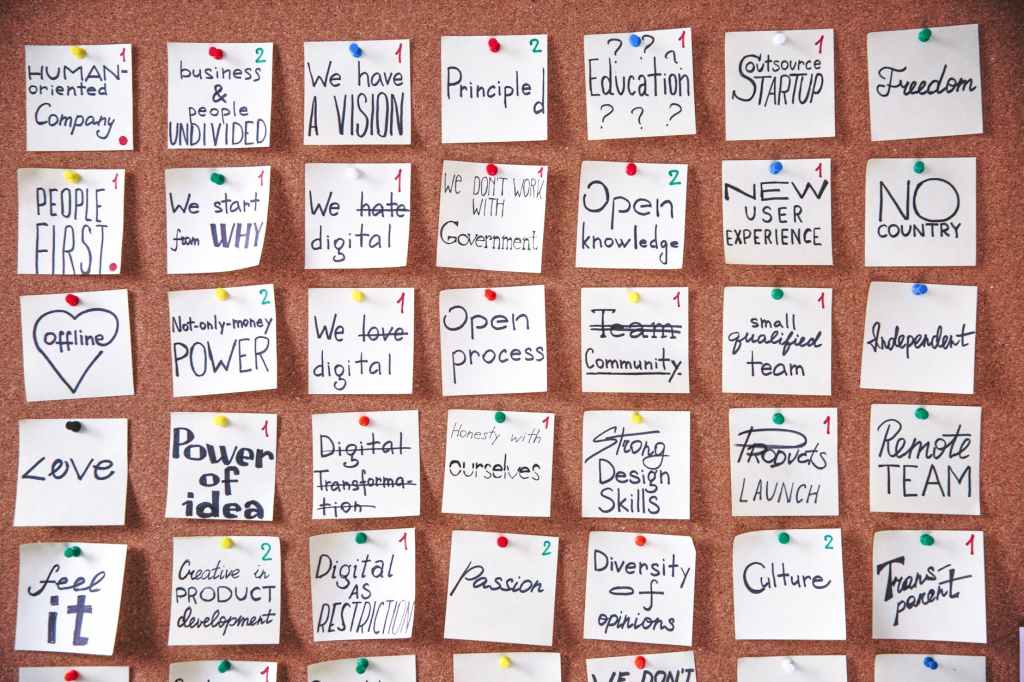
Well, after consulting my wise colleague Google, there seem to be several similarities between the many definitions of “organizational culture.”
You can pare down the commonalities of organizational culture to these things:
- There is a collective agreement on what things are important to that particular club or youth organization. This means that the leaders in the club gather and determine which things they wish to make a focal point for the day-to-day running of their organization. These can include assumptions, beliefs, values, and practices.
- The leaders of the organization are the ones that help to create and model these agreed-upon values or practices.
- Workers in the organization are provided support in order to uphold these common beliefs or values, often in the form of incentives and also sometimes in the form of…ahem…punishment.
- Leaders and workers alike work together to implement and maintain these beliefs, assumptions, values, or practices in order to create a harmonious and successful organization.
So there it is, sounds easy right?
BWAH-HA-HA-HA……! I hope that sound of my laughter in your ears isn’t too deafening.
Creating and maintaining a strong and positive club or organizational culture is one of the most difficult things to do ever.
Full stop.
With so many moving parts present in a figure skating club, like coaches, volunteers, parents, athletes, executive members, and administrative staff, just trying to get people to collectively commit to one set of shared values is nearly impossible.
A full concerted effort has to be made by every single person in that skating club to commit to modeling the core values of that culture, as well as following the processes and procedures set in place in order to maintain these values.
As someone who has always been fascinated by leadership styles (indeed, I am guilty of reading more books on leadership, mindset, and motivation by business leaders than your average bear), I have spent years trying to learn the “secret” to creating a positive club culture.
I’ve had some success and just as many failures, but I can tell you from experience these are the things that every club needs to possess in order to create a positive culture.
Clarity
As someone who is late to hop on the Brene Brown train, I admit to always being skeptical of anything that smacks of self-help…but wow, this lady (sorry….Doctor!) blew me away. Listening to her book “Dare to Lead” left me open-mouthed and wide-eyed from the sheer force of the multiple “a-ha” moments it provided. (not to be confused with multiple orgasms, that’s another book and an entirely different type of author).
While it would take too long to list all of the takeaways provided by this first-class researcher on vulnerability, courage, and shame in relationships AND in the workplace, one of the concepts that resonated the most deeply with me is: “clear is kind, and kind is clear.”
Dr. Brown repeats this rule like a mantra, and indeed, it should be the mantra at every skating club or youth sports organization.
Too often, we are too afraid to say what we are feeling. When we have a problem in our club, we hesitate to speak up for fear of sounding weak or, worse, like an emotional woman.
Too often, we let wounds fester in our skating clubs, leaving rumours unaddressed and allowing issues to grow until the resentment between coaches or executive members is so great there is no hope of meeting with an open heart or mind, as Brown often recommends.
I have always been clear. Perhaps too clear, and if I’m being candid, my delivery is not always as gentle as it could be. It has always been my belief that we have to name issues and do the hard work required to solve them in order to move forward productively.
Unfortunately, everyone in the club has to “buy in” to this belief, and if you are the only one or one of the few who believes that “clear is kind,” then you will often find yourself in “unkind” waters for attempting to be transparent.
Organization
In order to have a successful club culture, there must be a system in place that everyone understands and trusts implicitly. For example, it is no use attempting to team coach when you have coaches who haven’t bought into the process and do everything in their power to undermine the program.
Everyone in a productive organization must know their jobs and have the support necessary to carry them out to the best of their abilities. This leads me to my third point.
Value Each Other

I can’t tell you how much a simple thing like “thank you” changes my day. Yet words like “thank you” or “I appreciate the job you did today” are very seldom used. When they are, they stand out.
To value your fellow coaches and executive members means that you also trust them to do their job without micromanaging them.
A club with a positive culture gives professionals and executive members alike the space they need to do their jobs well and the resources they need to do it.
They also pay these individuals what they are worth and respect their time outside of the rink.
A positive club culture is one that allows members to set healthy boundaries and maintain a work/life balance.
Opportunity for Mentorship and Growth
Every member of an organization or club needs a chance to grow within that organization. Opportunities for education and promotion should be regularly provided in order to keep members challenged and fulfilled in their careers.
Novice coaches should be assigned a senior coach as a mentor to provide them support and guidance. The knowledge and experience mentor coaches can provide up-and-coming coaches are invaluable—particularly for female coaches—and will increase coach retention in the long run.
Openness to Feedback
No one likes receiving negative feedback. Myself the least of all. But in order to maintain and nurture a positive club culture, it is critical that all members in a skating club take a step back from their own egos and really LISTEN to feedback when it is offered. When members feel safe to open up about their concerns and feel valued and heard, the entire dynamic of the organization changes for the better.
As an example, my daughter used to dance at a studio where I felt like I was always overreacting or being a hysterical female when I brought up my concerns to her instructors or the director. (I want to be accurate; there were two instructors that went over and above to help my daughter and recognized that she needed modifications; they were the reason we remained as long as we did).
While lip service was paid to my concerns, nothing was ever changed, and I felt alienated and devalued, much like my daughter was feeling.
As I later found out, my daughter was diagnosed with special needs, and we left that studio for one that has one of the best organizational cultures I have ever seen. Every time I have approached any of the teachers or the owner of our new studio about any concerns, I have been met with absolute openness and care, and best of all, action was immediately taken.
This is what inspires people to remain loyal to your organization.
Constant Vigilance
As I mentioned above, it is not enough to simply write a mission statement about what the main values are for your organization. Now you have to “walk the walk.” This is where most organizations fall down.

With so many changes in our executive members and sometimes coaching staff, the values and beliefs that are so integral to each figure skating club require constant care and follow-up in order to maintain. Positive club cultures are not a “one-and-done” thing.
Another practical yet ground-breaking idea from Brene Brown is the idea of “rumbling with vulnerability.” Simply put, this is a meeting (on a continuous basis—I would recommend weekly) where everyone comes together with a total commitment to complete openness and vulnerability.
Everyone is required to share a viewpoint and back it up; no one is allowed to sit back and coast. The idea is to set aside ego and come together, in understanding and vulnerability, to find workable solutions to any issues.
I can’t state strongly enough how much I wish we had these at the skating clubs I have worked at. And yes, for those of us in the profession long enough, we are supposed to have coaches’ meetings, but are those really open?
Do people feel they can be vulnerable and will be supported in sharing their issues? Are the executive members present at these meetings too? Shouldn’t they be?
As you can see, creating and maintaining a positive culture in your youth sports organization or figure skating club can be a difficult process, but it is well worth it.
If you are a club executive member, skating school director, dance studio owner, or club coach, I highly recommend reading any of Brene Brown’s books, particularly “Dare to Lead.” It may help you create a more positive club culture in your organization.
If you want to hear more about organizational culture in youth sports, watch for our “Coaches on Edge” Podcast, where we dissect our experiences and thoughts concerning organizational, club, and studio culture. You can find us on Anchor, Spotify, Google Podcasts, Breaker, Overcast, Pocketcasts, and RadioPublic!
We’ll be joined by Shawna Kwan, Owner of Elan Dance Arts: Dance Teacher, Choreographer, Business Mentor, and Entrepreneur, as we discuss the things we do to maintain a positive culture for our athletes.
If you have any questions, comments, or pointers for creating your own positive culture you’d like us to discuss on our podcast, let us know in the comments below!




 BellaZinga.Blog