Tag: coaching

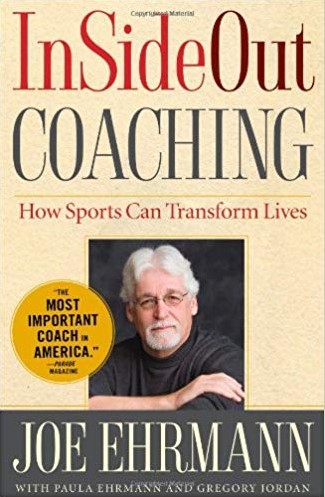
  • A Book Review of “InSideOut Coaching, How  Sports Can Transform Lives” by Joe Ehrmann

    A Book Review of “InSideOut Coaching, How Sports Can Transform Lives” by Joe Ehrmann

    Product:  InSideOut Coaching, How Sports Can Transform Lives by Joe Ehrmann

    Price:  Kindle Price CDN $24.99

    Cheapest Place to Buy Amazon.ca

    My Rating: 9 /10

    Overview:  Anyone who has ever grown up inside the belly of organized sport can attest to the many valuable lessons taught daily to those who participate.  Sports, both competitive and recreational, can impact young bodies and minds in ways that are immeasurable. 

    However, sport also provides an arena where harm can and often is meted out to those who play by those who often have the greatest influence on them: their coaches.

    Joe Ehrmann dissects the good, the bad and the ugly in organized sports specifically in the field of coaching. Through sharing his own experiences in life and in sport, Ehrmann achingly details how young and fragile youth can be further victimized by well meaning but unwitting coaches; coaches who are trying to work out their own issues but instead end up projecting these issues on players.

    Thought provoking and often disturbing, (warning; there may be triggers for sexual assault victims in reading this book), the author courageously illustrates how certain pivotal and traumatic life events created a foundation of vulnerability and sadness, which left him open to be influenced for the greater good, or, unfortunately, greater harm by his coaches.
    Joe Ehrmann leaves no stone unturned as he navigates the complicated waters of inter-relationships in sport.  Between outdated stereotypes of masculine and feminine roles, win-at-all costs sport culture, the stresses of the times we live in, familial dysfunction, and lack of values-based coaching, he paints a comprehensive picture of the problems young athletes face today and what coaches can do to help them successfully chart their own course.

    Starting with each coach turning their reflection inward by focusing on their own personal demons, and finishing with a complete road map for how to create your own InSideOut Coaching culture, this book shines a light on every nook and cranny of the coaching world.

    Best Feature of the Book:  The author writes this book in a very organized step-by-step way, first detailing the turning point in his life that started him on the “InSideOut” journey, next breaking down the positive and negative interactions and revelations into thoughtful and easy to understand categories within the sport continuum, and finally, detailing the steps he took to re-create the sport model with his newfound knowledge. This provides a very easy to follow narrative with a clear road map to incorporating the ideas he presents.

    Pros:  There are very few books that deal specifically with the coach-athlete interaction and the profound affect it can have on young people.  Ehrmann takes his wealth of experience and helps each of us see (either through the lens of the athlete or the lens of the coach) our own strengths and weaknesses.  Ehrmann then helps us clarify what we need to fix, and gently leads us to our own conclusions about the steps we can take to be better, simply by setting the example for us to follow.

    Cons:  While I enjoyed Ehrmann’s writing style, I found sometimes he spent too long on topics, often to the point of redundancy.  There were times where I as a reader had received the message and was ready to move on to the next chapter, and he was still fleshing out the point at hand with more examples.  However, this is more likely attributed to my get-it-done attitude than anything else and certainly did nothing to take away from the overall message.

    The other con I found while reading this book is it will trigger some negative memories.  As a victim of abuse, both inside and outside of sport, and more specifically, as someone damaged by transactional coaching, reading this book did bring back some of the old fear, anxiety, guilt and sadness related to those memories. However, just knowing that I wasn’t the only one that had these experiences was enough to help me get through them with some valuable insight and understanding.

    Conclusion:  If you want to be a better coach, for yourself, and for all the young men and women you can and will influence over the course of your career, you need to read this book.

  • Walking a Tightrope Between Parent of a Child with ADHD and Dance Mom

    Walking a Tightrope Between Parent of a Child with ADHD and Dance Mom

    I always knew my daughter was different, right from the womb. Not better or worse, just different. People tried to normalize her activity level, her issues with socialization, and her fears as “all kids have fears” but I knew she was different right from the get go.

    So now that we have a formal diagnosis of ADHD and anxiety, I am in the process of deciding whether to medicate for the ADHD symptoms, which is a dilemma in itself. ( I am convinced she is also gifted, and there may be other learning issues, but as we don’t have benefits there is no way I can afford a psycho-educational assessment right now.)

    I am a single parent. I work three jobs and home school my daughter because attending normal school became untenable….she suffered bullying and difficulties through out her first three years into grade 1, so much so that her physical symptoms of school avoidance, tummy aches, nightmares, outbursts, and constipation were dominating our lives.

    WHEN YOUR 5 YEAR OLD DAUGHTER STARTS TO TALK ABOUT KILLING HERSELF BECAUSE SHE WILL NEVER HAVE FRIENDS AT SCHOOL, YOUR HEART SHATTERS.

    But, I did my best to manage the symptoms of anxiety, because through junior and senior kindergarten, she was described as a “rock star” by her teachers, so I saw that there was value from her attending school.

    I should have known not to get complacent.

    Within a month of starting grade 1, my amazingly brilliant child who I couldn’t keep up with at home in regards to her curiosity and thirst for knowledge was suddenly behind in everything when the education style moved from learner driven to curriculum driven in grade 1. Suddenly, over the course of one summer, she went from being a “rock star” to being behind in every subject.

    It’s been a bumpy, ride, and I couldn’t love my daughter more. She is brilliant, and funny, and a true performer, and a caring and sweet little girl.

    But, she is exhausting. And I feel guilty for feeling exhausted by her…it’s a never ending cycle…lol. ( I laugh because if I cry I will never stop, and laughing is better)

    Today, I’d like to talk about my current dilemma in our neuroatypical saga.

    Photo by Skitterphoto from Pexels

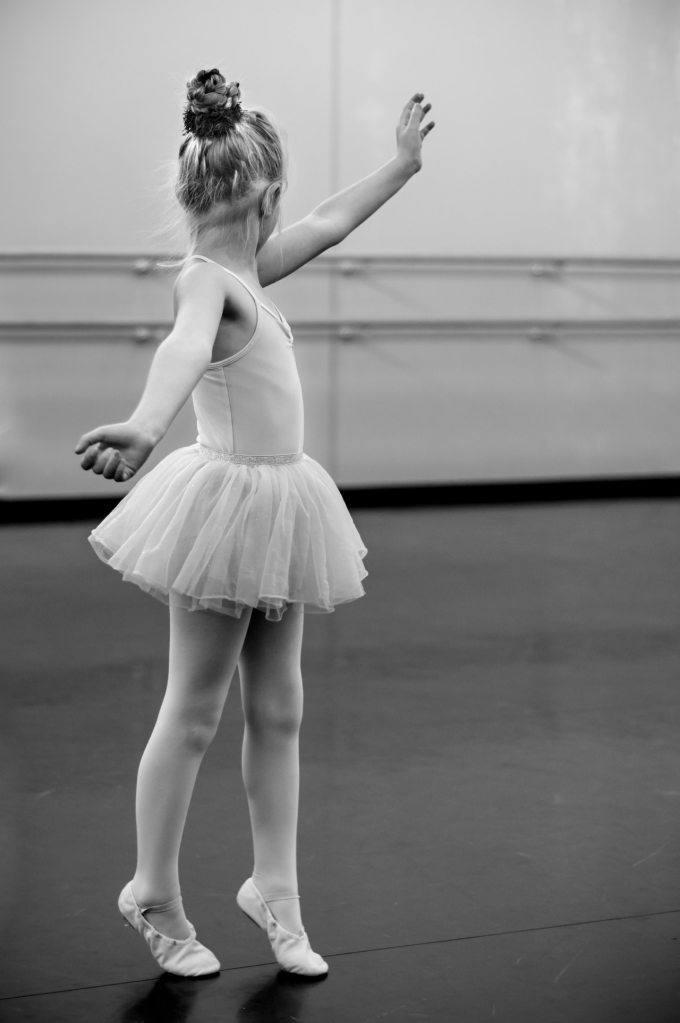
    My daughter is a competitive dancer, and here’s my concern. We have been been four years at the same dance studio. She has been competing on the performance group for 3 of those years. She has been a performer from birth and she shines when she is in the spotlight.

    I have also found that she does better socializing in her dance group because they are all there for a common goal and they have constant direction in their lessons, so it is easier for her to read social cues and navigate the landscape.

    Not to mention the outlet for her creativity and energy is a godsend.

    But there are issues. My daughter is hypersensitive, and always has been. Things that would not bother other kids will bring her to tears and she will fixate on them for weeks.

    Several of her instructors give feedback in ways that I do not deem appropriate.

    Now, a little background on me. I am a national level figure skating coach with a degree in Kinesiology. I have been coaching for 30 years and my life’s work has been all about learning how to teach young students, and how to give feedback. I have lost count of the papers I have written and the other coaches I have mentored in terms of helping them learn how to coach young athletes, and I myself never stop learning and trying to better myself and how I teach my skaters.

    So I know what I am talking about when I see feedback given in a manner that is not conducive to building self-esteem.

    And I feel that these particular teachers need to be aware that some of their dancers are not good with always being told negative things with no positive to balance them, or being singled out publicly when they are corrected.

    This is hard to handle for a neurotypical athlete, let alone an athlete with my daughters issues.

    I have emailed constructive feedback, asking for some compromise in how feedback is given. I have also worked consistently with the studio in terms of sharing my daughters issues and her diagnosis. I have given them a wonderful website with a list of coaches strategies for working with athletes with ADHD and anxiety, and I have countless one on ones with the instructors. I have bought private lessons for my daughter to help her with the smaller details of dance and her focus (group lessons are hard for her due to so much going on).

    The problem is, nothing is changing. She still feels singled out. She still struggles with the way the instructors teach, and the studio is extremely disorganized. I can never be sure the information I give to the owner/director is being passed down to the teachers. Her private lessons were discontinued due to scheduling on their end, and despite repeated attempts to re-book, because my daughter loves them and they help her tremendously, nothing has been done.

    I know that this is likely to be an issue at most dance studios, because from my experience, most coaches are not well-versed on the differences between neurotypical and neuroatypical athletes. If we change studios, it becomes a 45 minute drive to find a new one, and I am already stretched to the limit.

    Photo by Alexander Dummer

    I’m at a loss. I feel like that parent that always has to advocate, and I catch myself wondering how much I have to help her to get accommodations for her issues and how much I should just tell her that there are always different kinds of coaches and you have to learn how to deal with criticism if you want to get better.

    To add insult to injury, the issue of feedback is only one of the many problems I have had where the teachers and instructors fail to heed my concerns about things that cause my daughter excess hardship in practice; things such as playing the music so loud that she has to cover her ears and cringe during practice and, yet, they still. won’t. turn. it. down.

    My daughter and I talk about the value of hard-work, goal setting, losing as an opportunity to get better and above all, enjoying the process and having fun ALL the time. I have gone to great lengths to show respect for the studio and all the teachers in front of her and use our conversations as a way to model good sportsmanship and coping skills, but secretly, I am fuming and feeling like the studio is utterly incapable of handling a special needs athlete.

    I’m really having trouble finding the balance between mom, coach and dance parent, and worse, I feel singled out, blamed and shamed every time I try to advocate for her. To be fair, I don’t think that is anyone’s intent, they do their best, but that is how it comes across to me.

    So I will continue to hold my arms out, and do my best to balance on the tightrope that is now my life, wavering back and forth between dance mom, coach, and parent of a special needs child.

    Do you have any stories to share about your neuroatypical child and the obstacles you’ve faced? Feel free to share in the comments!

  • A Product Review of the “Mindful Powers” App

    Product:  Mindful Powers App for iOS Devices

    Price:  Free with In App Purchases of $4.99

    Cheapest Place to BuyApple App Store

    My Rating: 20/10

    Overview:  If I could be in LOVE with an App, I would be in love with THIS APP.  For years as a competitive skating coach, I have had to consistently research, re-write and figure out how to best apply the basics of mental training and mindfulness for my very young students with limited time and resources.  I am the type of coach who firmly believes we MUST start to sew the seeds of mental training EARLY and OFTEN for our young athletes and finding the time and the “kid friendly” material for my littlest of skaters was always a struggle.  Cut to my most recent experience of being a mom to a 6-year-old who struggles with anxiety and all of it’s physical symptoms, and this app has been a lifesaver. If I had the means and resources to open my own training centre, (I still dream of this) all my athletes would have a tablet with this app as the FIRST app to start the mental training process.

    Best Feature of the Book: This App is based on contextual behavioural science, and by using the app, students in early and middle age childhood will grow the following skills:  
    •              Calmness & relaxation
    •              Stress & anxiety reduction 
    •              Concentration & focus
    •              Navigating big emotions
    •              Getting along with others

    In a nutshell, this app covers all the most basic and critically important mental training skills for our youngest athletes in their most formative years.

    Pros:  Every single thing about this app appeals to young children.  From the central protagonist called a “Flibbertigibbet™”, who asks children to soothe him (and themselves) by using deliberate, thoughtful, repetitive, tactile stimulation, to the Mindful Stories which are, in fact, informational meditations read by a young child, designed to connect them with their feelings and thoughts, this app is colorful, engaging and dynamic in every way for young users.

    Cons:  The exercises grow incrementally time-wise from one to the next, with the first being only a couple of minutes to the next being a few minutes, and so on and so on. I felt that there should be a reduced increase in time between exercises, as the youngest users need more exercises in the 2-3-minute range and the app jumps quite quickly to the 10 minute range with some of the Mindful Play exercises. This is my ONLY small criticism of the app however, and it was hard to find even one criticism of it to be very honest.

    Conclusion:  My daughter begs to use this app and loves it to death.  I can hardly wait to start to apply it in the field with my youngest skaters in hopes it will teach them valuable tools for relaxation, emotional control, anxiety reduction, focus and mindfulness. I highly, recommend you check it out and add it to your coaching toolkit.

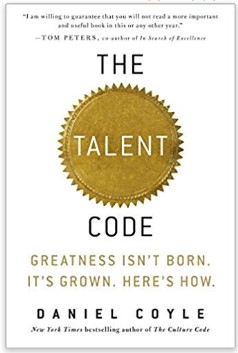
  • A Book Review of “The Talent Code”, by Daniel Coyle

    Price:  Kindle Price CDN $15.99

    Cheapest Place to Buy Amazon.ca

    My Rating:  10/10

    Overview:  As skating coaches, we spend all our time looking for talent, assessing talent, and learning how to cultivate talent.  Intuitively, we all know that talent takes time to grow, and the way to develop talent over time is through mindful practice and dedication. 

    “The Talent Code” takes a microscopic lens and scalpel to the talent myth and dissects every aspect of unlocking unseen potential, in athletes, artists and everyday people.

    As a coach with a background in Kinesiology, and a particular interest in motor learning and neuroscience, this book validated many of my beliefs about talent when I first read it.  Since that reading many years ago, I now spend much of my coaching time teaching the “why” behind skill acquisition, instead of just focusing on the how or technique behind it.  The results have been incredible. 

    If you want to learn the secrets behind skill acquisition and mastery, on both sides of the equation-coach and/or student-then this book is for you.

    Coyle centres much of the book around myelin, and its role in neural development, a theory of skill acquisition that has existed for several years, but is just now becoming main stream.  This concept explains nearly everything that master coaches have known for years such as:

    • Practice doesn’t make perfect; DEEP practice makes perfect.
    • Mastery in a sport requires commitment and passion right from the beginning, if not you won’t want to dedicate yourself to the countless hours of repetition necessary to myelinate the neural pathways required.
    • Primal Cues such as belonging, scarcity and safety can help provide ignition for passion and commitment to a sport and we can tap into these cues and use them right at the grass roots level of talent development.

    This book should be required reading for every coach.  If you want to learn how to get the most out of your students and accelerate learning, this book explains the “why” behind the “how” and will give you strategies for a more accelerated learning process.

    Best Feature of the Book:  Coyle weaves a coherent and exciting narrative thread through the book and documents his journey carefully as he breaks the talent equation into parts and investigates each with intelligence and empathy. The picture he creates of the people he meets along the way is colorful, full of humor, and packed with insight into the human condition. Along the way we get a view of the behind the scenes struggles and triumphs of many of the worlds famous over-night success stories, which we learn were NOT in fact over-night success stories. 

    Just reading the Talent Code gives all of us all hope in how we learn, and that the daily grind of practice and repeated failure does in fact pay off with more success in our chosen endeavours. The Talent Code is equal parts endearing and inspiring, and will keep you engaged until the last page.

    Pros:  The way Coyle breaks down the talent equation into it’s parts and further breaks down each part into it’s various necessary components makes it easy for sports organizations, parents, coaches and athletes to tap into the processes he describes to accelerate their learning curve and develop their talent. The benefits to be gained from utilizing these theories to maximize athletic development, particularly in skating, are incredible.

    Cons:  None.  This is a great book.

    Conclusion:  The Talent Code, by Daniel Coyle, is fun, informative, and trans-formative. The scope, breadth and depth of knowledge you will gain from it, even if it just reaffirms the instinctual beliefs you have always incorporated into your coaching and explains them, is well worth the money.

    If you are in the business of developing talent, in any medium, “The Talent Code” is a must read.

    Have you read the Talent Code? What did you think? Share your thoughts in the comments below, and if you liked this review, please, share with your friends!