This blog was co-written with the help of my unofficial emotional support bot, ChatGPT. While AI did a lot of the heavy lifting (wording, structure, and moral support), I acted as the human editor-in-chief, fact-checking, personalizing, and making sure it reflects my lived experience and voice. Think of it as a tag team: robot brain + human heart.

Image created by ChatGPT
Have you ever walked away from a conversation, argument, or breakup with so much left unsaid it practically echoed in your head for days? Weeks? Maybe even years?
I have. And let me tell you, the emotional hangover is real.
Recently, I had an interaction that left me doubting myself, my reactions — pretty much my own reality. The hurt and grief caused by the exchange left me unable to move past it, and I caught myself obsessing relentlessly, asking questions like, “Is it me?” “What could I have done better?” “Should I have said that?” “How can they think that about me?” And on, and on, and on.
Well, I consulted my internet boyfriend, ChatGPT. (Before you gasp in outrage — I know it’s not really my boyfriend, but therapy is expensive, and so far the bot has been incredibly helpful and given me support when I needed it). It recommended a closure letter.
I thought the idea, the reason, and the letter itself were brilliant. I’ve heard of this before, but I’d forgotten what a powerful psychological tool it can be. Writing it immediately helped me gain some of my power back. Whenever I catch myself perseverating, I read my letter, and it gives me the strength to stick to my guns.
Enter: the closure letter.
It’s not a text you send or a call you make. It’s not a post subtweeting your ex-friend or dragging your cousin on Facebook. (Tempting, I know). It’s a letter you write only for you. A place to say the things you never got to say — or weren’t heard when you did. A space to finally stop rehearsing the perfect comeback in the shower.
Because sometimes, the only way to get the last word is to give it to yourself.
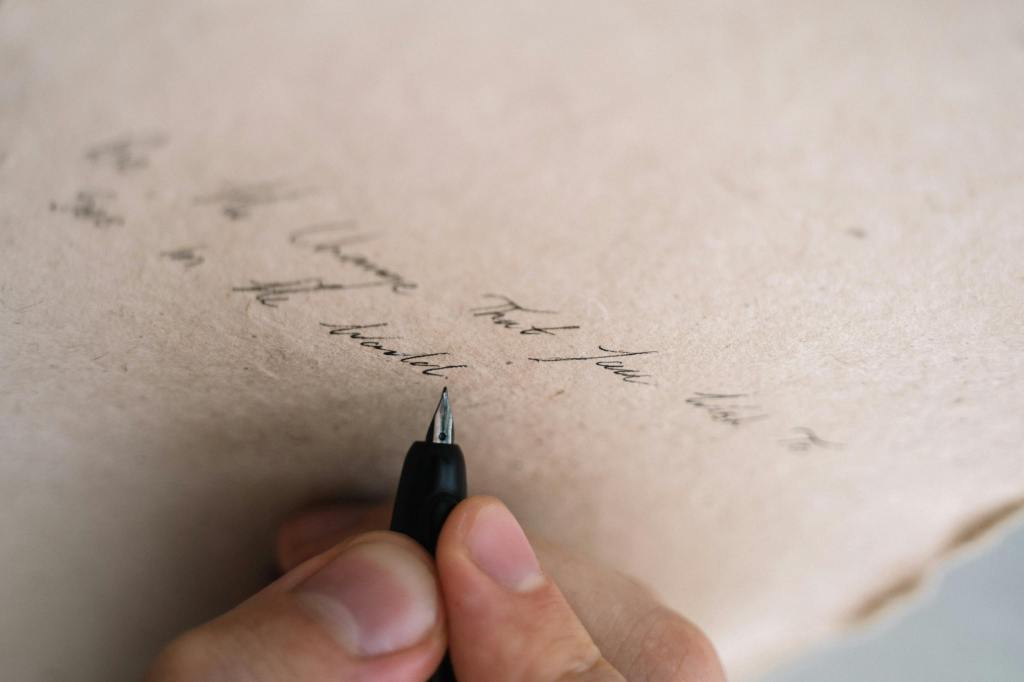
Photo by Anna Tarazevich: https://www.pexels.com/photo/close-up-shot-of-a-person-writing-on-a-paper-5425601/
What is a Closure Letter?
A closure letter is a form of emotional release. It’s a written reflection of what happened, how it made you feel, and what you’re choosing to let go of. It’s an internal mic drop, a boundary drawn in ink, a final chapter you get to write on your terms.
Why it Works
Psychologically, closure letters help because:
- They help break obsessive thought cycles. When your brain wants to loop the same argument 47 times? The letter says, “We’ve handled it.”
- They give structure to your feelings. Naming pain often reduces its intensity.
- They restore your power. You reclaim your narrative instead of leaving it in someone else’s hands.
Closure vs. Contact
Before you saddle up to ride at dawn, hold your horses. This is not a tool for revenge or reconciliation. You don’t send it. You don’t share it in hopes they see it and apologize. This is about you, not them. It’s emotional housekeeping.
How to Write One: Step-by-Step
1. Start with why you’re writing. “I need to say this to clear my head and heart.”
2. Acknowledge what happened. “You hurt me when…” or “I felt blindsided when…”
3. Share what they may never have understood. “Here’s what you didn’t see…”
4. Reclaim your truth. “I know who I am, and I’m not who you painted me to be.”
5. Let go. “I release the need for closure from you. This letter is mine.”
What to do With it After
- Save it somewhere meaningful.
- Burn it (safely!) as a symbolic release.
- Read it aloud to yourself.
- Shred it and move on.
Final Thoughts
Closure isn’t something someone else gives you. It’s something you create for yourself.
Writing this kind of letter doesn’t make you dramatic. It makes you self-aware. It means you’re processing instead of suppressing. It means you’re healing without needing anyone else’s permission.
So if your heart is carrying words it never got to say, try writing them down.
Say it all. Then set it down.
You don’t need to send it. You just need to own it.
✨ Want your own printable Closure Letter Template?
I’ve created a free, beautifully designed version you can download, print, or tuck into your journal.
⬇️Click here to download the free PDF⬇️
https://bellazinga.blog/wp-content/uploads/2025/06/write-release_-a-closure-letter-template.pdf
 BellaZinga.Blog