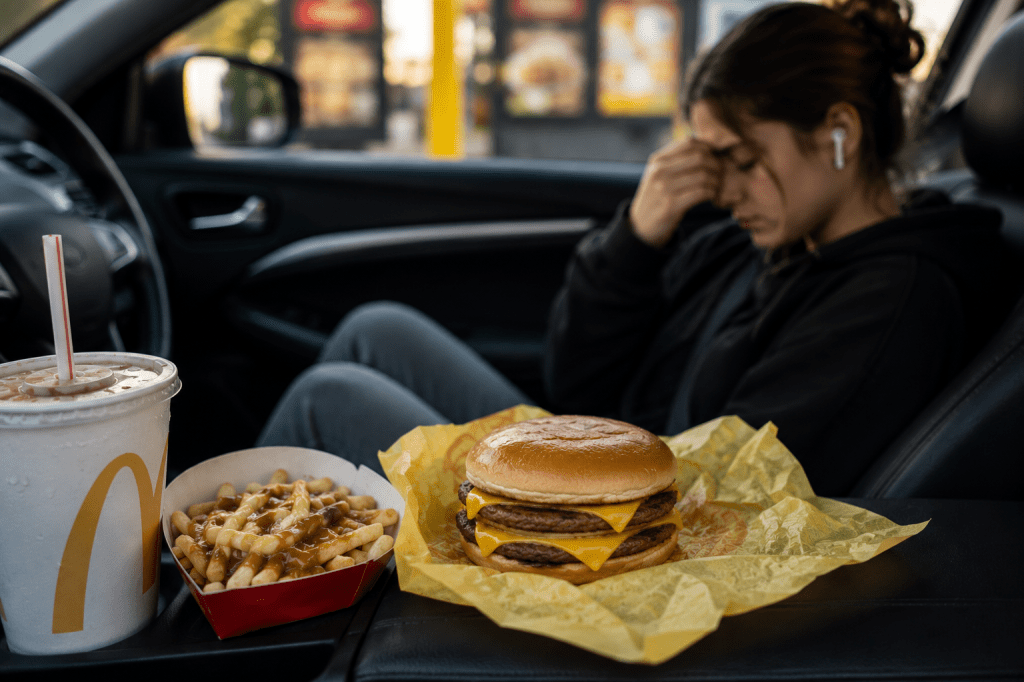
Images created with AI. AI was also used for editorial feedback. All written content is my own.
I’d spent the morning online with my Care Coordinator for the Ontario Autism Program. It was our welcome call, where she introduced herself, explained the core services available, and talked about our upcoming Determination of Needs assessment. We’ve waited five years for this, so I was happy to finally get it, although we still have to wait until November for our DON.
Regardless, it was a heavy hour, because you discuss all the struggles your child has and all the help she needs, instead of bragging about all her amazing strengths and gifts.
After the call, I used my notes to organize a previous document I’d made about the therapies and struggles kiddo has into a new document, according to the 10 domains they would be asking about in the upcoming 3.5-hour-long interview. When I was done, it was pages and pages of information about the struggles my child has fitting into a neurotypical world when she is neurodivergent with additional comorbidities.
One of which is ARFID.
Welcome to the ARFID Safe-Food Universe
Speaking of ARFID, this is where things get interesting.
See, our family struggles with ARFID (Avoidant/Restrictive Food Intake Disorder), and it’s been a lifelong challenge, like many families out there. It’s not just picky eating. In fact, it is much more serious. But, as with many other things relating to autism, this is often misunderstood and characterized as just willfulness or a control issue.
Judgements abound from well-meaning yet ignorant individuals with nary a speck of knowledge about ARFID and autism who feel they can lecture me about just “making her eat it,” “letting her go hungry,” or my personal favourites, “If it was my kid, she wouldn’t do that,” and “You need to set stronger consequences and rules.”
Sure, Jan. Sure.
Anyhoo.
For the past few years, McDonald’s has been one of our reliable staples, even when other “safe foods” come and go in the ARFID universe. (I’ll get to safe foods in a bit.) Specifically, the Double Cheeseburger Extra Value Meal. No pickles or onions on the burger, Coke to drink, and poutine instead of fries.
For LITERALLY the past three or four years, we have been ordering this at the drive-through at our local McDonald’s, so it is safe to say we are regulars. And frankly, given the specifics of the order, I’m not sure why remembering us is such a big deal.
But here’s where things get murky.
The number of times I’ve had to explain that I need THAT specific meal, even when staff members have argued that the EVM wasn’t on the menu anymore…
(Apologies, this happened at the Wellington Street McDonald’s in London on more than one occasion.)
And newsflash: imagine their surprise when, EVERY time they tried to give me a different meal, I walked in, showed them their self-serve kiosk, and pointed out the EVM Double Cheeseburger Meal.
The problem with our local McDonald’s in St. Thomas isn’t with not knowing the EVM meal is available. It’s with always trying to sell me the McDouble Meal.
And I get it. I mean, these kids and adults working there are trying to save their customers money. After all, the McDouble Meal is nearly $5 less than our good ol’ EVM. But the problem is, every time, I have to assert myself that I specifically need the EVM…and of course they think I’m crazy.
What they don’t understand is the severity of ARFID. The fact that it is a classified eating disorder that can make it incredibly difficult for kids on the spectrum to get the nutrients they need, or sometimes to eat enough at all. Some kids with severe ARFID require nutritional supplementation or feeding tubes.
Everything about that meal can be a trigger if it isn’t the same every time. From the name, to the packaging and wrapping, to the way the cheeseburger is made, to how it’s stacked, to the size of the Coke that comes with the meal. Small for the McDouble Meal. Medium with our reliable EVM. Even the mixture of syrup to carbonation in the drink can cause issues, and kiddo will not drink it.
We now have a standing ritual that, before driving away from the drive-through window, we check that we have straws, a fork, and that the mixture of the pop is okay, because if it’s not, I will have to turn around and drive back. And this happens far too often.
The last time this particular carbonation faux pas occurred, it was with a new, young worker at the window. When I hadn’t moved on and had to get her attention, she literally rolled her eyes at me and tried arguing.
Now, I’ve worked in service for 20 years, out in Banff, Alberta, and I know that arguing with customers is never a good idea. But argue and throw attitude she did. This is not to say I wasn’t a little hot under the collar myself by the time I got my third stink-eye from her.
But this is what happens to families supporting neurodivergent kids on the daily.
So, Back to the Plot of the Story
Today, we went through the drive-through. I had just seen news saying Dolly Parton had died, and both kiddo and I were reeling. Needless to say, when I pulled up to order, I wasn’t paying attention.
I did my usual spiel: “I’ll have a Double Cheeseburger Extra Value Meal, no pickles or onions on the burger, Coke to drink, and poutine instead of fries.”
Now, normally I check the screen and make sure it is the EVM. The past six months or so, I’ll order the EVM and the cashier will then ring it in as a McDouble Meal. I correct them, and sometimes they’re great about it. Sometimes they argue.
One lady was super nice. As I was getting a little flustered, she actually said, “I’m not trying to upset you. I just want to get you a good deal.” I appreciated that. And I felt badly, because I don’t want to be THAT person. You know. Entitled. White. Privileged. Yada, yada, yada.
When I got to the window that time, I explained that my kiddo had autism and it was super important that she get the same meal every time, or she couldn’t eat it. Of course, I didn’t explain ARFID, because just explaining about kiddo’s autism felt like a step I didn’t really want to take.
But…and this is the important part… I felt like I had to in order to stop having to constantly explain why I needed this exact meal.
Needless to say, after this exchange, I’ve been getting the correct meal…er…for the most part. They have new staff all the time, but they’re pretty good, though slightly puzzled, when I correct them and insist on the more expensive meal.
Today, however, I fell short. My usual hypervigilance was not at its best, and we drove up to the window to pay.
“McDouble Meal?” the attendant asked.
Now, this is an attendant who always waits on us. She’s lovely. And she has literally taken our money hundreds of times. We order this meal on average three to five times weekly, for the past three years. Do the math.
And I’m pretty sure they have cameras that can see into our car when we order, so she knows us. My daughter is always with me in the passenger seat. And the specific order, always rattled off in exactly the same way, should have tipped her off.
But this time, it didn’t.
So I’m now at the window, paying for a McDouble Meal, worried about how kiddo will take this, wondering if I can try to pass this off as the EVM. I mean, maybe she won’t notice?
Please God, make her not notice.
And I’m frustrated that after spending thousands at this McDonald’s, here I am, yet again, having to go through this constant defence of getting the specific thing I ordered. The one safe meal my daughter will eat TODAY.
And Then Our McDonald’s Burger Came
We pull up to the next window, and the young man is sweet, and he hands me a small Coke.
Not a medium.
I freeze. Like, literally, deer-in-headlights freeze.
He looks at me and can tell something’s wrong. Now my anxiety is kicking in, but I don’t want to cause a scene. So I turn to kiddo and ask her if this size is good. She says yes, but she’s starting to get nervous. I’m now on high alert, looking for signs of a meltdown, which could occur.
The young man asks me to pull up to the next window to get our food. As we wait, I’m trying to explain that the poutine is the same, and the burger should taste the same.
But kiddo is getting upset.
And sure enough, the burger comes.
Different wrapping. Different look. Different feel.
FUCK.
And now she’s crying and apologizing. She’s telling me she’s sorry, but she can’t eat it, and she’s being made to feel like there’s something wrong with her because she can’t.
So I reassure her as I drive in a circular pattern back into the drive-through line and pull up to order again. The same person takes my order.
“McDouble?” she says, or something along those lines.
And I say something like, “No. I want the….(insert spiel here)…remember, that’s what I ordered the first time. The EVM. Have you heard of ARFID? It’s an eating disorder, and it makes it hard for kids with autism to eat certain foods. She has to eat the same foods every time, and the EVM Meal is one of those. So I’ve got an upset kid with autism beside me because we didn’t get the order right the first time.”
I’m not yelling. But I’m blunt. And I offer no other explanation.
Silence.
I roll up to the window and pay. Frost. Silence. Might as well have been at Wendy’s.
I roll up to the next window. We get our medium Coke, and the young man is somber and respectful and subdued. We roll up to the third window to get the meal we originally wanted, after paying an extra $10 for a meal I didn’t order, didn’t want, and have a history of having to fight for.
I might also mention that at.no.time.did.anyone offer to refund us our money for the mistake in the first order.
The Drive Home
Sure enough, I’m replaying this all the way home from St. Thomas to Port Stanley. Feeling, in turn, ashamed for not being kinder, frustrated because I am ALWAYS having to explain a simple order to the people in the drive-through, and wondering whether, moving forward, we should even continue to go to this McDonald’s.
What is very clear to me is that there is a gap in understanding somewhere. There isn’t enough understanding of autism and invisible disabilities, there isn’t enough understanding of ARFID, or, probably, both.
So now I’m in the position of thinking maybe I should go in and explain why this particular meal is necessary.
But will they believe me?
How many times have parents of kids with ARFID been disbelieved?
And here’s the other thing. My kiddo doesn’t “look autistic.” She’s beautiful, tall, and normally happy as she sits next to me in the passenger seat, most times with earbuds in to help her deal with her sensory sensitivities. She doesn’t “look” like she has an eating disorder.
And I’m sure after today, everyone on the McDonald’s side thinks I was being a complete and utter bitch.
Frankly, I’m soooo tired of having to explain my daughter’s disability to people, because I have to do it so often. And all I wanted was to get my daughter the fucking meal I ordered so she’d eat something substantial for the first time that day.
So.
In an effort to advocate for others out there who may feel this same frustration, and in an effort to explain why this particular meal is so important, here’s some information about autism and ARFID that I wish more people knew.
And YES…I AM talking to you, McDonald’s employees and managers. If you know better, maybe we can ALL do better, myself included.
A Quick Primer on Level 1 Autism and ARFID
First, Level 1 autism does not mean “Autism Lite™.” It doesn’t mean “barely autistic.” It doesn’t mean someone only has a little bit of autism. And it certainly doesn’t mean the disability only exists if you can recognize it through the passenger-side window of a car.
Level 1 autism means a person requires support. My daughter can talk. She’s smart, funny, beautiful and sarcastic. She can also experience significant sensory sensitivities, anxiety, difficulty with unexpected changes, and a nervous system that can become completely overwhelmed by something another person might barely notice.
Which brings us to ARFID.
ARFID stands for Avoidant/Restrictive Food Intake Disorder. It is an actual eating disorder. It isn’t picky eating, bad parenting or manipulation. And it isn’t something you fix by saying, “She’ll eat when she’s hungry enough.”
Sure, Jan.
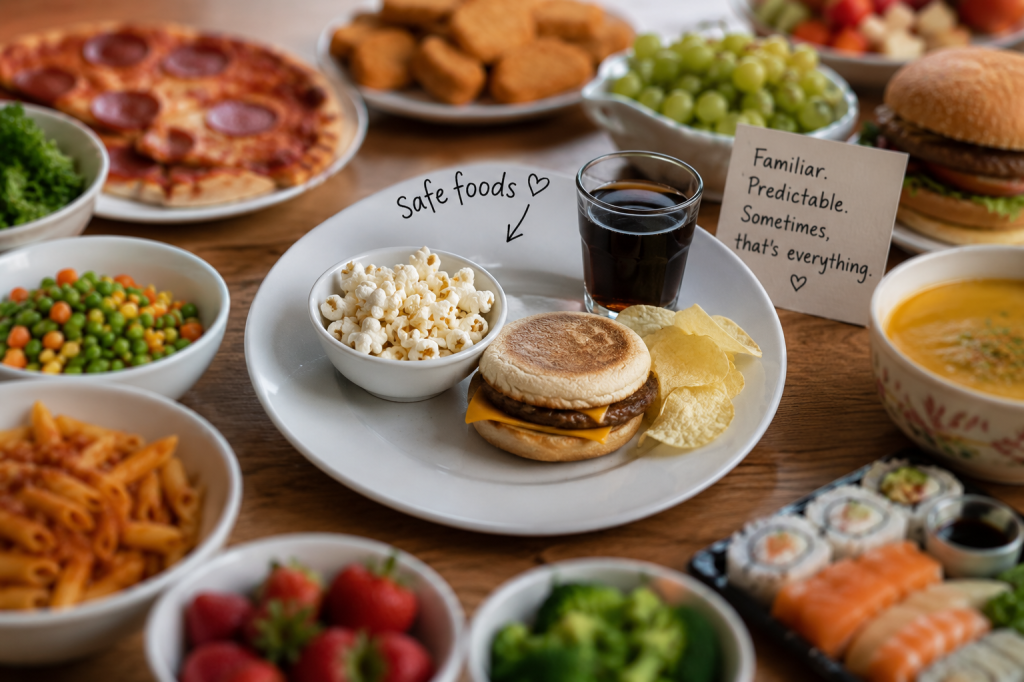
For people with ARFID, things like taste, smell, texture, temperature, appearance and consistency can determine whether a food feels safe enough to eat. Things most of us wouldn’t even think about, like packaging, presentation, drink size or whether something looks slightly different than usual, can matter too.
And safe foods can disappear. That’s one of the particularly shitty parts of ARFID. Something your child reliably ate for months, or even years, can suddenly become something they simply cannot eat.
My daughter’s safe-food list is already severely limited, so when she has a substantial food that is safe, I protect the ever-loving shit out of it.
Would I prefer that safe food to be grilled salmon, broccoli and quinoa? Absolutely.
The ARFID gods have declined my request.
Instead, one of her safe foods is a McDonald’s Double Cheeseburger Extra Value Meal, no pickles or onions, Coke, poutine instead of fries.
And “basically the same thing” doesn’t necessarily mean the same thing to an autistic brain with ARFID. Different wrapper, different drink size, different presentation, different appearance, something assembled differently, even Coke with a different syrup-to-carbonation ratio.
To most people? Meh.
To her nervous system? This isn’t the food I know. I can’t eat this.
And she isn’t choosing that response.
Today my daughter sat beside me crying and apologizing because she couldn’t eat a hamburger.
Think about that.
She wasn’t throwing a tantrum because she didn’t get what she wanted. She wasn’t demanding I buy her something better.
She was apologizing because her disability wouldn’t allow her to eat the food sitting in front of her.
That’s ARFID.
That’s why the wrapper matters. That’s why the size of the Coke matters. That’s why I check the carbonation. That’s why I will drive around and buy the entire damn meal again.
And that’s why, when someone helpfully tries to save me five bucks by substituting a cheaper meal, I keep saying, “No, thank you. I need the Double Cheeseburger Extra Value Meal.”
Trust me. I would LOVE to save the five bucks. I’d love to save the whole damn amount and make her a sandwich at home.
But feeding a child with ARFID isn’t about winning a parenting battle. Sometimes it isn’t even about creating the nutritionally perfect meal. Sometimes the goal is simply getting enough food into your kid.
And right now, McDonald’s happens to make one of the increasingly few substantial meals my daughter can reliably eat.
And Finally, My Part in This
I also want to be fair. I could have handled today’s interaction better.
I was frustrated. I was worried about my daughter. I’d already spent the morning cataloguing pages and pages worth of the ways she struggles in a world that wasn’t exactly designed with her in mind. Then I watched her cry and apologize because she couldn’t make herself eat a hamburger.
So yes, when I went around that drive-through the second time, I was blunt. Probably too blunt. And to the employee on the receiving end of that frustration, I’m sorry.
She didn’t know what had happened inside my car after we left that first window. She didn’t know about ARFID. She didn’t know about my morning, our five-year wait for autism services, the super-long document, the shrinking safe-food list, or the crying teenager sitting beside me. She just knew an irritated woman had come back through her drive-through.
I can own that.
But I also think there’s something worth learning from what happened. I don’t expect every McDonald’s employee to understand autism, ARFID, sensory processing or restrictive eating disorders. I don’t expect them to understand why on God’s green earth I’m insisting on paying MORE MONEY for what appears to be almost exactly the same hamburger.
I just need them to believe me when I say I need the thing I ordered.
I shouldn’t have to disclose my daughter’s disabilities through a drive-through speaker to justify buying a particular cheeseburger. And she shouldn’t have to “look autistic” or “look like she has an eating disorder” for her needs to be real.
Sometimes when someone says, “No, thank you. I know that’s cheaper, but I need the meal I ordered,” there may be a reason you can’t see.
You don’t have to understand it. You don’t even have to know what it is.
Sometimes, you just need to give them the damn cheeseburger.

