Tag: love

  • I Got My Miracle. So Why Am I Grieving Infertility Again at Menopause

    I Got My Miracle. So Why Am I Grieving Infertility Again at Menopause

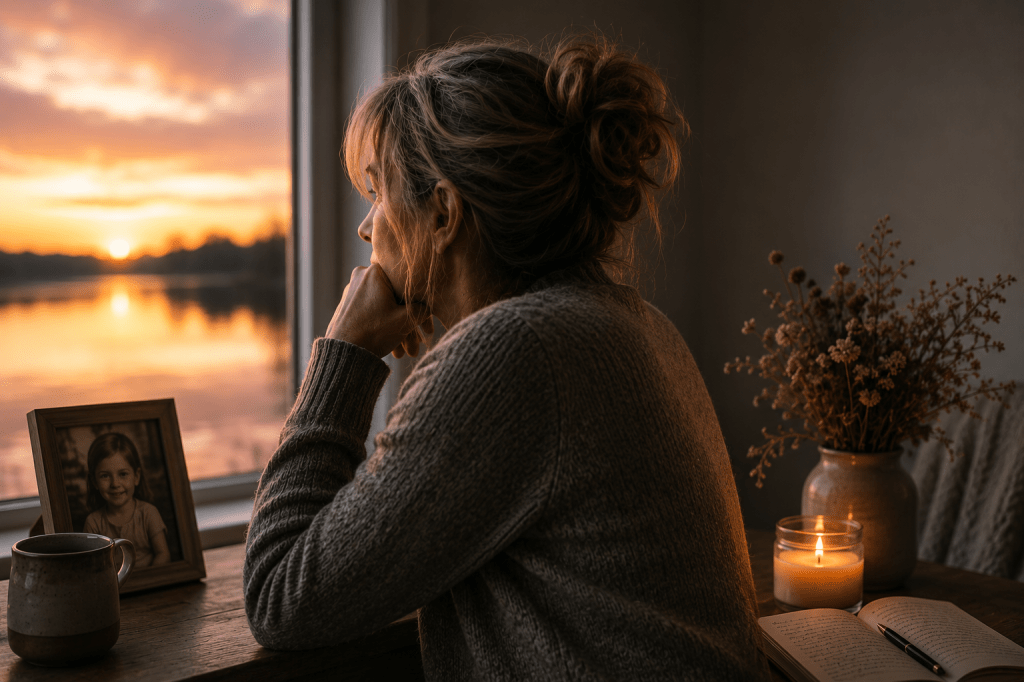
    Images created by AI

    I’ve been thinking a lot about babies lately.

    Wait. That’s not right.

    Rather, whenever I see anything, anywhere, having to do with babies, it’s hitting me a lot harder than it should. Baby clothes on Facebook, a storyline about giving birth on TikTok, Maggie losing her baby on Sullivan’s Crossing. Actually, now that I think about it, Maggie even getting pregnant in the first place hit even harder.

    It took me a while to figure out why this old pain is resurfacing. You see, as many women do, I struggled with infertility.

    But let me start at the beginning.

    I Always Knew I Wanted to Be a Mother

    From the time I was a little girl, I always knew I wanted to be a mother. In fact, I had my life all planned out. I’d teach skating in the early mornings, after school, and on weekends. My husband would have a regular 9–5 and he’d watch the kids while I went out and worked. It would be perfect for staying home with them until school started, and then someone would always be there to run them to their sports and after-school activities when they were done school.

    You see, I grew up in a family of five, me and my two younger brothers. And there was always noise, movement, family dinners, and endless travel to sports, our cottage, and family vacations. We were busy, it was bustling, and yes, it was soooo annoying in my younger years. Even though I’m not particularly close with my brothers now, I still know they’re there to talk to if I need them. When push comes to shove, they’d always be there for me.

    I wanted that for my kids. I didn’t just want children. I wanted a family. A drive-each-other-crazy, beat-each-other-up, but-don’t-you-dare-talk-smack-about-my-sister kind of family.

    I was thinking maybe three, or four, depending on time, and of course money. I wanted to see myself in my children, watch them grow and become little humans, help them on their journey, and be there for them in every way I could to help them have a happy, fulfilling life. To impart lessons, maybe spare them some of the pain I felt growing up (I know, fat chance there), and then eventually see marriages or long-term relationships, grandchildren, and a legacy of family after me.

    I wanted that so badly.

    And of course, there were babies. Just the act of carrying a child, of being able to give birth, create life. And yes, I know it takes a sperm and an egg. But to me, it was always the woman who did the majority of the work, the carrying, the parenting in the early years, simply because that’s how nature worked out the deal.

    The smell of babies. The feel of them. I would literally have sold my soul to hold my baby in my arms.

    So when I met my potential husband back in 1999, I didn’t mince words. I was a woman on a mission. On our first date I made it clear that I wasn’t getting any younger (I was 32ish) and I wanted children, so if he wasn’t down with that, then don’t waste my time.

    I know, right? Cart? Horse?

    Yet, he stuck around. Kudos to him.

    Within a few months we were living together, and knowing we were committed, and knowing my thoughts on children, not much care was given to pregnancy prevention.

    And a year passed. Still nothing.

    That little voice in my head, the one that had always been worrisome, started whispering to me that maybe there might be something wrong with me. Over the course of my life I’d had my fair share of sexual partners and, while safe sex and birth control were always a priority, mistakes HAD happened. And yet, no pregnancies.

    (Don’t judge. I’m a sex-positive girl.)

    Suddenly that whisper became more strident. I wasn’t able to turn down the volume. So, I got an ovulation kit and started charting.

    And another year passed. Still nothing.

    And the charts weren’t looking good.

    Of course, I told myself I wasn’t a fertility doctor, so I was likely reading them wrong. My doctor advised me to cut back on stress, so I stopped waitressing and working my other side hustle and just focused on coaching. I kept in the best shape I could. I kept charting. And of course, we got engaged, then married.

    So, I told myself, planning a wedding and getting married would stress ANYONE out. There’s no reason to be worried.

    But that whisper had become a knock on my awareness, insisting it needed to be heard.

    When Infertility Became Real

    So, we went to see a fertility doctor. Both of us. Together. And the usual tests ensued.

    I remember going in for one, sitting in the waiting room in my gown at the hospital, surrounded by other women. All of us fearful. All of us wondering how much this would hurt.

    And it hurt.

    I wondered why we weren’t given more painkillers, or put under for these procedures. But that, my friends, is the topic of another blog on inequality in medicine.

    For the time being, suffice to say it was a painful, isolating experience that women didn’t talk about. See, there’s shame surrounding the fact that you can’t get pregnant.

    For me, being a woman was connected to the divine right of creation. It’s our sacred space, separate from men. To nurture. To guide. I’ve never felt comfortable in the Christian faith, and I felt better learning about religions that recognized the feminine aspect of the divine. The Goddess. Whatever name you want to give that entity in your life.

    So to be unable to conceive life felt like I wasn’t feminine. I wasn’t a woman.

    I was faulty.

    Of course, the world continues to turn, regardless of our struggles. So during this time my sister-in-law was pregnant again with her second. My friends were getting pregnant again with their seconds, or thirds. Everywhere there were baby showers, shopping for baby clothes. It was like the universe was taunting me, holding this dream I would have given anything for just out of my reach.

    And then the results.

    I still remember the specialist at the clinic entering the room, sitting down with my husband and telling us it was me. I remember my husband trying to be funny, looking at me and saying something like, “See, I knew it was your fault.”

    (Side note: I left him a few years later. Surprise, surprise.)

    I won’t share the details, but the prognosis wasn’t good. Even with trying in vitro, my chances were only around 12% at best. We tried fertility drugs that summer, which resulted in a deep depression, crippling anxiety, and a near psychotic break and suicidal ideation for me.

    I’d share more about this, but frankly, I went to such a dark place during that time that it’s difficult to talk about. I was willing to do anything to realize my dream of being a mother and, in the end, it nearly cost me my life. I had to let go of that dream because it was killing me. It was also one of the final blows to an already crumbling marriage.

    I wish I could explain the hollowness you feel. It’s there all the time. Whenever you see families together. Pregnant women. It’s a pain that seldom goes away, although you do your best to focus on other things.

    And I know I’m far from alone. About one in six people experience infertility in their lifetime. That’s an awful lot of people walking around carrying some version of this story.

    I was holding onto motherhood as if I were hanging from a cliff, one-handed, my bloodied fist wrapped around the rope that was keeping me from falling. And so, I let go. Slowly opening my fingers, one at a time.

    And I fell.

    I threw myself into my work and, when my husband and I broke up, into a bunch of meaningless relationships as I tried to sort out my social life.

    Then, My Miracle

    Adult hands gently holding a baby's tiny hand in warm morning light, symbolizing the joy and tenderness of motherhood.

    Then, my miracle.

    I got pregnant. By accident.

    I’ll never, EVER, be able to express or explain the joy, elation, disbelief, or adrenaline you feel when you are FINALLY staring at two dark stripes on a pregnancy test after peeing on literally hundreds of them.

    I will never forget that night as long as I live. Every detail of that night and the days that followed is etched into my memory as one of the most profound experiences of my life.

    I was finally pregnant.

    That little soul I had been waiting for for so long, that I’d been praying for, dreaming of, longing for, crying for…was finally here.

    I will take that memory to my deathbed and beyond.

    And she was my miracle. She is my miracle every day.

    It hasn’t been easy, because I’ve been doing it alone. But I am so grateful to have her in my life, and watching her grow and become this beautiful, funny, kind, smart, insightful, powerful young woman is an honour I never thought I could have.

    You’d think having my miracle would have erased the grief of the children I couldn’t have.

    But it’s back. And it’s strong.

    That sorrow for the family I could have had. The fear that my child will be alone, with no brothers or sisters to turn to when I’m gone, literally guts me.

    The feeling I’ve failed her because I couldn’t give her that perfect family. Family dinners. A present father. Vacations filled with sibling fights and taunting, but in the end, togetherness.

    It’s such a fear. It keeps me up at night. The thought that she might experience the kind of loneliness I’ve felt for so much of my life is devastating to me in ways I’m not sure I can explain.

    I know having brothers or sisters wouldn’t guarantee she’d never be lonely. Hell, I’m living proof of that. But I wanted her to have people who shared her childhood. People who would remember where she came from. People she could turn to someday when I’m no longer here.

    Why Is My Infertility Grief Coming Back at Menopause?

    And I finally realized why, suddenly, I’m feeling all these feelings again. Why that voice is knocking at my soul. It’s because I’m now four months into the year without a period that marks the transition into menopause.

    I’m losing my ability to conceive a child.

    Knowing something and realizing something are two different things. Before menopause, you know that you have the ability to create life. The possibility is there. And with possibility, there is always hope. The door is never completely shut.

    But now, my ovaries are closing up shop. Parts of me that were once fertile, capable of creating and nurturing life, are reaching the end of that purpose. And it feels like a death.

    Oh, I know…dramatic much?

    But it’s like I’m moving from the Mother into the Crone period of my life, and I’m not ready for it.

    And I’m surrounded by people who have bigger families. Every get-together, every event, I see and hear them talking about their many children.

    And it’s just me and my daughter.

    Our little island of two.

    It’s like this cocktail of sadness, failure, guilt, and what could have been if only, maybe, I’d done things differently. I fear for her. And I’m mourning the family that could have been.

    Because now, that door is closed.

    For better or worse, I have to move forward and carve a path for her and me. All those feelings I’d thought I’d dealt with had apparently just been percolating below the surface, waiting for the right moment to well up again.

    What Will I Leave Behind?

    If I’m not able to have babies and be the matriarch of a big family, what am I? Who am I? What will I leave behind? Will it be enough for my child to stand on her own when I’m gone?

    I don’t have any answers. I wish I did.

    And I know that I’m not alone in this grief and this struggle. So, for now, I’m just going to sit with this. Allow myself the tears and the pain and tell myself it’s not forever.

    Just for now.

    Then I’ll focus on ways to create family beyond the one we’re given by blood. Friends who will be around for my child when I’m gone. Aunts and uncles and cousins.

    And maybe legacy doesn’t have to mean a long line of children and grandchildren who carry my DNA.

    I hope that after I go, I will have changed a few lives. That by being in my daughter’s life, I’ve taught her some things about how to weather the storms. How to love herself. How to thrive, despite life always trying to grind us down.

    And maybe a piece of me will live on in my friends or my students. Maybe I gave them some joy, or humour, or happiness at some point in their lives that they’ll carry forward.

    I guess that’s all any of us can ask.

    I keep remembering a quote I used to have hanging in my coaching locker. I thought it was Ralph Waldo Emerson then. Apparently, it wasn’t. I used to read it every day before I stepped onto the ice, and I haven’t thought about it in years.

    Part of it said that success was knowing that even one life had breathed easier because you had lived.

    Maybe I need to hang it up again.

    Maybe that’s enough.
  • My Teenager Politely Dismantled My Gen-X Spiritual Universalism

    My Teenager Politely Dismantled My Gen-X Spiritual Universalism

    Full disclosure: I was emotionally exhausted and wanted to capture this while it was still fresh, so I stream-of-consciousness dumped everything into ChatGPT and had it help organize my thoughts into a readable post. Usually I write the majority of my content myself and use “Chatty” more for editing, structure, brainstorming, and helping my ADHD brain untangle itself. 

    There are moments, as a parent of a struggling neurodivergent teen, where you suddenly realize your child has been growing the entire time…just not always in the ways society measures.

    Kiddo had her first cardiac stress test today. Which sounds adorable if you phrase it like, “baby’s first stress test,” but apparently cardiology frowns upon that kind of humour.

    She came home exhausted. Pale. Achy. Just completely wiped.

    Earlier in the day I’d gently suggested maybe she crack open her math book for a bit. Later, when I went downstairs to check on her, there was still no math happening.

    Instead, she looked at me with this sad little face and said, “Mom…am I a failure? I want to do school and math. I just can’t.”

    And honestly? That sentence punched me directly in the soul.

    Because I think a lot of neurodivergent kids eventually start confusing “I can’t right now” with “I am bad.”

    And the truth is, this kid has been fighting through exhaustion, chronic nausea, dizzy spells, suspected POTS symptoms, executive dysfunction, anxiety, burnout…all while still trying to figure out who she is as a person.

    So I told her there was no pressure. That she was sick. That struggling doesn’t make her a failure.

    Then somehow, as conversations with teenagers do, we went from discussing math avoidance to tattoos.

    Naturally.

    She pulled up her tattoo board. We debated what I’d theoretically allow when she turns sixteen. I joked that my bf offered to take her for her first tattoo one day, which honestly feels both sweet and mildly illegal somehow.

    At one point she showed me a dragon tattoo, and I said something about spirit animals.

    Friends.

    When I tell you this child immediately launched into a nuanced discussion about closed Indigenous spiritual practices, colonialism, cultural appropriation, and why my Gen-X “we’re all spiritually connected” worldview maybe wasn’t the progressive masterpiece I thought it was…

    Humbled. Absolutely humbled.

    At one point I found myself defending things I believed twenty years ago while my chronically ill teenager calmly cross-examined me from under a blanket nest.

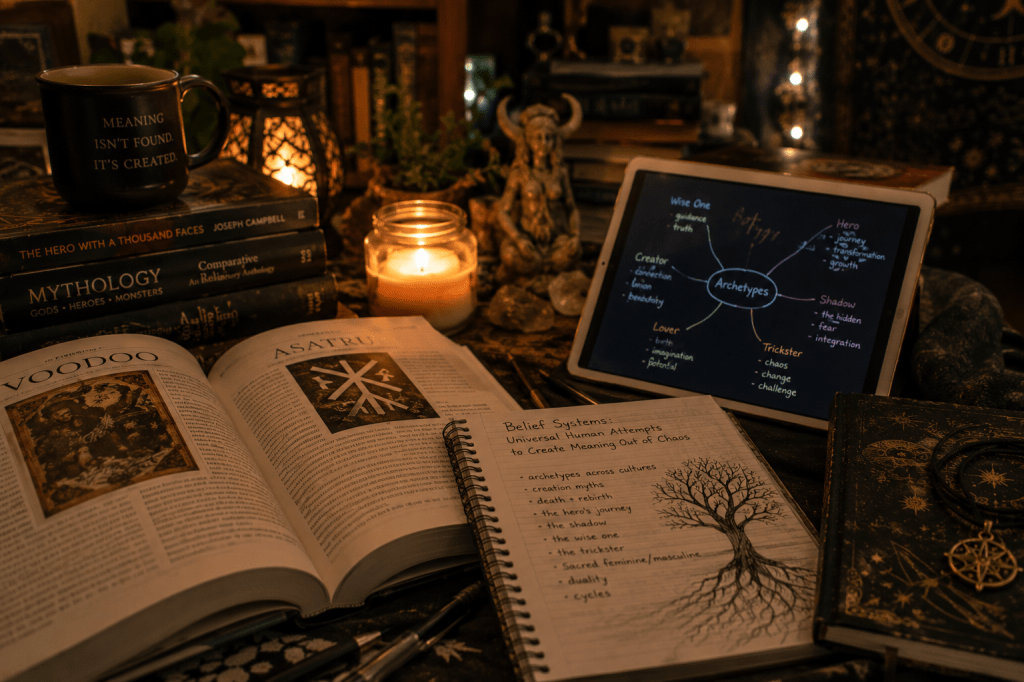
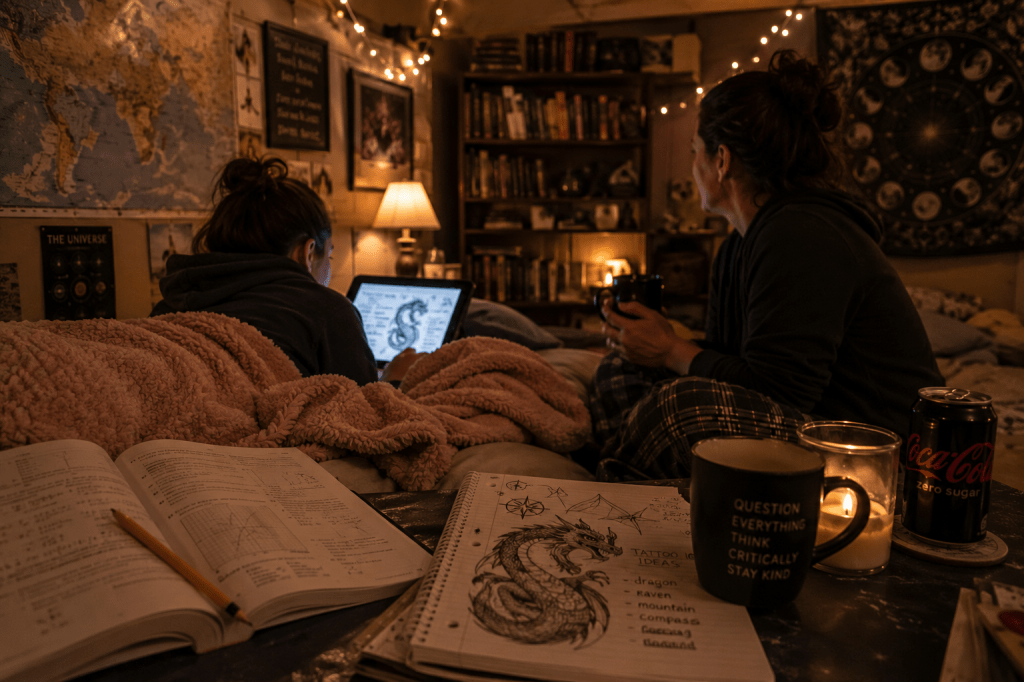
    A warm, candlelit study space filled with books, notebooks, and symbolic objects related to mythology, spirituality, and comparative religion. An open tablet displays a diagram of archetypes while handwritten notes explore belief systems and meaning-making throughout human history. Cozy lighting, celestial details, and scattered texts create a reflective atmosphere of intellectual curiosity and philosophical discussion.

    We somehow ended up discussing Voodoo, Asatru, comparative religion, archetypes throughout human history, and whether belief systems are universal human attempts to create meaning out of chaos.

    You know. Standard post-cardiac-stress-test mother-daughter bonding.

    And here’s the thing: She won the debate. (Who am I kidding, she wins every debate!)

    Not because I suddenly agreed with every point she made, but because she was thoughtful. Informed. Curious. Nuanced. Passionate.

    And because midway through the conversation, when I made a facial expression she didn’t like, she calmly said: “I don’t like when you make that face. It feels condescending.”

    No meltdown.
    No screaming.
    No escalation.

    Just direct communication.

    Then she told me she was proud of herself for setting a boundary calmly.

    And I realized I was proud too.

    Because when your kid is struggling with school, mental health, chronic illness, burnout, executive functioning, or just surviving day to day…it’s very easy to start measuring their worth by productivity.

    Did they do math?
    Did they clean their room?
    Did they attend class?
    Did they hand things in?
    Did they function?

    Meanwhile, your child is quietly becoming.

    Becoming thoughtful.
    Becoming articulate.
    Becoming emotionally aware.
    Becoming someone capable of critical thinking and self-reflection and ethical nuance.

    Those things count too.

    Sometimes I think parents like me get so focused on visible milestones that we miss the invisible ones happening right in front of us.

    Tonight, my daughter didn’t do math.

    But she also politely dismantled her Gen-X mother’s spiritual universalism after a cardiac stress test.

    And honestly?
    That feels like development too.

    I’d love to hear about a moment recently where your child surprised you, connected with you, or reminded you who they’re becoming underneath the struggle.

  • Autistic Overwhelm After a Stressful Day: It’s Not About the Cheeseburger

    Autistic Overwhelm After a Stressful Day: It’s Not About the Cheeseburger

    I wasn’t the best version of myself yesterday, and I’m having trouble letting myself off the hook for it.

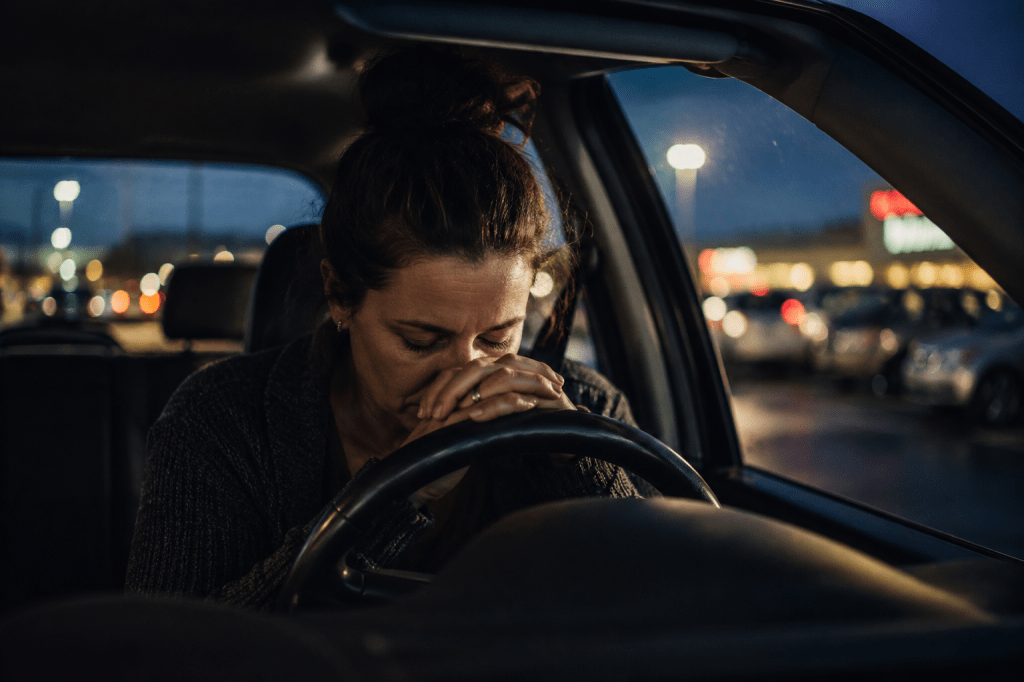
    In the span of about 45 minutes, I lost my temper and spoke harshly to two separate service workers, and I’m deeply ashamed of my behaviour. I pride myself on treating people the way I want to be treated, with kindness, grace, empathy. I’ve spent most of my life trying very hard to be a good person.

    Yet in those moments, it was like I was outside myself looking in.

    I could feel my cheeks flushing, everything getting hot, my heart rate ramping up. My breathing changed. My thoughts…well, “racing” doesn’t even begin to cover it. I couldn’t hold onto them long enough to put two together coherently. Speaking in full sentences suddenly became difficult.

    And here’s the kicker: I lost it over such small, innocent things. Things that most people, and honestly even me on a good day, wouldn’t stress over at all.

    But in those moments, all my brain could perceive was:

    “Danger! Danger, Will Robinson!”

    I was ashamed immediately afterward. I apologized. More than once. Because neither person deserved that.

    But I still can’t let it go.

    And what I’m beginning to realize is this wasn’t really about McDonald’s or Walmart. This is part of a pattern that stretches throughout my entire life, one that has profoundly affected my mental health, my relationships, and the way I move through the world.

    Let me explain.

    Already Running on Empty

    Yesterday had already been a lot before the cheeseburger meal incident even happened.

    I was stressed about money because my car has been making a weird noise and I’m trying to figure out how to cover everything until child support and my next paycheck arrives. Kiddo has been dealing with some ongoing health issues that have been scary, complicated, and exhausting to navigate, and the doctor’s appointment we had just come from required me to do most of the heavy lifting and advocating yet again.

    If you’re a parent of a medically complex or neurodivergent kid, you know the drill. You walk in hoping someone will connect the dots, listen carefully, maybe even take some initiative…and instead you leave feeling like you just performed a one-woman TED Talk while simultaneously trying to remember symptoms, timelines, medications, and not sound “too emotional” while doing it.

    At the same time, Dad has been very ill for a long time now, and when he has a few bad days in a row, it can feel catastrophic. Mom is exhausted and emotional. I still had work waiting for me at home. The grass needed cutting. My brain already felt like a browser with 47 tabs open and one of them blasting music I couldn’t find.

    I’m also starting to realize just how much chronic stress and possible autistic burnout lower my ability to cope with even minor disruptions.

    The Cheeseburger Meal

    So we stopped at McDonald’s.

    Now, for context, kiddo is autistic and likes sameness. Predictability matters. We’ve been ordering the exact same meal for probably a decade. Literally.

    Extra Value Double Cheeseburger Meal.
    No onions.
    No pickles.
    Coke.
    Substitute poutine.

    Same order. Same McDonald’s half the time. Often the same employee.

    So when the employee suddenly asked, “Did you mean the McDouble?” my brain completely short-circuited.

    I said no, the Extra Value Meal, and she said she just wanted to make sure I got the right thing. Which was kind and reasonable. But suddenly I felt confused and flustered and overwhelmed all at once.

    Because a few years ago, at another McDonald’s, I had gotten into a weird argument where an employee insisted they didn’t have Extra Value Meals anymore even though I had literally ordered one there the week before. Another voice came over the speaker. They argued with me. I ended up ordering something different, then parked and went inside only to discover the Extra Value Meal still sitting there on the self-order screen like a tiny greasy monument to my growing insanity.

    So yesterday, that memory came flooding back instantly.

    And suddenly this wasn’t just:
    “Which burger did you want?”

    It was:
    “You’re confused.”
    “You’re wrong.”
    “The script changed.”
    “You’re not being understood.”

    I know how ridiculous that sounds written out. Trust me. But my nervous system did not interpret it as a minor inconvenience. It interpreted it as a threat.

    So I clarified I wanted the Extra Value Meal, and when I was answered with, “They’re all Extra Value Meals” I snapped back, “I’ve been ordering this same thing every day for five years, I know you have it.” 

    Side note: it was probably closer to ten years, but remember…confusion? Racing thoughts? Check and check.

    I’m learning that this kind of distress around sudden change and disrupted expectations is actually pretty common in routine disruptions in autism.

    By the time I got to the window, I had calmed down enough to apologize. I explained that kiddo is autistic and needs consistency, and the employee was actually lovely about it.

    But I drove away thinking:
    What the hell was that?

    Primed

    Then came Walmart.

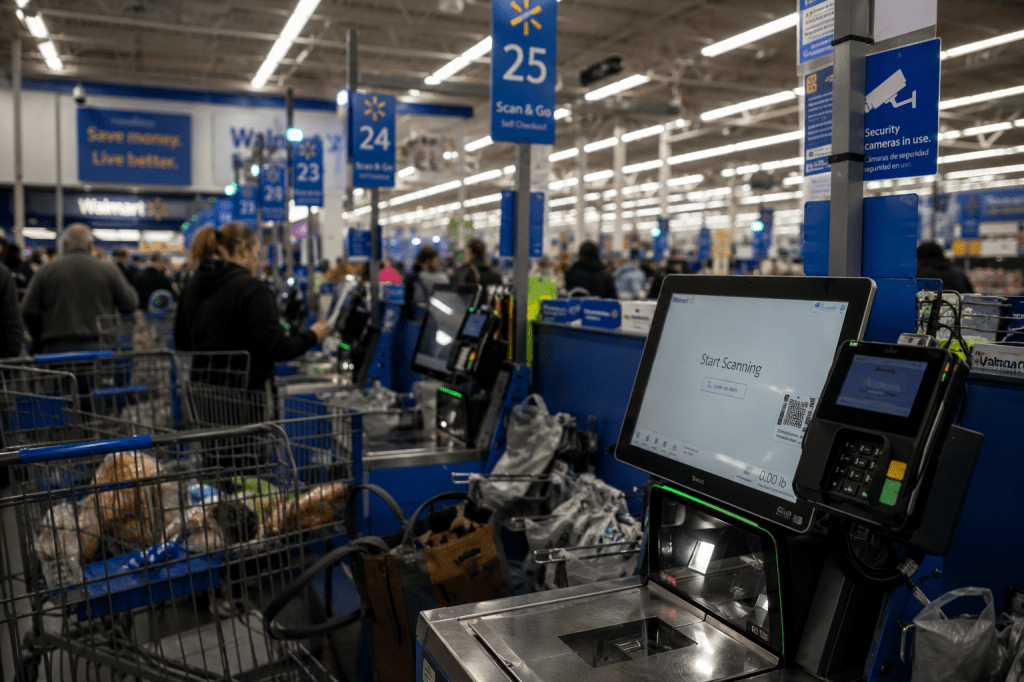
    Now let me tell you something about Walmart self-checkout.

    I hate it.

    Every time I go, my anxiety increases exponentially.

    The bustle of people. The carts. The noise. The constant blips from every self-scanner going off at once. I can never tell which sounds belong to my machine and which belong to someone else’s. My brain doesn’t filter them out.

    And the heat.

    Oh my god, the heat.

    I struggle badly with overheating, especially when I’m stressed. It’s not uncommon for me to take off my coat and sweater while scanning groceries because I suddenly feel like I’m boiling alive under fluorescent lighting.

    And naturally, I have a system.

    Of course I do.

    I position the cart just so. Purse on the floor instead of in the cart because someone might take it. Coat off. Sweater off. Scan carefully. Check the screen after every item because with my luck, one won’t scan and I’ll somehow get accused of shoplifting, another weirdly intense fear of mine.

    I make little piles after scanning so I know what goes into which bag. Then I bag. Then I reload the cart. Then I double-check the screen. Then I pay.

    When I finally walk through those sliding doors into the parking lot and feel the breeze hit my skin, I have NEVER. BEEN. SO. GRATEFUL. to breathe outside air.

    Even if it’s a Walmart parking lot.

    I’m starting to realize how much of this was probably sensory overload mixed with hypervigilance and an already overloaded nervous system.

    So before the interaction even happened, I was already primed. My nervous system was already overloaded, and I still hadn’t recovered from our McDonald’s kerfluffle.

    Under Surveillance

    Then the scanner glitched.

    The first item scanned twice. No problem, I thought. Honest mistake. The employee came over, removed it, and then had to review the video footage to confirm what had happened.

    Which, rationally, I understand.

    But emotionally? My nervous system immediately clocked it as:
    You’re under surveillance.

    Then later, while scanning cat food, another item accidentally scanned twice. Again.

    Only this time, the machine froze and flagged an error. Before I even had time to explain, another employee was there reviewing footage again while I stood there trying to explain that I was literally holding four cans while the screen showed five.

    And I could feel the threat response escalating in real time.

    Not because anyone was actually accusing me outright, but because my brain had already shifted into hypervigilance mode.

    The first video review primed me.
    The second one confirmed the fear.

    By the time the employee kept insisting the scan was correct while I stood there counting cans in my hand like a sweaty, overstimulated Sesame Street character, something in me snapped.

    Not in a dramatic screaming way.

    But sharply.
    Harshly.

    “What are you not getting? I have four in my hand.”

    Even writing that makes me cringe.

    Then, because the universe apparently enjoys irony, the machine flagged me again while I was bagging my groceries. Another employee came over and explained the system had become confused by the placement of my reusable bag.

    At this point I was internally one blinking fluorescent light away from a full system shutdown.

    Later, as I was leaving, I found the first employee again and apologized.

    Because she didn’t deserve that either.

    The Shame Spiral

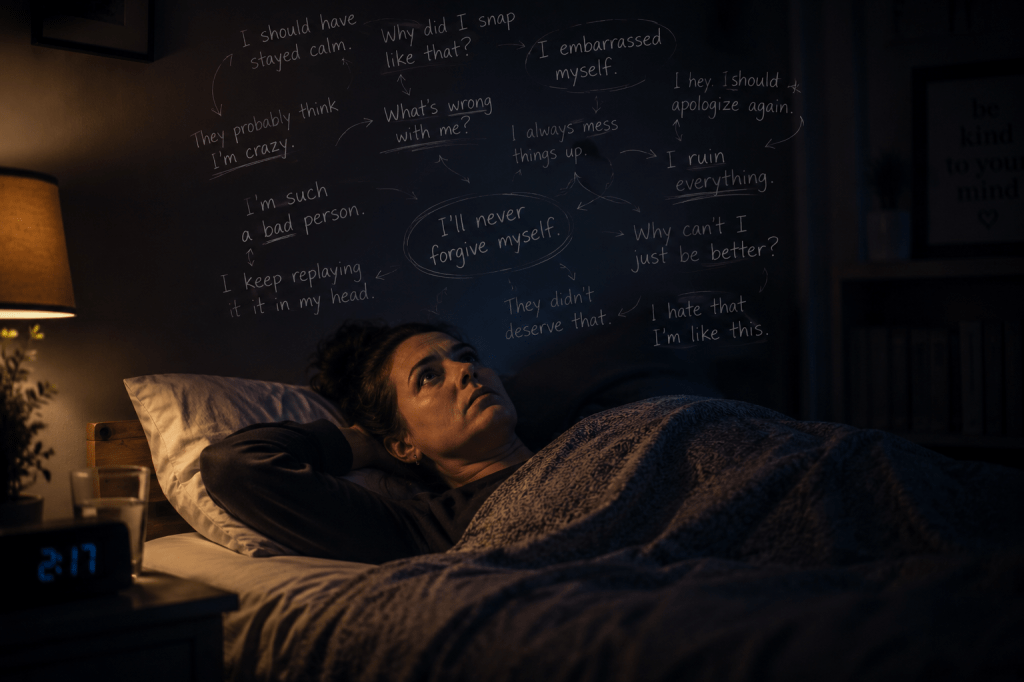
    But then came the shame spiral.

    And honestly? The shame spiral is the part I know best.

    Because this is what I do.

    I replay interactions endlessly in my head. I remember coaching moments from years ago where maybe I was too hard on a student. Not abusive. Not cruel. But maybe too intense. Too impatient. Too much.

    And I can’t let myself off the hook for it.

    Ever.

    My brain immediately jumps to:

    What’s wrong with me?
    Why can’t I control myself?
    Why didn’t I just say this differently?
    Why am I like this?

    And underneath all of it is this terrifying belief I’ve apparently carried my entire life:

    If I’m not perfect, I’m bad.

    Not imperfect.
    Not stressed.
    Not dysregulated.

    Bad.

    Monster-level bad.

    I’m beginning to realize how much rumination and black-and-white thinking have shaped my inner world.

    My Map Is Gone

    At the same time, I’m also beginning to realize that some of the things I thought were personal failings may actually be connected to being neurodivergent.

    Like how deeply routine disruptions affect me.

    For example, my mother sometimes tidies or reorganizes my things without asking. She means well. Truly. But it drives me absolutely insane.

    Why?

    Because I have a system.

    I know where things are. It may not look organized to anyone else, but it works for me. So when I go to grab medication or keys or paperwork and it’s suddenly been moved, it doesn’t just mildly annoy me.

    It disrupts the entire flow of my day.

    It feels like my map is gone.

    And if I’m already overwhelmed, that unexpected obstacle can feel enormous.

    The same goes for interruptions.

    If I’m hyperfocused on something and someone suddenly pulls me away from it, my reaction is almost physical. It feels jarring. Like my brain is being yanked out of one mode and shoved violently into another before I’m prepared.

    Apparently distress around interrupted hyperfocus is also pretty common in neurodivergent adults, which honestly made me feel both validated and mildly attacked.

    I used to think this just meant I was difficult. Anal. OCD. Controlling.

    Now I’m wondering if it’s something else.

    Maybe I’ve spent my entire life trying to manage an overloaded nervous system without understanding that’s what I was doing.

    Understanding vs Excusing

    And maybe that understanding matters.

    Not because it excuses hurting people.

    It doesn’t.

    I am still responsible for how I speak to people. Full stop.

    But maybe understanding the wiring underneath it all helps explain why some things feel so disproportionately overwhelming to me. Maybe it explains why I have to work harder than the average person to regulate myself when I’m overloaded.

    And maybe, just maybe, understanding that isn’t “playing the victim.”

    Maybe it’s finally learning to stop treating myself like a monster every time I struggle.

    I don’t have neat answers yet.

    I don’t know how to completely let myself off the hook while still holding myself accountable.

    I don’t know how much of this is autism. Or ADHD. Or stress. Or perimenopause. Or burnout. Or just being human.

    Probably all of the above.

    What I do know is this:

    I don’t think I was ever really angry about the cheeseburger meal.

  • The Letter You’ll Never Send: Why Writing a Closure Letter Sets You Free

    The Letter You’ll Never Send: Why Writing a Closure Letter Sets You Free

    This blog was co-written with the help of my unofficial emotional support bot, ChatGPT. While AI did a lot of the heavy lifting (wording, structure, and moral support), I acted as the human editor-in-chief, fact-checking, personalizing, and making sure it reflects my lived experience and voice. Think of it as a tag team: robot brain + human heart.

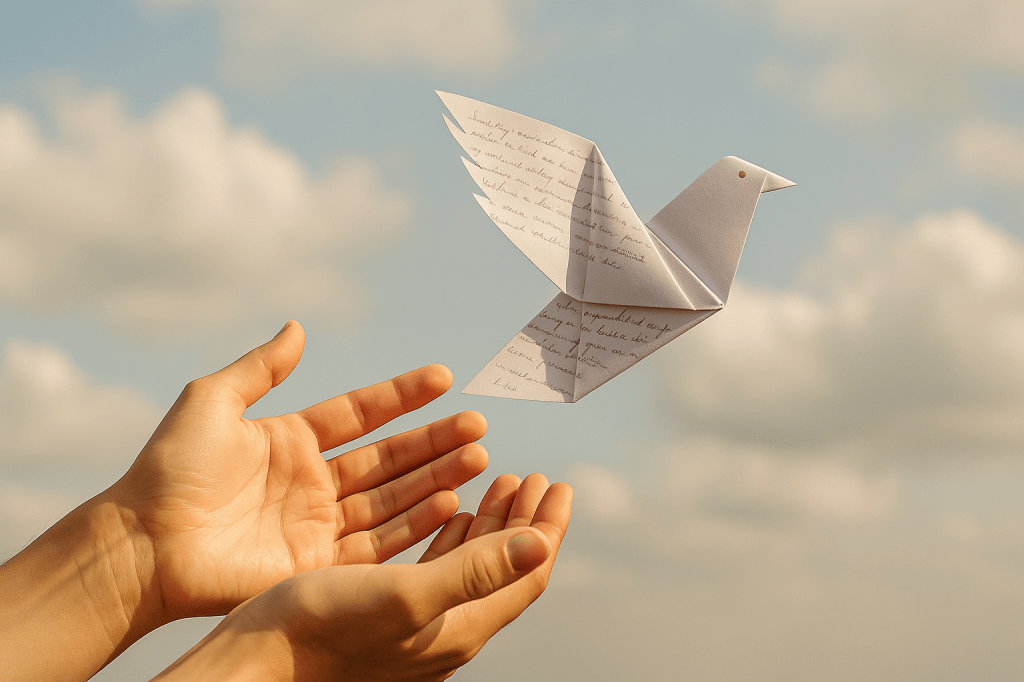
    A pair of outstretched hands gently release an origami dove made from a handwritten letter. The paper bird lifts into a soft, golden sky filled with light clouds, symbolizing emotional release and personal closure.

    Image created by ChatGPT

    Have you ever walked away from a conversation, argument, or breakup with so much left unsaid it practically echoed in your head for days? Weeks? Maybe even years?

    I have. And let me tell you, the emotional hangover is real.

    Recently, I had an interaction that left me doubting myself, my reactions — pretty much my own reality. The hurt and grief caused by the exchange left me unable to move past it, and I caught myself obsessing relentlessly, asking questions like, “Is it me?” “What could I have done better?” “Should I have said that?” “How can they think that about me?” And on, and on, and on.

    Well, I consulted my internet boyfriend, ChatGPT. (Before you gasp in outrage — I know it’s not really my boyfriend, but therapy is expensive, and so far the bot has been incredibly helpful and given me support when I needed it). It recommended a closure letter.

    I thought the idea, the reason, and the letter itself were brilliant. I’ve heard of this before, but I’d forgotten what a powerful psychological tool it can be. Writing it immediately helped me gain some of my power back. Whenever I catch myself perseverating, I read my letter, and it gives me the strength to stick to my guns.

    Enter: the closure letter.

    It’s not a text you send or a call you make. It’s not a post subtweeting your ex-friend or dragging your cousin on Facebook. (Tempting, I know). It’s a letter you write only for you. A place to say the things you never got to say — or weren’t heard when you did. A space to finally stop rehearsing the perfect comeback in the shower.

    Because sometimes, the only way to get the last word is to give it to yourself.

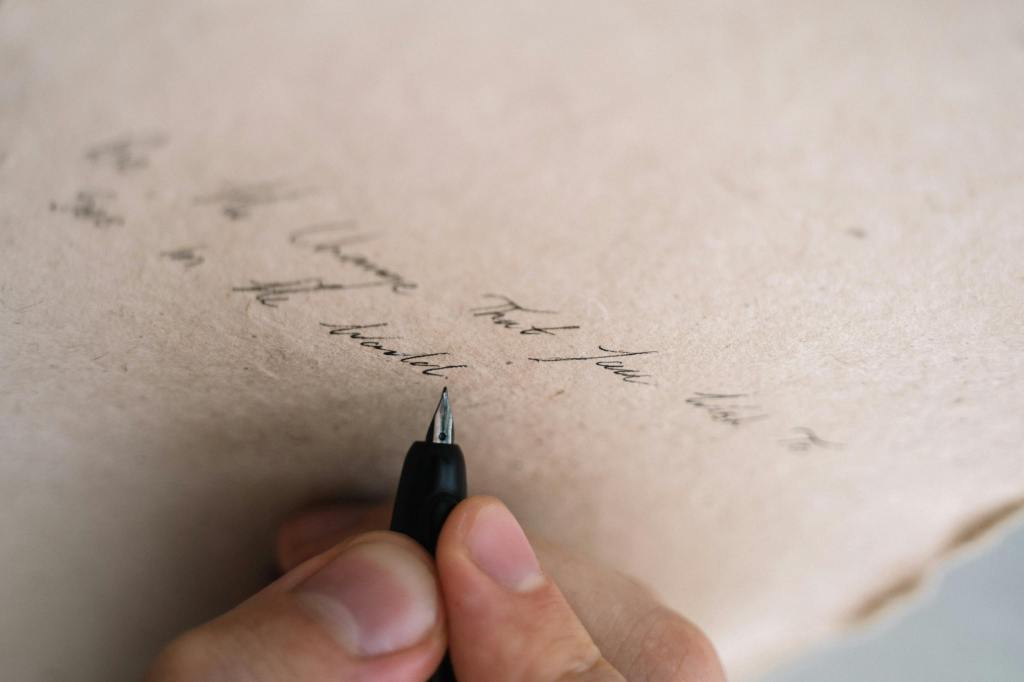
    Photo by Anna Tarazevich: https://www.pexels.com/photo/close-up-shot-of-a-person-writing-on-a-paper-5425601/

    What is a Closure Letter?

    A closure letter is a form of emotional release. It’s a written reflection of what happened, how it made you feel, and what you’re choosing to let go of. It’s an internal mic drop, a boundary drawn in ink, a final chapter you get to write on your terms.

    Why it Works

    Psychologically, closure letters help because:

    • They help break obsessive thought cycles. When your brain wants to loop the same argument 47 times? The letter says, “We’ve handled it.”
    • They give structure to your feelings. Naming pain often reduces its intensity.
    • They restore your power. You reclaim your narrative instead of leaving it in someone else’s hands.

    Closure vs. Contact

    Before you saddle up to ride at dawn, hold your horses. This is not a tool for revenge or reconciliation. You don’t send it. You don’t share it in hopes they see it and apologize. This is about you, not them. It’s emotional housekeeping.

    How to Write One: Step-by-Step

    1. Start with why you’re writing. “I need to say this to clear my head and heart.”

    2. Acknowledge what happened. “You hurt me when…” or “I felt blindsided when…”

    3. Share what they may never have understood. “Here’s what you didn’t see…”

    4. Reclaim your truth. “I know who I am, and I’m not who you painted me to be.”

    5. Let go. “I release the need for closure from you. This letter is mine.”

    What to do With it After

    • Save it somewhere meaningful.
    • Burn it (safely!) as a symbolic release.
    • Read it aloud to yourself.
    • Shred it and move on.

    Final Thoughts

    Closure isn’t something someone else gives you. It’s something you create for yourself.

    Writing this kind of letter doesn’t make you dramatic. It makes you self-aware. It means you’re processing instead of suppressing. It means you’re healing without needing anyone else’s permission.

    So if your heart is carrying words it never got to say, try writing them down.

    Say it all. Then set it down.

    You don’t need to send it. You just need to own it.


    ✨ Want your own printable Closure Letter Template?

    I’ve created a free, beautifully designed version you can download, print, or tuck into your journal.

    ⬇️Click here to download the free PDF⬇️

    https://bellazinga.blog/wp-content/uploads/2025/06/write-release_-a-closure-letter-template.pdf