Tag: Parenting ADHD

  • A Dance Recital Like No Other

    A Dance Recital Like No Other

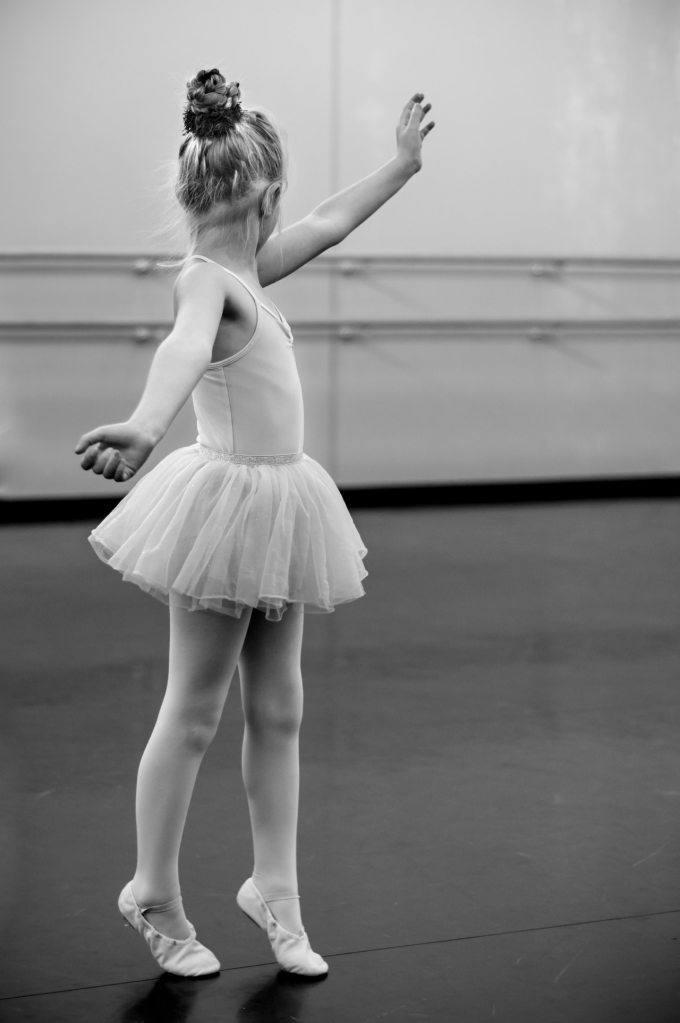
    Last weekend my daughter danced in her studio’s end-of-the-year recital. The show was a success, full of the usual suspects; seasoned performers hip-hopping their way to fame, teeny-weenies out for their dance debut loaded with sparkles and wide-eyed anticipation, and budding street dancers learning the breakdance ropes. 

    While all of these regular recital occurrences are heart-warming, what got me in the “feels” was that I got to watch the entire thing from the audience. 

    This may sound odd, given that my little dancer is not so little anymore. In fact, at nearly twelve, she’s taller than most grown women. And you’re likely now thinking that I’m a total helicopter mom, hovering like there’s no tomorrow, too afraid to cut the apron strings and let my daughter look after herself.

    While that may be true, there’s also another factor to consider. You see, my daughter is neurodivergent; she has ADHD and is on the autism spectrum. This means that she is quirky, beautiful and (in my humble opinion) fucking brilliant. 

    It also means she has significant challenges in places and at events that you and your neurotypical kiddos likely take for granted.

    I won’t ever take something like watching a dance recital from the audience for granted again. I’ll tell you why.

    Source: Unsplash

    The Extra Steps of Autism

    My daughter doesn’t look any different than your average tween. Given that she is considered Level 1 ASD (formerly known as Aspergers), nothing would cue you that she is any different from a neurotypical child. 

    This is why so many parents of kids on the spectrum get the side-eye, eye-rolls, and just about any other eye-related behaviour from other parents, teachers, doctors, etc. 

    No two children on the spectrum are the same, but let me share with you some of the challenges my daughter has had to overcome in her dance career.

    Motor Difficulties

    You know how kids can effortlessly tie their shoes or change outfits like they’re in a backstage dressing room of a Broadway show? Well, that’s not exactly a walk in the park for my kiddo. 

    With her motor skills functioning a little differently, quickly tying tap shoes or changing sparkly leotards might as well be an Olympic event. And let’s not forget the actual dance numbers. 

    With balance and coordination playing a cheeky game of hide-and-seek, the challenge of mastering those intricate steps is on another level.

    Issues with Working Memory

    Ever tried to keep track of multiple dance numbers, their order, and the steps for each in your head? My daughter tackles this challenge head-on every time she steps onto that stage. 

    Prioritizing tasks and decision-making are like trying to solve a Rubik’s cube blindfolded. The struggle with working memory is real y’all.

    Executive Function Challenges 

    Imagine having a long list of instructions, each more complex than the last. Sound overwhelming? Now, think about how it feels when every day is filled with these lists and not having a freaking clue where to begin or how to put the required steps in order?

    That’s the reality for children like my daughter. Delayed executive function development is like trying to solve a jigsaw puzzle with missing pieces. Is it any wonder they get frustrated and lose their shit?

    Emotional Dysregulation

    Feelings for my daughter are like waves during a storm, overwhelming and unpredictable. Her emotions are big, bold, and often challenging to rein in. It’s like riding a roller coaster without a safety bar, thrilling but also a little scary.

    The hardest part as her parent is to watch the shame and guilt play across her features once she has calmed down and realized what she said and did while she was struggling for control. 

    Even though my kiddo is starting to realize that when she gets overwhelmed, her frontal lobe is not in control, and she is in the clutches of her amygdala and the dreaded fight/flight/freeze/fawn (although there is a strong argument for using “feign” instead of fawn) response cycle, she still feels bad about her behaviour after the fact.

    Sensory Sensitivities

    Imagine being at a rock concert, but the music’s too loud, the lights are too bright, and the crowd’s too much. Now, try picturing that every time you’re in a room full of kids or under fluorescent lighting. 

    That’s what my daughter deals with — a world where sounds, smells, and sights can be as piercing as a siren’s call. Because she perceives the world differently and often more intensely, she can experience these sensations as discomfort and even pain.

    Now see yourself at a dance competition or recital, packed together in a dressing room with hundreds of other dancers, all anxious and excited. The steady drum of chatter, shouting, crying, and music would be enough to drive a neurotypical person to drink, let alone someone who’s conditioned to perceive these stimuli as threats! (To clarify, I don’t let my daughter drink…so don’t come for me!)

    Problems Reading Social Cues

    Reading social cues for my daughter is like deciphering hieroglyphics without a Rosetta Stone. It’s tough not knowing how to fit into the social puzzle, feeling isolated in a room full of chattering children. 

    But thank the goddess for our dance studio. Through careful attention to fostering a climate and culture of family and inclusion, they have helped my daughter fit in every step of the way. I wish I could say the same for our previous studio, but that’s another story for another time. (And perhaps that aforementioned drink)

    Triumph in the Dressing Room

    Usually, I am my daughter’s special assistant in the dressing room. My job is to make sure she can navigate quick changes, take a sensory break if necessary, calm her in case of overwhelming nervousness to prevent meltdowns and help her navigate the environment and pressure around her.

    I always ask my kiddo if she wants me there with her in the dressing room or if she’d like to try it on her own, as I’m trying to foster independence and push her boundaries, but I want her to feel ready for it.

    So I wasn’t surprised when she asked me to be her special dressing room assistant once again. 

    I don’t mind this, but the fact is, it is usually only my daughter and me at these events. So when I’m below in a dressing room, I am not in the audience to hoot, holler, yell, and clap for her when she’s onstage. And that means she has no one in the audience to do that for her. 

    As you can imagine, for an only child who seldom sees her father and sees ALL the other families full of siblings and relatives attending, this is hard for both of us.

    Still, I was prepared. I’d created extra lists for my l’il dancer with the order of her numbers, all carefully highlighted. I’d labelled each of her dance bags carefully, even crafting numbers to hang on each hanger so it would be easier to see which one was next.

    I’d done all the things necessary to ensure a seamless experience. I’d packed all my kiddo’s sensory stuff, like headphones, earbuds, fidget spinners, a tablet and a charger, not to mention a cell phone. You name it; we were ready.

    Then, suddenly, as we were setting her bag up in her designated space, my daughter shot me an “I’m so embarrassed my mom is here look” and started shooing me away.

    I have to admit. I froze, unsure if I was actually seeing what I thought I was. 

    Sure enough, my daughter wanted me to leave her alone so she could hang with her dance friends. When I asked if she could handle the quick changes, she said she could, and I should leave her alone.

    Source: Pexels

    A New Perspective: Joining the Audience

    I just about cried. Partly, if I’m being honest, because this was a huge hurdle, and it meant my baby was growing up, which is difficult for every mama bear, neurodivergent or neurotypical alike.

    But partly because of the overwhelming sense of relief and freedom to sit and enjoy myself at a function. Whether it was a family dinner, a holiday gathering, a school assembly, or a dance recital, I had yet been unable to do this.

    I don’t think you can understand how it feels to always be alone when you’re the parent of a kiddo on the spectrum. Because your child is more, needs more, and demands more, you have to give more, be available more, be more organized, be more prepared, be more calm…I think you get the picture.

    This sense of being an uber parent is not conducive to sitting and having a cocktail at a dinner party, socializing with family at a Christmas get-together, or watching your daughter shine onstage at dance recitals.

    Until last week.

    And shine, she did. Although it was hard to see from the tears in my eyes. (I’m not crying, you’re crying)

    Parenting on the Spectrum Means You Celebrate the Ordinary Moments as if They Were Extraordinary

    My daughter did it on her own, and I couldn’t be prouder. You see, for parents like me, we don’t just celebrate the recitals or awards. We celebrate the moments when our children prove to the world, and more importantly to themselves, that they are so much more than a label.

    We celebrate when they show their strength and resilience in the face of adversity and face the challenges of a world that can be overwhelmingly stacked against them.

    So yes, I won’t ever take something like watching a dance recital from the audience for granted again. Not because it’s a luxury but because it’s a testament to the beautiful, quirky, brilliant girl my daughter has become. And how damn proud I am of her.

    If you want to share some ordinary yet extraordinary moments with your neurodivergent child, comment below, and follow me for more blogs!

    Better yet, why not check out my online store, BellaZinga (inspired by my daughter and her neverending one-liners) for some merch with a side of neurodivergent sass? While you’re there, you can download my eBook “Friends Beyond Differences: Embracing Neurodiversity.” 

    It’s an engaging guide written specifically for neurotypical kids aged 6-12 to help them understand and embrace their neurodiverse peers.

    And remember, our differences make us unique, but our humanity binds us together. Let’s ensure every child, regardless of their neurotype, feels accepted, loved, and capable of dancing their own unique rhythm.

    Shine on, my beautiful neurodiverse kiddos.

    Shine on.

  • Challenges and Rewards of Raising a Neurodivergent Child as a Single Mom

    Challenges and Rewards of Raising a Neurodivergent Child as a Single Mom

    Raising a neurodivergent child as a single mother can be a roller coaster, full of unique challenges and rewarding moments. As a single mom to a child with autism spectrum disorder (ASD), attention deficit hyperactivity disorder (ADHD), and generalized anxiety, I’ve had more than my fair share of struggles. Keep reading for a few examples of the unexpected twists and turns you might encounter on this journey.

    Challenges of Raising a Neurodivergent Child

    Let’s look at the difficulties of raising a neurodivergent child as a single mom first. As much as I’d love to say it’s all sunshine and flowers, it’s not, and you will find some obstacles you both have to overcome. Here are a few I’ve found:

    Your child’s special interest becomes your special interest

    As a neurodivergent child, your little one might have a deep passion for a particular subject or activity. And as a single mom, you’re the primary source of support and encouragement. So get ready to become an expert on everything from Pokémon to medieval history, even if it’s not your usual jam.

    My daughter’s special interests to date have been:

    • Dinosaurs
    • Geisha girls (she was young, so I made sure to describe them as, ahem, party planners)
    • The Titanic (please don’t ask me how many times I’ve seen the movie!)
    • Henry VIII and his wives
    • HAMILTON!!!
    • Six the Musical (guess she never left Henry and his wives behind)
    • Fashion and make-up trends through each decade
    • MUSIC!!!!

    I’ve found that if you tie special interests into the learning process for school, or daily activities, it helps keep kids interested in the activity and more excited about learning.

    Unexpected meltdowns in public

    Neurodivergent children can sometimes react intensely to sensory stimuli or changes in routine. And as the only parent present, you’re the one there to help them through it. In other words, it’s alllllll you, mama!  So be prepared for some interesting looks from strangers as you calmly–or not so calmly, who are we kidding–talk your child down from a meltdown in the middle of the grocery store.

    Judgment from, well, everybody

    Let’s face it, people will judge you. I wish it were otherwise, but you will discover that everyone and their dog will have an opinion–usually an uneducated one–about how you should discipline your child. From well-meaning teachers who have a few days’ worths of training and think themselves an expert to parents stuck in the more traditional child-rearing path, you will feel their criticism, which will cut to the bone. I wish it were otherwise, believe me, but better to be prepared for it than not.

    Everything is a masterclass in psychological strategy

    From anxiety to school avoidance to demand avoidance, these are terms you will get intimately familiar with. You will also have to throw everything you know or think you know about parenting out the window. Parenting a child who isn’t physically or mentally able to regulate their attention or emotions, follow instructions, or plan ahead is another level of parenting. 

    You will have suggestions and strategies thrown at you from every corner. From ABA therapy to reward charts to visual prompts, you’ll become an expert at it all. Some of these suggested techniques may take a LOT of your time and energy. Not a word of a lie, but one specialist gave me a 14-page set of instructions to implement a reward system for my child. 

    14 @#$% pages! 

    Clearly, he is not a single parent and doesn’t understand the first thing about our struggles or level of overwhelm! So mama, when this happens to you–and I guarantee it will–take a breath and remember that you can choose the right strategy for you and your child, so-called experts be damned.

    Rewards of Raising a Neuroatypical Kiddo

    Okay, now the doom and gloom part is over, I’ve got good news. You will have many feel-good moments raising your special needs child, and the best advice I can give you is to cherish every accomplishment, no matter how big or how small. 

    Those moments of success, whether they are finally brushing their teeth by themselves, or making a new friend at school, will make all the difference in your ability to cope with the struggle. Here are a few more perks I’ve encountered:

    Your child’s unique perspective enriches your life 

    Neurodiversity is beautiful, and your child’s unique way of thinking and experiencing the world can open your eyes to new possibilities. You might find yourself laughing at their quirky sense of humor, being inspired by their creative ideas, or simply enjoying their unique perspective on life. 

    And don’t forget the embarrassment that comes from them announcing loudly to perfect strangers that you need to fix your roots. I promise you will laugh about it later, much later.

    You become a fierce advocate for your child

    As a single mom, you’re the only one standing up for your child regarding their education, healthcare, and overall well-being. And that means you become a social justice warrior for their rights and needs, learning everything there is to know about neurodiversity and fighting to ensure they have the support they need to thrive. 

    So be prepared to be “that” parent, and don’t stress if others see you as “that” parent. Sometimes we have to be “that” parent to get any help, and to hell with what anyone else thinks.

    Your child teaches you resilience and flexibility

    Raising a neurodivergent child as a single mom can be tough, but it can also teach you valuable lessons about picking your battles and not sweating the small stuff. They don’t want to wear a coat today even though you’re freezing? No problem, pack it in their backpack in case they need it.

    They only eat chicken fingers morning, noon, and night? (I’m convinced this is the universal symbol for autism btw) No sweat, search for the healthiest brand you can find and try to balance out their meal with less processed foods too. (A good multivitamin and probiotic yogurt also help to keep things even keel). 

    You might find yourself adapting to unexpected challenges, learning to roll with the punches, and ultimately becoming a stronger, more open-minded person.

    You will find a new tribe

    Help is out there, I promise. You don’t have to do this alone. Search on social media for groups of other single parents and parents of children with special needs. As much as we like to rely on our neurotypical friends for support, sometimes we need to find people who are living our experience. These people will understand what you and your child are going through and will likely have some advice to share. 

    Likewise, don’t be afraid to reach out for resources and funding; if you’re unsure where to start, ask someone who’s already been there. There is aid available to you; it’s not always easy to find, but if you search hard enough–I know, one more thing to add to your already overflowing plate–you will find it!

    Be Prepared for the Roller Coaster

    In short, raising a neurodivergent child as a single mother can be challenging, but it can also be gratifying. You’ll have to navigate some unique obstacles, but you’ll also have the opportunity to experience the world in a whole new way and become your child’s ride-or-die, so you may as well buckle up and enjoy the ride!

    What’s your experience been like as a single mom to a neurodivergent child? Did I miss anything? Make sure to like, share and comment so we can support each other!

  • Why We Judge

    Why We Judge

    I’ve been thinking lately about judgment.  What it is, how often we do it, WHY we do it to others, and how it makes us feel when others judge us.  The sad fact is, as a parent to a child with special needs, and in particular a neuro-diverse child where the disability is on the inside and not apparent from the outside, I have experienced more than my fair share of judgment.

    According to the great God Google, judgment is defined as “the ability to make considered decisions or come to sensible conclusions”.  I find this rather ironic, since more often than not, the conclusions made about single parents, and particularly single parents of children with ANY type of exceptionality contain neither consideration or common sense. 

    Judgment is not necessarily a bad thing.  Let’s face it, we make 1000 judgments a day just to stay alive and maintain a peaceful existence. We judge if we have enough time to make the light safely before it turns red, we judge what food is safe to eat in our refrigerator and what could have spoiled and therefore give us food poisoning, we judge if it is safe to go outside during a thunderstorm, and we judge if it is the right time  to ask our boss for that raise based on her mood that day.

    Thousands of judgments. Every day.

    These types of judgments are necessary for survival and the propagation of the human race, after all, 50,000 years ago, our prehistoric ancestors made the judgment:

    SABRE-TOOTH TIGERS=BAD

    RUNNING AWAY=GOOD

    ……..thus ensuring our existence today. Judgment is necessary for us to navigate the world we’re in and reduce stress.  Hopefully judgments allow us to relate to each other and foster healthy relationships with like minded people.

    Yet, the judgment on my mind is that other kind of judgment.  The malicious kind.  The kind where someone decides that they know better than you, despite knowing nothing about your circumstances, your history, or your challenges.  The type that makes you question yourself and your actions.

    You all know what I mean, because every one of you reading this has been the victim of this kind of judgment.

    I remember when my daughter was three.  She was very musically inclined, so I enrolled her in a musical exploration class in town.  The class was wonderful, mothers and fathers, sitting in a group with their toddlers, singing songs, pantomiming, marching, playing with numerous toys and instruments that had been strewn about.

    The instructor was also lovely, and made a point of asking parents not to interfere or “tell” our children what to do, but to simply model the songs and dances required and allow them to explore and determine what they wanted to do.

    During one exercise the toddlers were expected to sit on our laps as we sat in a circle singing a song.  For one particular part of the song, we were required to help the children jump up and down in front of us.

    The instructor asked for my daughter to demonstrate.  Now, I have always known my daughter had excessive energy, even from birth, she now has an official diagnosis of ADHD, anxiety, plus the possibility of giftedness with, I suspect, some sensory processing issues.  Needless to say, she was a handful, and I was doing the best I could to navigate and guide her behavior to the very best of my ability.

    So, when the instructor in this small musical gathering asked for my child to demonstrate the song and sit on her lap, I was nervous, but I did my best to follow her instructions about not getting too controlling.

    Well, my daughter jumped alright, even when she wasn’t supposed to.  I watched as this poor woman did her best to control my kamikaze munchkin as she pistoned up and down on her legs, alternating between crazy bursts of height and then collapsing and giggling like a rag doll in her arms.  I didn’t know whether to take my daughter from her arms or not; I was of course embarrassed (and slightly bemused) by her behavior. I was a spectator, frozen, wincing at my daughter’s antics, and not knowing what the teacher wanted me to do.  So, I watched, mortified, until the song was done.

    Hurriedly, I rushed in to grab my daughter from the red-faced and obviously frustrated teacher. I quietly mumbled, sorry, she has a LOT of energy. She took a breath, and very loudly, in front of everyone in the group declared. “You have GOT to learn to control her.”

    I sucked in my breath, stunned, holding my daughter and feeling assaulted. Everyone in the room was watching.  I could feel my cheeks getting red. 

    Keeping my cool the best I could, I said, “I control her quite well, thank you very much.”

    I’m sure the look on my face was something to see, because she immediately looked away and continued with the lesson.

    I left that class feeling worthless as a mother.  I had been judged and found wanting, and worse; I had been called out in front of my peers.  Even though intellectually I knew I had done the best I could to monitor and control my daughter’s behavior her entire life, all it took was one comment from someone who knew nothing about my daughter, or our struggles, to make me doubt myself.

    Where does this come from?  Why do we do this to each other?  I know I’ve done it, despite my best efforts. It’s easy to decide something about someone based on YOUR experiences and YOUR knowledge, and hard to actually take a SECOND to put yourself in THEIR shoes. Let’s face it, who has time to ask someone about their life experiences before making a split-second decision about their behavior? We are all guilty of passing judgment.

    According to Elizabeth Dorrance Hall, Ph.D., from Psychology Today, these judgments are termed “attributions” and are basically thoughts we have that help us explain the reason behind others behaviors.

    As we go through our day, we tend to form two different types of attributions:

    Situational Attributions, where we make allowances for a person’s situation as the cause of their behavior. This allows for some fluidity, as a person’s situation can change, and gives us permission to look more favorably on a person or judge them less harshly.

    Personality Attributions, where we see the person’s personality as being the cause of the particular behavior. This tends to be a more fixed attribute, after all personality doesn’t change much does it? (I won’t get into all of the different theories of personality here, it’s been a loooong time since my personality psych class)

    So far so good. 

    This makes sense, right?

    But the article goes on to explain some pitfalls we encounter because of our tendencies to create these attributions.

    It seems that with strangers, we tend to give more weight to their personality being a factor in their behavior rather than the situation they are in. Since a person’s personality is more fixed and less fluid than their situation, this makes for some pretty damning attributions being made about that person.

    Conversely, we tend to give more weight to the situational explanations or attributions for things than personality attributions when we are dealing with the behavior of friends and family.

    So, in plain speak, we tend to give our friends the benefit of the doubt….. strangers…. NOT SO MUCH.

    And from here it gets even worse. When we have already established negative personality attributions or causes for behavior from someone we do not know well, we tend to subconsciously look for further proof to validate our beliefs when we see them again. This is called “confirmation bias“, where we unconsciously look for things that “confirm our existing beliefs.

    Accordingly, we filter out good behavior that would allow us to make positive attributions, and only attend to negative personality attributes for poor behavior, which we see as fixed and unchanging. This then only solidifies our judgement of them and sets us up to only focus on negative or personality attributes in the future.

    And so, the vicious cycle begins.

    In short, we see what we want to see, to hell with the truth.

    This brings me back to two questions, why do we make judgments about others, and why has it been on my mind so much recently?

    • Well, for one, I lost a good friend of mine just recently over her judgment of me and my parenting.
    • That same week an acquaintance of mine on Facebook was brought to tears at a baseball game.  As a single mother, she finally felt her 12 year old was old enough to leave at her ballgame while she went for a run.  Upon return, she was openly and loudly lectured and berated by an official from the team.  Needless to say, she was devastated.

    Both of these cases involved people who made judgments before even attempting to put themselves in our shoes.

    In the case of my close friend, who has a loving husband, a great job, a steady and large income, and gets to be a step-parent with the help of her husband and the other parents they share custody with, she felt she could judge me and my parenting by spending two days with my daughter and I and only slightly understanding the challenges I was facing.

    It all came about after we had too many cocktails our final night together. She made the very generous offer of flying myself and her to Mexico on her dime the following month. I was very thankful and told her so, but I needed to look at our commitments, and figure out when I could find adequate child care for my daughter. In addition, since I’m a contract worker, I have to figure out where I can find other work to balance the time I take off so I don’t lose too much income.

    She couldn’t understand why I couldn’t just leave my daughter with my parents for 5 days, even though they are 75 and my daughter is a handful on the best of days. I calmly asked her if we could talk about it when we were sober, but she then hinted that I should fly my daughter across the country to her fathers house to stay with him. My daughter talks to her father often on the phone, but has not spent more than a weekend with him at any one time, and only once yearly at that, so I thought she would understand why I was hesitant to fly my special needs daughter across the country to stay with him.

    She was having none of my “excuses” as she called them. And it escalated from there. She started spewing venom at me that became more and more hurtful the longer her diatribe against me went on.

    In her eyes, I was a failure, trust me, she made it clear……she actually, flat-out called me a failure.  (I believe she also called me fat, and a waste.)  She asked what had happened to me.  She screamed that everything was about my daughter and my life had gone nowhere.  And she ended it with a drunken “fuck you and fuck your daughter.”

    I kid you not.

    I’m still in shock about the ferocity and aggressiveness of the encounter.  I have another friend as a witness to the whole exchange, and she was also stunned. 

    In the end, my decision was easy.  I have no room in my life for someone who can’t understand what it is like to be the single parent of a special needs’ child.  She can’t understand the decisions I have to make every day, the self-doubt I harbor, or the struggle it is to provide the kind of monitoring, mentoring and advocating you have to provide EVERY.DAMN.DAY to a child that is hypersensitive, anxious, and struggles with focus, self-regulation and executive functioning. 

    I was more concerned about my acquaintance on Facebook, and the unfair treatment she had received at the hands of someone who was supposed to be promoting all the values of youth sport like team-work, understanding, guidance, balance, and patience.  You see, I know this woman, and she is fully invested in her child.  I see how hard she works to provide for her child, and how much she cares.

    Most importantly, as a single mother myself,  I KNOW how hard it is to find the time for self-care. 

    For her to try to look after herself, to FOR ONCE put herself first, and then to have to face the very public tirade of shame she was subjected to is simply unacceptable.

    Moms and dads everywhere.  Let’s make a pact.  Let’s only allow people in our lives that refuse to pass judgement on others. And when we see someone having their darkest day, let’s shine some hope, and attribute their behaviour to difficult circumstances.

    Let’s offer a hand, a shoulder, and some hope, instead of being THAT person who simply puts others down.

    “He that is without sin can cast the first stone.” John 8

    Have you ever been the victim of unfair judgments?  Let me know in the comments section.

    If you like my blogs, please, share with your friends!

  • Walking a Tightrope Between Parent of a Child with ADHD and Dance Mom

    Walking a Tightrope Between Parent of a Child with ADHD and Dance Mom

    I always knew my daughter was different, right from the womb. Not better or worse, just different. People tried to normalize her activity level, her issues with socialization, and her fears as “all kids have fears” but I knew she was different right from the get go.

    So now that we have a formal diagnosis of ADHD and anxiety, I am in the process of deciding whether to medicate for the ADHD symptoms, which is a dilemma in itself. ( I am convinced she is also gifted, and there may be other learning issues, but as we don’t have benefits there is no way I can afford a psycho-educational assessment right now.)

    I am a single parent. I work three jobs and home school my daughter because attending normal school became untenable….she suffered bullying and difficulties through out her first three years into grade 1, so much so that her physical symptoms of school avoidance, tummy aches, nightmares, outbursts, and constipation were dominating our lives.

    WHEN YOUR 5 YEAR OLD DAUGHTER STARTS TO TALK ABOUT KILLING HERSELF BECAUSE SHE WILL NEVER HAVE FRIENDS AT SCHOOL, YOUR HEART SHATTERS.

    But, I did my best to manage the symptoms of anxiety, because through junior and senior kindergarten, she was described as a “rock star” by her teachers, so I saw that there was value from her attending school.

    I should have known not to get complacent.

    Within a month of starting grade 1, my amazingly brilliant child who I couldn’t keep up with at home in regards to her curiosity and thirst for knowledge was suddenly behind in everything when the education style moved from learner driven to curriculum driven in grade 1. Suddenly, over the course of one summer, she went from being a “rock star” to being behind in every subject.

    It’s been a bumpy, ride, and I couldn’t love my daughter more. She is brilliant, and funny, and a true performer, and a caring and sweet little girl.

    But, she is exhausting. And I feel guilty for feeling exhausted by her…it’s a never ending cycle…lol. ( I laugh because if I cry I will never stop, and laughing is better)

    Today, I’d like to talk about my current dilemma in our neuroatypical saga.

    Photo by Skitterphoto from Pexels

    My daughter is a competitive dancer, and here’s my concern. We have been been four years at the same dance studio. She has been competing on the performance group for 3 of those years. She has been a performer from birth and she shines when she is in the spotlight.

    I have also found that she does better socializing in her dance group because they are all there for a common goal and they have constant direction in their lessons, so it is easier for her to read social cues and navigate the landscape.

    Not to mention the outlet for her creativity and energy is a godsend.

    But there are issues. My daughter is hypersensitive, and always has been. Things that would not bother other kids will bring her to tears and she will fixate on them for weeks.

    Several of her instructors give feedback in ways that I do not deem appropriate.

    Now, a little background on me. I am a national level figure skating coach with a degree in Kinesiology. I have been coaching for 30 years and my life’s work has been all about learning how to teach young students, and how to give feedback. I have lost count of the papers I have written and the other coaches I have mentored in terms of helping them learn how to coach young athletes, and I myself never stop learning and trying to better myself and how I teach my skaters.

    So I know what I am talking about when I see feedback given in a manner that is not conducive to building self-esteem.

    And I feel that these particular teachers need to be aware that some of their dancers are not good with always being told negative things with no positive to balance them, or being singled out publicly when they are corrected.

    This is hard to handle for a neurotypical athlete, let alone an athlete with my daughters issues.

    I have emailed constructive feedback, asking for some compromise in how feedback is given. I have also worked consistently with the studio in terms of sharing my daughters issues and her diagnosis. I have given them a wonderful website with a list of coaches strategies for working with athletes with ADHD and anxiety, and I have countless one on ones with the instructors. I have bought private lessons for my daughter to help her with the smaller details of dance and her focus (group lessons are hard for her due to so much going on).

    The problem is, nothing is changing. She still feels singled out. She still struggles with the way the instructors teach, and the studio is extremely disorganized. I can never be sure the information I give to the owner/director is being passed down to the teachers. Her private lessons were discontinued due to scheduling on their end, and despite repeated attempts to re-book, because my daughter loves them and they help her tremendously, nothing has been done.

    I know that this is likely to be an issue at most dance studios, because from my experience, most coaches are not well-versed on the differences between neurotypical and neuroatypical athletes. If we change studios, it becomes a 45 minute drive to find a new one, and I am already stretched to the limit.

    Photo by Alexander Dummer

    I’m at a loss. I feel like that parent that always has to advocate, and I catch myself wondering how much I have to help her to get accommodations for her issues and how much I should just tell her that there are always different kinds of coaches and you have to learn how to deal with criticism if you want to get better.

    To add insult to injury, the issue of feedback is only one of the many problems I have had where the teachers and instructors fail to heed my concerns about things that cause my daughter excess hardship in practice; things such as playing the music so loud that she has to cover her ears and cringe during practice and, yet, they still. won’t. turn. it. down.

    My daughter and I talk about the value of hard-work, goal setting, losing as an opportunity to get better and above all, enjoying the process and having fun ALL the time. I have gone to great lengths to show respect for the studio and all the teachers in front of her and use our conversations as a way to model good sportsmanship and coping skills, but secretly, I am fuming and feeling like the studio is utterly incapable of handling a special needs athlete.

    I’m really having trouble finding the balance between mom, coach and dance parent, and worse, I feel singled out, blamed and shamed every time I try to advocate for her. To be fair, I don’t think that is anyone’s intent, they do their best, but that is how it comes across to me.

    So I will continue to hold my arms out, and do my best to balance on the tightrope that is now my life, wavering back and forth between dance mom, coach, and parent of a special needs child.

    Do you have any stories to share about your neuroatypical child and the obstacles you’ve faced? Feel free to share in the comments!