
Tag: real housewives

  • Tamra Judge’s Autism Announcement: A Mother’s Perspective

    Tamra Judge’s Autism Announcement: A Mother’s Perspective

    When Tamra Judge, star of “The Real Housewives of Orange County,” recently announced her autism diagnosis, it sparked a whirlwind of reactions. As an autism mom of 13 years, my initial feelings were intense—ranging from disbelief to anger. Raising a child on the spectrum has been a journey marked by profound challenges, daily heartbreaks, and constant advocacy. 

    Hearing Tamra reveal her diagnosis so casually, without the depth of understanding or experience, felt like a slap in the face to families like mine who live this reality every day.

    But then I took a step back. Autism isn’t the same for everyone—it presents differently in every individual, especially for women who often go undiagnosed until later in life. Still, I found myself conflicted, questioning whether her announcement was genuine or if it was simply an excuse for her bad behaviour on the show. 

    In this blog, I want to explore these mixed feelings and offer a glimpse into the realities of autism, both as a condition and a diagnosis that impacts not just individuals, but entire families.

    A World Not Built for Kids on the Spectrum

    For kids like my daughter, the world can feel overwhelming—a place that’s too bright, too loud, too chaotic. It often feels like the world wasn’t built for them. My daughter struggles with sensory sensitivities, which makes it hard for her to be in busy, noisy places like school. The overhead lights, the constant hum of conversation, kids acting out—these things, which many children might find mildly distracting, are huge obstacles for her. 

    Autism Parenting Magazine explains that sensory processing issues are common in autistic children and can cause them to feel overwhelmed by sounds, lights, and touch. For my daughter, these sensitivities often trigger meltdowns and anxiety attacks that make a typical school day feel impossible to get through. She’s forced to endure an environment that’s almost tailor-made to overstimulate her senses.

    And then there’s the bullying. My daughter struggles with reading social signals, understanding concepts like personal space, regulating her voice volume, and following the flow of conversation. She often gets too close, speaks too loudly, or doesn’t know when to enter or end a conversation. 

    Despite her kind heart and good intentions, she’s been ostracized and bullied so severely that we’ve had to change schools. The pain of watching her struggle to fit in, of seeing her beautiful spirit crushed under the weight of her peers’ rejection, is almost unbearable. 

    And don’t get me started about the lack of acknowledgment, understanding or support from school officials, the staggering amount of time I had to spend advocating for her and the number of meetings I had to initiate to try and make school a safe space. (That’s another blog entirely).

    The Emotional and Physical Impact of Autism

    Anxiety is a constant companion for my daughter. The fear of being bullied, the pressure to conform, and the overwhelming sensory input create an emotional cocktail that often results in meltdowns

    These aren’t the minor tantrums that some people might imagine—they are full-blown panic attacks that can last for hours, leaving both of us completely drained for the rest of the day. And these aren’t just emotional responses—they manifest physically, too.

    Autistic children often experience physical symptoms tied to their anxiety, like gastrointestinal issues, frequent headaches, or even asthma. My daughter frequently complains of stomach aches and other physical discomforts on the days when her anxiety is at its peak. Anxiety and gastrointestinal problems are closely linked in autistic children, and it’s a struggle I see play out daily in my own household.

    Executive Function and Daily Struggles

    Even the simplest tasks, like getting ready for school in the morning, can feel insurmountable for my daughter. She struggles with executive function, which means organizing tasks and managing time can be incredibly difficult. While a neurotypical child might be able to get dressed, pack their backpack, and leave the house in 10 minutes, my daughter takes significantly longer because she can’t easily break down the steps in her head. 

    Executive function challenges manifest in autistic children in countless ways, making it hard to manage even routine tasks. For my daughter, things like tying her shoes, packing her lunch, or remembering what order to do things in are daily battles that take ten times as long as a neurotypical child would take. And when the world expects her to keep up with her peers, it adds even more anxiety to her already overwhelming load.

    Tying It Back to Tamra’s Autism Announcement

    This is why Tamra Judge’s announcement initially felt like a punch to the gut. As an autism mom, I know firsthand the profound challenges and daily struggles that come with raising a child on the spectrum. So when Tamra casually mentioned her diagnosis on her podcast, claiming she was diagnosed in one therapy session, it raised a lot of red flags. 

    Diagnosing autism typically takes multiple assessments with specialists, and the process is often lengthy and thorough. Could someone really be diagnosed in one session?

    Reality Blurb’s article on the backlash Tamra received highlights how Tamra’s announcement was met with skepticism, especially given her reputation for dishonesty on “Real Housewives.” To some, it seemed like she might be using autism as an excuse for her bad behaviour on the show—a harmful narrative that could reinforce negative stereotypes about people on the spectrum.

    Understanding Late Autism Diagnosis in Women

    But on the other hand, it’s also important to acknowledge that autism often goes undiagnosed in women, who tend to mask their symptoms more effectively than men. Tamra could very well be one of the many women who were overlooked in childhood and only diagnosed later in life. Autism is frequently underdiagnosed in adult women, who often learn to hide their struggles and adapt to neurotypical expectations.

    While my initial reaction was skepticism, I now see that Tamra’s diagnosis could still be valid. If she is truly on the spectrum, it’s important to have compassion for her and recognize that her journey may be different from others. However, it’s also crucial that we don’t allow this announcement to perpetuate harmful stereotypes about autism.

    Conclusion: Balancing Compassion and Critical Thinking

    At the end of the day, Tamra Judge’s announcement brings to light the complexities of autism, particularly in how it’s perceived and diagnosed in adults. While we should approach her situation with compassion, it’s equally important to demand a responsible conversation around autism—one that doesn’t reduce it to a convenient label or excuse.

    Autism is not an excuse for bad behaviour, and it certainly isn’t a tool for garnering sympathy or avoiding accountability. It’s a condition that profoundly impacts individuals and families and deserves to be discussed with the respect and seriousness it warrants.

    For those reading this, I urge you to educate yourselves further about autism and how it affects not only individuals but their families, friends, and communities. Let’s foster a conversation rooted in understanding, not judgment, and continue supporting and advocating for those on the spectrum in every way possible.

  • THE CHAIR

    THE CHAIR

    I have a confession.

    I love the Real Housewives franchise, particularly New York and Beverly Hills.  It’s my guilty pleasure.  I know, I know…I can practically hear you judging me as I say it, but trust me, you can’t even come close to how hard I judge myself for it.

    Truthfully, when I get to sit down and watch reality TV,  it’s one of the few times I can stop my brain from having to work so hard.  I can just zone out.  And it makes me feel better about my life because, while these women have seemingly endless amounts of money and perfect lives, the back-stabbing, gossiping, and infighting make any skating club (and, by association, my career) look like a cakewalk.

    This week, one of the characters, named Erika, really took the piss (that’s for my Scottish friend Anne) out of a housewife named Teddy.  Now the stink of it was Erika is ALL about girl power…I mean, she’s freaking girl power on steroids.  Yet she seems to enjoy snarking at Teddy and putting her in her place as often as she can.  I mean, there is really NO sense of her extending any helping hand of friendship, acceptance, OR empowerment to this poor woman.

    The timing of this episode was fortuitous because it coincided with a tug-of-war I have been having internally in relation to one of my past coaching experiences.  Truth be told, I’m not sure what triggered this particular memory, but it has been playing over and over in a recurring loop with no resolution to be found.

    I’d like to share with you an incident that I have yet to reconcile within myself as to whether I was right or wrong; whether I over-reacted or under-reacted, whether I was defending myself or being petty, whether I was calling out someone for trying to take me down a peg or whether I was actually the one who made her feel bad.

    So, dear reader, maybe you can be the judge.

    It all went down like this.

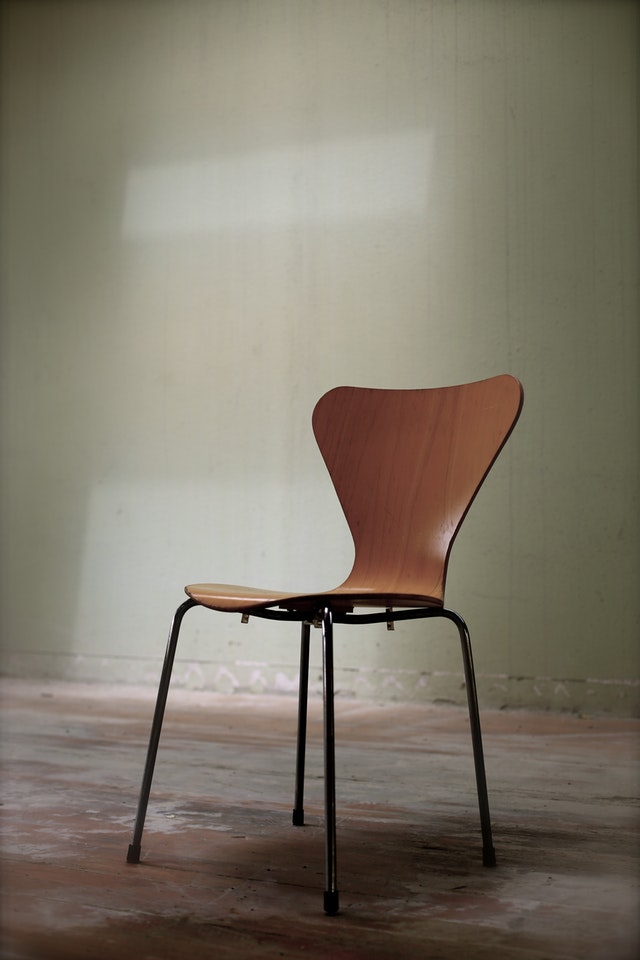
    As most of us know, in any coaches’ room, there is a pecking order.  Or at least, back in my day – when this specific incident occurred – there was.  Every coach usually has a specific spot they sit and place their skate bag, coats, teaching aids, books, purses, etc.  Over time, these specific areas become permanent and were silently acknowledged as that coach’s “spot”.  I have been in some clubs where you would literally be taken to school for sitting in another coach’s chair.

    Back in the mid-2000, I had well over a decade of figure skating coaching under my belt, had started running my own intensive summer program with the help of an incredible team of friends, and had several provincial medallists to boot (see what I did there?).  So, while I wasn’t the best of the best in coaching terms, I had put in my time, paid my dues, made MANY sacrifices, and gained, at the very least, a modicum of experience and credibility.

    I had been coaching at a little club on the outskirts of Calgary for a few years.  I was the relative newcomer, and the first thing I did when I started using the coaches’ room was to make damned sure I did not sit in any other coach’s spot.  I even asked a friend who worked there with me who usually sat where so I could make sure to find a chair that didn’t offend anyone.

    You see, I’m old school.  I believe you show respect to those who went before you. 

    I believe that you should show deference to coaches who have put in the time and sacrifice to get to where they are. 

    Without those successful coaches who have paved the way for us, I firmly believe we would have had a harder time of it. 

    And I also believe, more and more fervently with each passing year in my profession, that it is our job to kick in doors, shatter stereotypes and help empower the next generation of coaches in their journey as they follow our example.

    Now, some of you may say this is outdated thinking.  Some may think that respect should be earned and not given freely.  And to some extent, I agree.  One of the lessons I have learned over time is to withhold my respect and trust until new colleagues earn it, BUT, I want to stress, I still feel it is important to be kind, polite, and respectful whenever and wherever possible.

    So, time passed as I worked at this small club, and eventually, this chair became my spot.  Now, I wasn’t a senior coach in the club, but I felt I worked hard and deserved the same respect as anyone else.

    Around this time, a new coach was hired.  Let’s call her Monica.  Now Monica was a young coach, just starting out. She was very green and very young. But she seemed nice, and since I was only at the club a couple of days a week, I really didn’t have much interaction with her.  The first week with Monica working with us came and went with no problems.

    Then came the day that I arrived at the rink early and was out on the ice before Monica. When I came back in to change my skates, Monica was sitting in my chair.  “Well”, I thought, “no problem”.  So, I picked up my bag (which was next to the chair), my coat (from the back of the chair), and my boots (which were under the chair) and moved to an empty seat.  (Yes, there were empty seats in the room she could have sat in, but she was new, and she was young and just starting out, so I figured she may have been flustered and not remembered that’s where I usually sat).

    As I grabbed my stuff, she seemed confused and said, “oh, I’m sorry, is this your spot?” I quietly responded, “no problem,” and moved.

    In my head, I was thinking, “well, DUH, of course, it’s someone’s spot since all their stuff is on it, in it, or around it, not to mention you’ve seen me sitting here all week,” but I kept quiet and told myself to chill out.

    After this incident, I had a private conversation with one of my coaching friends in the dressing room.  I found it odd that with the empty chairs, Monica had chosen mine, even though my stuff was all over it, and she MUST have seen me sitting in that chair. And my friend told me that on her VERY FIRST DAY when she entered the coaches’ room, Monica had asked my friend(duh-duh-DUUUUUHHHH)…..“WHO SAT WHERE”?

    My friend had gone through who sat in each chair, so Monica already knew who sat where and where the empty seats were.

    This seemed odd to me.  Monica already knew who usually sat in each spot.  There were empty chairs.  But rather than take an empty chair or any of the FOUR other coaches’ chairs who also used that room, Monica chose to target me.

    Of course, because I wanted to be nice, I told myself I was being paranoid.

    I let it go.

    Sure enough, the next week, it happened again…. empty seats in the room, lots of choices of where to sit, aaaannnnnnnddddd sure enough, Monica targets my seat.

    I called her bluff.

    As she looked up at me, she asked, “Oh, I’m sorry, is this your chair?”  I said yes and stood there.  She grabbed her stuff and went to an empty chair.

    I said thanks.

    That night I got an email from Monica.

    She was genuinely hurt.  She expressed herself quite eloquently, explaining in DETAIL how I had embarrassed and devalued her because I had made her move. How I had hurt her feelings. How could I do that to her?

    I read the email a second time.

    I poured myself a very large glass of red wine.

    I re-read the email over and over and over, trying to digest what I was reading and reconcile it with my perception of the situation.

    I had another glass of wine.

    I started about 12 different responses, then deleted each one.

    I finished the bottle.

    I realized that I would never want to be the one to make anyone feel bad about themselves, and I really, truly tried to look at it from her point of view.

    • True, she knew I sat there and chose to single me out twice and make me move. 
    • True, this felt like a calculated move to take me down a peg.
    • True, it felt like she was identifying the competition in the room and trying to neutralize it.
    • True, I was over-analyzing the situation to death.
    • True, I was likely paranoid based on my experiences so far in the figure skating and coaching world.

    I went back and forth in my head, arguing each side of the argument.  Was I being over-dramatic and seeing shadows that weren’t there?  Were my instincts correct, and was this a targeted move on her part?  It is well documented that women are overtly competitive with their peers in their workplaces…. this could be one of those times.

    In the end, I couldn’t dismiss one inescapable fact.

    It was JUST. A. DAMNED. CHAIR.

    So, I wrote her an email.  I apologized if I made her feel bad.  I tried to express the fact that I have always respected older coaches, the battles they have fought, and the experiences they have had, and for this reason, I always tried to not take their places in coaches’ rooms because they had earned the right to those spots.

    In the end, though, I said it was just a chair, and if that was where she felt she needed to sit then I said she could knock herself out, and I would move.

    I even invited her out for a beer, so we could have a good laugh about it.

    Confident that I had diffused the situation, I pressed send.

    The email I got back was no longer sad or hurt.

    SHE. WAS. NOT. HAVING. IT.

    She went UP one side of me and DOWN the other.

    According to her, I was condescending and egotistical, and a few other things I don’t care to repeat. I mean….  how DARE I talk to her like that? Who did I think I was?

    And it went on and on and on.

    I still shake my head when I think about how badly she had misinterpreted the tone of the email and how angry she was.

    I also shake my head at the fact she took absolutely no accountability for her part in ANY of it.

    She was the victim.  I was the aggressor.  In her eyes, it was case closed.

    I had had enough, so I forwarded the entire exchange to the club president.  She sent out an email the next day telling everyone that there were no assigned seats in the coach’s room.

    This, of course, was NOT true.  But the president was a much older lady who, while sweet, was not in the loop when it came to the politics at work within her club.  So, it seemed that every other coach got to keep their chair, and Monica had succeeded in demonstrating her power and co-opting mine.

    Even though I had already conceded the battle, it was clear I had also lost the war.

    Life went on at the club, Monica and I co-existed, I was pleasant, and she was cordial, but it was clear we would NEVER be besties.

    To this day, I still think about that chair.

    I still don’t know if I was right or wrong.  Did I stand up to a woman who saw me as a competitor and was trying to cut me off at the knees?

    Or was I the one disrespecting a new coach and being the antithesis of everything I had hoped to stand for?

    I’ll let you be the judge on this one. 

    Have you ever felt a colleague was trying to stealthily take you down a peg?  Share your experiences in the comments.