Last weekend my daughter danced in her studio’s end-of-the-year recital. The show was a success, full of the usual suspects; seasoned performers hip-hopping their way to fame, teeny-weenies out for their dance debut loaded with sparkles and wide-eyed anticipation, and budding street dancers learning the breakdance ropes.
While all of these regular recital occurrences are heart-warming, what got me in the “feels” was that I got to watch the entire thing from the audience.
This may sound odd, given that my little dancer is not so little anymore. In fact, at nearly twelve, she’s taller than most grown women. And you’re likely now thinking that I’m a total helicopter mom, hovering like there’s no tomorrow, too afraid to cut the apron strings and let my daughter look after herself.
While that may be true, there’s also another factor to consider. You see, my daughter is neurodivergent; she has ADHD and is on the autism spectrum. This means that she is quirky, beautiful and (in my humble opinion) fucking brilliant.
It also means she has significant challenges in places and at events that you and your neurotypical kiddos likely take for granted.
I won’t ever take something like watching a dance recital from the audience for granted again. I’ll tell you why.
My daughter doesn’t look any different than your average tween. Given that she is considered Level 1 ASD (formerly known as Aspergers), nothing would cue you that she is any different from a neurotypical child.
This is why so many parents of kids on the spectrum get the side-eye, eye-rolls, and just about any other eye-related behaviour from other parents, teachers, doctors, etc.
No two children on the spectrum are the same, but let me share with you some of the challenges my daughter has had to overcome in her dance career.
Motor Difficulties
You know how kids can effortlessly tie their shoes or change outfits like they’re in a backstage dressing room of a Broadway show? Well, that’s not exactly a walk in the park for my kiddo.
With her motor skills functioning a little differently, quickly tying tap shoes or changing sparkly leotards might as well be an Olympic event. And let’s not forget the actual dance numbers.
With balance and coordination playing a cheeky game of hide-and-seek, the challenge of mastering those intricate steps is on another level.
Issues with Working Memory
Ever tried to keep track of multiple dance numbers, their order, and the steps for each in your head? My daughter tackles this challenge head-on every time she steps onto that stage.
Prioritizing tasks and decision-making are like trying to solve a Rubik’s cube blindfolded. The struggle with working memory is real y’all.
Executive Function Challenges
Imagine having a long list of instructions, each more complex than the last. Sound overwhelming? Now, think about how it feels when every day is filled with these lists and not having a freaking clue where to begin or how to put the required steps in order?
That’s the reality for children like my daughter. Delayed executive function development is like trying to solve a jigsaw puzzle with missing pieces. Is it any wonder they get frustrated and lose their shit?
Emotional Dysregulation
Feelings for my daughter are like waves during a storm, overwhelming and unpredictable. Her emotions are big, bold, and often challenging to rein in. It’s like riding a roller coaster without a safety bar, thrilling but also a little scary.
The hardest part as her parent is to watch the shame and guilt play across her features once she has calmed down and realized what she said and did while she was struggling for control.
Even though my kiddo is starting to realize that when she gets overwhelmed, her frontal lobe is not in control, and she is in the clutches of her amygdala and the dreaded fight/flight/freeze/fawn (although there is a strong argument for using “feign” instead of fawn) response cycle, she still feels bad about her behaviour after the fact.
Sensory Sensitivities
Imagine being at a rock concert, but the music’s too loud, the lights are too bright, and the crowd’s too much. Now, try picturing that every time you’re in a room full of kids or under fluorescent lighting.
That’s what my daughter deals with — a world where sounds, smells, and sights can be as piercing as a siren’s call. Because she perceives the world differently and often more intensely, she can experience these sensations as discomfort and even pain.
Now see yourself at a dance competition or recital, packed together in a dressing room with hundreds of other dancers, all anxious and excited. The steady drum of chatter, shouting, crying, and music would be enough to drive a neurotypical person to drink, let alone someone who’s conditioned to perceive these stimuli as threats! (To clarify, I don’t let my daughter drink…so don’t come for me!)
Problems Reading Social Cues
Reading social cues for my daughter is like deciphering hieroglyphics without a Rosetta Stone. It’s tough not knowing how to fit into the social puzzle, feeling isolated in a room full of chattering children.
But thank the goddess for our dance studio. Through careful attention to fostering a climate and culture of family and inclusion, they have helped my daughter fit in every step of the way. I wish I could say the same for our previous studio, but that’s another story for another time. (And perhaps that aforementioned drink)
Triumph in the Dressing Room
Usually, I am my daughter’s special assistant in the dressing room. My job is to make sure she can navigate quick changes, take a sensory break if necessary, calm her in case of overwhelming nervousness to prevent meltdowns and help her navigate the environment and pressure around her.
I always ask my kiddo if she wants me there with her in the dressing room or if she’d like to try it on her own, as I’m trying to foster independence and push her boundaries, but I want her to feel ready for it.
So I wasn’t surprised when she asked me to be her special dressing room assistant once again.
I don’t mind this, but the fact is, it is usually only my daughter and me at these events. So when I’m below in a dressing room, I am not in the audience to hoot, holler, yell, and clap for her when she’s onstage. And that means she has no one in the audience to do that for her.
As you can imagine, for an only child who seldom sees her father and sees ALL the other families full of siblings and relatives attending, this is hard for both of us.
Still, I was prepared. I’d created extra lists for my l’il dancer with the order of her numbers, all carefully highlighted. I’d labelled each of her dance bags carefully, even crafting numbers to hang on each hanger so it would be easier to see which one was next.
I’d done all the things necessary to ensure a seamless experience. I’d packed all my kiddo’s sensory stuff, like headphones, earbuds, fidget spinners, a tablet and a charger, not to mention a cell phone. You name it; we were ready.
Then, suddenly, as we were setting her bag up in her designated space, my daughter shot me an “I’m so embarrassed my mom is here look” and started shooing me away.
I have to admit. I froze, unsure if I was actually seeing what I thought I was.
Sure enough, my daughter wanted me to leave her alone so she could hang with her dance friends. When I asked if she could handle the quick changes, she said she could, and I should leave her alone.
I just about cried. Partly, if I’m being honest, because this was a huge hurdle, and it meant my baby was growing up, which is difficult for every mama bear, neurodivergent or neurotypical alike.
But partly because of the overwhelming sense of relief and freedom to sit and enjoy myself at a function. Whether it was a family dinner, a holiday gathering, a school assembly, or a dance recital, I had yet been unable to do this.
I don’t think you can understand how it feels to always be alone when you’re the parent of a kiddo on the spectrum. Because your child is more, needs more, and demands more, you have to give more, be available more, be more organized, be more prepared, be more calm…I think you get the picture.
This sense of being an uber parent is not conducive to sitting and having a cocktail at a dinner party, socializing with family at a Christmas get-together, or watching your daughter shine onstage at dance recitals.
Until last week.
And shine, she did. Although it was hard to see from the tears in my eyes. (I’m not crying, you’re crying)
Parenting on the Spectrum Means You Celebrate the Ordinary Moments as if They Were Extraordinary
My daughter did it on her own, and I couldn’t be prouder. You see, for parents like me, we don’t just celebrate the recitals or awards. We celebrate the moments when our children prove to the world, and more importantly to themselves, that they are so much more than a label.
We celebrate when they show their strength and resilience in the face of adversity and face the challenges of a world that can be overwhelmingly stacked against them.
So yes, I won’t ever take something like watching a dance recital from the audience for granted again. Not because it’s a luxury but because it’s a testament to the beautiful, quirky, brilliant girl my daughter has become. And how damn proud I am of her.
If you want to share some ordinary yet extraordinary moments with your neurodivergent child, comment below, and follow me for more blogs!
Better yet, why not check out my online store, BellaZinga (inspired by my daughter and her neverending one-liners) for some merch with a side of neurodivergent sass? While you’re there, you can download my eBook “Friends Beyond Differences: Embracing Neurodiversity.”
It’s an engaging guide written specifically for neurotypical kids aged 6-12 to help them understand and embrace their neurodiverse peers.
And remember, our differences make us unique, but our humanity binds us together. Let’s ensure every child, regardless of their neurotype, feels accepted, loved, and capable of dancing their own unique rhythm.
I have a confession to make. I used to be one of those coaches who did not believe ADHD (attention deficit hyperactive disorder) was a real “thing.” I cringe as I write this, but there it is.
I can remember YEARS ago as I was in the midst of coaching a group of young boys for an ice show number. The boys were a handful, and I had been informed that several of them had ADHD.
“Right,” I thought to myself, “all these kids need are a strong hand and firm boundaries….seriously.”
So I cracked down. I was firm, and strict. Hell, I ran that practice like a drill sergeant. And those poor kids had no fun whatsoever.
When I think back to that time, I can’t believe how ignorant I was…..I had no knowledge of ADHD, and just assumed in my hubris that it was the result of inadequate parental discipline. I still shudder to think of my lack of empathy and understanding for those poor kids suffering with invisible conditions, as well as the parents doing their best to help them.
Fate has a twisted sense of humor, and she decided I was in need of a serious karmic tune-up. The first person put in my path to teach me valuable lessons was a competitive skater. I had worked with many recreational skaters in the past with ADHD and other special needs, but I had not had the pleasure and the challenge to work closely for a long period of time with a higher level athlete.
It was an eye-opening experience. There were so many behaviors I observed over the course of our years together that I was to learn were simply not in my athletes’ control, and I experienced first-hand the struggles faced physically, mentally and emotionally these brave kiddos face every-single-day.
I also learned that despite all of my coaching experience, my university degree, and my thousands of dollars spent on my NCCP coaching courses over the years, I had received virtually no training in 20 years of coaching with my association, (up until that point in time) on how to coach neurodiverse athletes.
It was an aha! moment, and I immediately went to work to learn as much as I could about conditions like ADHD, ASD, giftedness, dyslexia, processing disorders, executive function issues and so many others…..and let me tell you, there is a LOT to learn.,
After taking courses in Learning Disabilities and ADHD with different associations and colleges, I felt better equipped to be the best coach I could be for my skater.
Then fate hit me with the second of it’s one-two punch.
I gave birth to a beautiful baby girl. My miracle baby after years of infertility. And it quickly became apparent that there was something different about her; not better or worse, (although she certainly demanded MORE of me than other babies and toddlers her age seemed to demand of other parents)…..just….different.
Sure enough, after years of research, advocating, homeschooling and fighting against judgement and stereotyping…..I had a diagnosis….well, one of possibly many diagnoses….my daughter has ADHD. And anxiety. And executive function issues….and possibly Aspergers. Let’s not forget possible dysgraphia. Or the possibility of processing issues….oh yeah…and pretty sure she’s gifted too!
(note: I am aware Aspergers has now been grouped under the autism umbrella and categorized as an Autism Spectrum Disorder–ASD–but Asperger’s and “Aspie” is the term we have chosen to use.)
Holy fuck.
On a personal level, I found out just how amazing, wonderful, frustrating, overwhelming and draining it feels to be the parent of a kiddo with an invisible disability and superpower like ADHD.
Not gonna lie though, sometimes it feels like I am drowning.
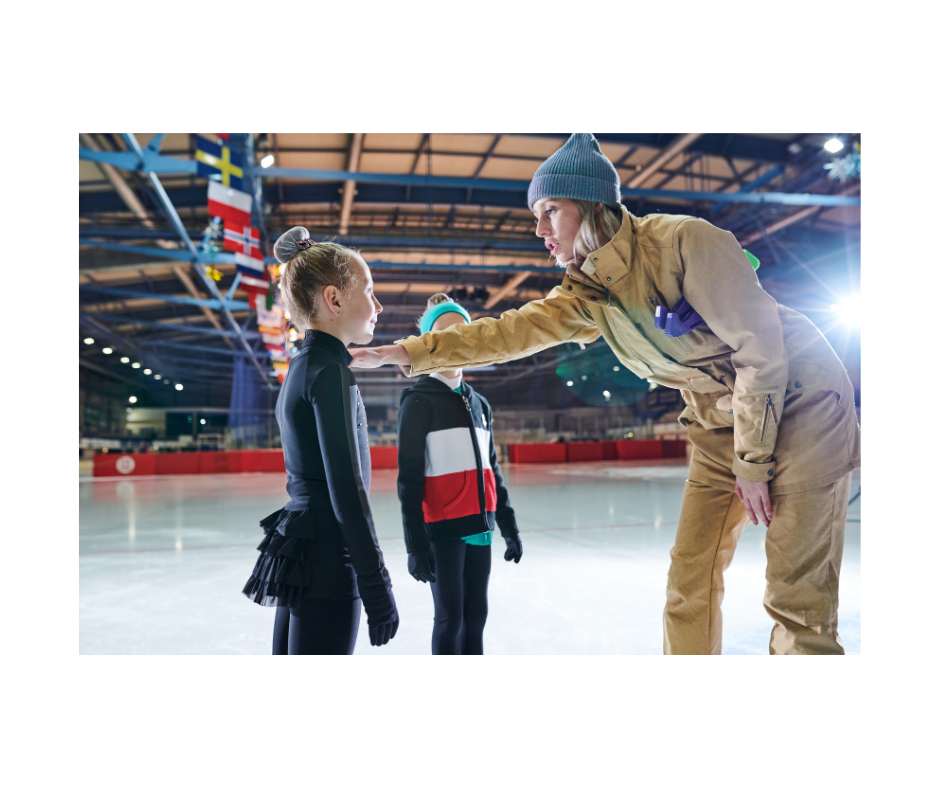
Over the course of the years, as my daughter tried different activities like skating, karate, soccer, and dance, I was able to observe many different types of teachers, coaches and dance instructors as they worked with my daughter.
I felt I had a unique viewpoint given my many years coaching, and my years parenting a neurodiverse child to REALLY understand what it takes to teach kiddos with unseen disabilities.
And I was, unfortunately, often disappointed.
I say this with the utmost respect to those amazing teachers and individuals I have encountered who were fully educated about my daughters needs, and those who went over and above to help her and really individualize her learning experience.
Some of my best friends are teachers, educational assistants and coaches to special needs kiddos, so I see and appreciate those who actively work to make a difference every day.
Unfortunately, most teachers, coaches and dance instructors simply don’t have the tools in their toolbox, the knowledge, or even the motivation to learn the techniques required to work with these kids.
And even MORE UNFORTUNATELY, most sports and educational institututions don’t supply adequate training or compensation for their teachers/instructors who deal with children with special needs, and are equally lacking with resources and supports for those who need it most.
I remember clearly my daughter coming home sobbing from school, not understanding why her teacher got mad at her for not finishing her work on time, or taking off her outside clothes after recess before she was late for class. Even though I stressed that my daughter struggled with executive functioning, working memory, and fine motor skills, all of which required more time and assistance to complete most tasks, her teacher was not able to give her the time, grace or help she needed.
I also remember a couple of my daughters’ dance teachers making the students sit on the studio floor for long lectures, a task that is painful for kids with ADHD. I also watched them giving long lists of instructions or corrections that were difficult for my daughter to follow and, in my opinion-the cruelest thing of all-telling the kids that only the students that could sit still and be quiet enough would be the ones who would get the best parts in the dance.
My daughter felt unseen, unheard and unworthy. She still has nightmares about that particular dance studio. We have since changed studios and are with a wonderful, inclusive studio where my daughter has found her love of dance again.
But the damage was done.
So in an effort to save my fellow coaches some time as they work with athletes that may have these invisible disabilities, I thought I’d compile a list of the things I’ve experienced and information I’ve researched in an effort to better help YOU help YOUR students.
Before we get started, I’d like to impart a few words of caution.
When talking to your athletes parents about what you are seeing with their children, don’t normalize the behavior in an attempt to make them feel better. How often have you heard or been part of a conversation like this?
Tired parent: “So how did Sally do in her lesson today?”
Coach: “She did well, but she was pretty busy, she had trouble standing still and listening to me giving directions.“
Tired parent: “Sorry, she has a hard time maintaining attention, but she is listening….(sigh), she’s just very busy and it takes a lot of work to keep her on track.“
Coach: “All kids are busy, but she just needs to pay attention to the instructions so she knows what to doin the lesson.“
Sounds okay, right? The coach didn’t sound mean, just explaining what behavior is required in the lesson. I mean, we’re taught to be clear about our expectations, right?
The problem lies with the “all kids are busy” part.
You may think by down-playing that child’s hyperactivity you are making the parent feel better by pointing out that all kids are busy, or have difficulty paying attention.
But you aren’t making them feel better. In actual fact, you are making them feel awful.
Think about it. Kids with invisible disabilities have an actual, proven, neurobiological and physical disability. Just because you can’t see it, doesn’t mean it’s not there. They simply are MORE, and because of these deficits they demand MORE from parents and coaches.
Would you tell a parent of a child with cerebral palsy, “it’s okay, all children have trouble with movement and muscle tone.”
Pretty sure you wouldn’t. But when you tell a parent of a child with an invisible condition that “all children” are like that you are devaluing their entire experience of parenting their child. You are in actuality giving credence to the judgment they hear every day from people with no knowledge of the biological reasons for their children’s differences.
You are, in effect, saying that if all children are like that, then it must be an issue with the environment or parenting.
And that’s just shitty. Even when it’s meant with the best of intentions, it still hurts. The shame and recrimination we feel and think every day as the parent of a neurodiverse kiddo is a pretty heavy burden. Trust me, we already judge ourselves more harshly than other parents. So don’t add to that guilt, okay?
Next, as the saying goes, “if you’ve met one individual with autism, you’ve met one individual with autism.” (Steven Shore)
This means that no two neurodiverse athletes will have the same characteristics, strengths and weaknesses as the other. Every neurodiverse individual is unique, as coaches it is our job to figure out what works, what doesn’t and how to adapt our teaching styles to best accommodate them. It’s not their job to accommodate us…..they are physically unable to do so.
You have to approach every neurodiverse student as if they are a puzzle to figure out. You have to observe their behavior, discuss their needs with their parents who are often the BEST source of information, research their conditions, talk with other coaches or teachers who have had success with their own special needs students, and finally, use trial and error in your approach to coaching them.
Coaching students with invisible special needs is not for the faint of heart. These kids can try your patience and knowledge to the Nth degree, but when you figure out how they learn best, you will be richly rewarded. Without further ado, here are a few common sense and easily applied strategies you can use in your every day coaching these athletes.
1.Keep Your Instructions Short
Really short.
THIS.SHORT.
Seriously guys, I can not stress this enough. Asking kids with attention deficits to sit through long lectures, explanations or any instructions longer than a few chunks of information is actually not only unrealistic, it is almost cruel to them.
Give instructions in short, easy to remember chunks. Then send your student off to try it.
If you use “cue” or “key” words when you teach (and you should, because…hello!) then you need to try to use the same 4-5 keywords for everything.
I know, this is hard to do….especially if you are working on two very different skills in a lesson, but do your best. It is critical that you make your instructions as easily accessible for their brains as possible.
Think about it, learning is an incredibly complex process-when you learn something new you have to be able to access and rehearse the information as you hold it in your working memory, and then incorporate it into your motor program carefully enough so that you myelinate the correct pathway!
And let’s not forget that the brain also has to convert that information from your short-term/working memory to long-term memory, andthen be able to figure out where you stored the correct information when you need to access it in subsequent practices.
And of course, if you struggle with regulating attention, this will hamper the process of encoding the information….this is what happens when you have students who have seemingly grasped a skill or concept one day, then appear to have no knowledge of the skill the next. It feels like you are re-teaching skills constantly and can get quite frustrating. This leads me to my next point.
2.More Patience, More Understanding, More Kindness
Imagine what the learning process feels like for your neurodiverse students. These athletes are giving you every effort they can, doing their best to attend and learn, and they still struggle to retain skills from one day to the next, watching their neurotypical counterparts pick up the skills more rapidly and with less effort.
It’s not fair, and as a coach, you absolutely have to give support and empathy to these athletes. They will require more understanding, more patience, and more kindness than you may have ever thought you have.
Don’t think you have that level of support in you? Trust me, you will find wells of empathy you never knew you had, because when these kids finally achieve a skill they have worked and cried and literally bled for, it will feel like they have won the freaking Olympics.
(For a great infographic on how we encode, store and retrieve information, check out learnupon.com)
The learning process for any new skill is hard enough for a neurotypical learner, let alone a child who has a deficit in the brain processes required for these tasks…which leads me to my next point, kids with processing disorders.
3.Give the Gift of Time
A neurodiverse athlete or learner will often have difficulty in any one of the steps required to encode, store or retrieve information.
Often, upon hearing verbal instructions, students with processing issues require time for the auditory input to reach their brain. I think of it as that swirling circle you see when you type information into your web browser and are waiting for it to load.
You have to give your neurodiverse athletes more time then you would normally give your neurotypical athletes when you give instructions. If working in a group setting, give the instruction, using only a few chunks of information (remember, SHORT instructions) and send your neurotypical athletes out first to practice the skill.
Then, use the time with your neurodiverse kiddos to check for understanding. You can ask them to repeat what you said, and if you detect they are having difficulty you can repeat, rephrase, or reform your instructions, perhaps drawing a picture, or demonstrating the skill yourself while stressing the cue words.
Even more helpful would be pictures of the instructions posted for them to refer back to when necessary.
Too often, I see coaches blaming kiddos for not paying attention, or not caring, when they don’t understand given instructions. Remember, A CHILD WILL DO WELL IF THEY CAN, if they cannot, it is our job to help them to do well.
Talking louder and repeating the same instruction to your athlete when they struggled to understand it the first time will. not. help. It only creates anxiety and frustration in the learner.
I heard a brilliant analogy of this from the “Leaky Brakes” Brake Shop Webinar offered from the Child and Parent Resource Institute in London Ontario. I highly stress you check them out, because it will CHANGE THE WAY YOU THINK about kids with impulse control problems.
Here’s the analogy: Imagine you have a beautiful sports car. This car is the top of the line, it can drive faster than any car on the road. Now imagine, there’s a leak in the brake line of this beautiful car. This car simply cannot stop when it needs to.
Will yelling at the car and repeating “stop, stop, stop!” help the car to stop?
Will threatening to take away the best oil from the car if the car doesn’t stop help the car to stop?
No, identifying that there is a problem with the brake line, that the car is physically UNABLE to stop at this time, and figuring out how to fix the brake line is how you fix the problem.
We have to change how we approach and work with these kids, realizing we cannot have the same expectations from them as we have from neurotypical kids.
And we absolutely cannot use the same language, motivation, or discipline techniques with our neurodiverse athletes as we do with our neurotypical athletes.
It just won’t work.
4. Help Them Prioritize
Often, athletes who seem to not give their best effort in a task are not procrastinating out of disinterest, they are unsure how to begin. Many neurodiverse athletes have deficits with executive functioning, which impedes how they access information to complete tasks.
In order to complete any task, we must be able to organize our thoughts enough to pick a beginning point. This involves prioritizing the elements of a task and picking the most important to complete first, organizing each subsequent element of a task in sequence, and finally, accomplishing the appropriate portion last.
This act of determining which elements of a skill must be practiced or completed first is sometimes the biggest obstacle to a neurodiverse athlete as they attempt to learn new skills and incorporate instructions.
In order to help, first, keep instructions short, and repeat them as many times as necessary for the athlete to remember. Where you might teach a skill with the “whole-part-whole” approach for a neurotypical athlete, when it comes to dealing with students who think differently, you must parse your instructions down even more.
Lower your expectations with regard to the time it takes to learn new tasks, and break skills down into chunks involving only 2 chunks of information or physical actions at a time.
Next, give your instructions using this phrase: “First…….then….”
Giving instructions in this format helps neurodiverse kiddos pick the most important step to begin with, and the next step to do after they have accomplished the first.
This gives them a clear path to learning the skill with much less use of brain power on their part, allowing them more enjoyment in the learning process itself.
I also highly recommend writing these instructions down where they are easily accessible, such as laminated lists you can re-use daily. Having instructions posted where neurodiverse learners can see them helps them when they lose focus and become distracted.
5. Dial It Down
Many student athletes have “sensory processing” disorders, which deals with the way a body receives and processes sensory information from the outside world. Children that have sensory issues often experience stimuli more strongly than others, and things like loud noises or bright lights can be painful for them.
If you know or suspect that an athlete may have sensory issues, you might want adapt their learning environment, choosing times when there is less stimuli, less people, and less noise. If you are teaching a sport in an environment that requires music, then watch the volume of the music, and make sure to modify it if it causes issues for the athlete in question.
Teaching group lessons with students who struggle with distraction may be difficult, however, kids that struggle with social cues learn so much about how to interact with their peers when they are working with a group of friends toward a common goal and under the guidance of an instructor.
I recommend a balance of group lessons for work on social skills and private for intensive skill work in order to provide the best benefit for your neurodiverse athletes, but remember, every neurodiverse kiddo is different, so trust your instinct for what you feel will work best for them.
From taste, touch, pressure, sight and hearing, be prepared for your neurodiverse athletes to exhibit sensitivity in any of these areas, and work to lessen the discomfort so they can train free of distractions.
6. Delayed Development
All coaches have received training concerning the difference between chronological age (years) and developmental age (maturity). When working with neurodiverse children, it is important to remember two things:
First, it is very common to see delayed development in kiddos that have hidden disabilities like ADHD or ASD. Children can often lag behind several years from their counterparts.
This means that while you might be teaching a student who looks 12, he or she may be up to 3 years behind their counterparts in not only physical, but also social or emotional development.
As coaches, we have to recognize this lag and adjust our expectations on everything from emotional control to reading social cues.
Second, development in children with hidden disabilities and issues is often ASYNCHRONOUS, particularly in children with multiple special needs-often called twice- exceptional children.
This means that you could be dealing with a gifted 8 year old child who knows more than you about the Canadian political system, yet struggles to grasp basic time management each practice, and may have the emotional control of a 6 year old.
Be prepared to meet your neurodiverse athlete on all levels in order to best engage them as they learn.
7. Embrace Anxiety
This sounds funny I know, after all, who wants to embrace anxiety? What I mean is, as a coach, you have to realize that anxiety goes hand-in-hand with neurodiversity. Children who suffer with invisible disabilities often know they are different before they are even diagnosed. They know things are harder for them, and they feel shame and anxiety about not fitting in.
Often anxiety will show up as perfectionism, negative self-talk, crying, or reluctance to practice. Even more often, the anxiety about failure, or being different, will manifest in stomache aches, headaches, aches, pains and melt downs.
It is important to remember that if you have a child athlete that exhibits these symptoms often, and all possible physical causes are ruled out, then you are likely looking at a physical expression of their psychological turmoil.
Don’t accuse them of making excuses or trying to get out of work. They didn’t ask for this. Instead do what you can to alleviate their anxiety.
Help them name their fears, if they can’t express how they are feeling then they can’t address how to control those feelings.
Once your neurodiverse athletes have named their fears, don’t discount them or issue the typical “stop worrying” advice that we so often hear. While it is important to recognize your students’ anxiety, it is equally important to not try to fix it, or tell them to stop worrying. Doing this invalidates your athletes feelings, after all, they are allowed to feel what they feel.
Instead, start teaching mindfulness, growth mindset and relaxation strategies EARLY and OFTEN. Then practice, practice, practice.
I can’t stress this enough. As a coach of neurodiverse athletes, you must stay on top of their mental training….it will be as important as their physical training.
Once you have the basis of these strategies, stress to your athlete that anxiety is natural, but they have the tools to cope with it and you have faith they can do it.
Anxiety is a tricky monster for neurodiverse athletes, but it CAN be controlled with CONSISTENT EFFORT from them, and CONSTANT support from you, their coach.
8. Change Your Thinking
As coaches, we have this belief about what it takes for kids to be coachable. We’ve all seen those memes we circulate on Facebook, hell, I’ve even circulated some of them.
I know you all know the ones I’m referring to, memes that start like this:
Ten things that have require zero talent.
Being on time. (ten times harder for kids with executive function issues.)
Work ethic. (hard for kids with ADHD or ASD that are prone to distraction, which is often mistaken for laziness.)
Effort(often neurodiverse kids are so riddled with anxiety they give up, or they don’t even know where to begin due to executive function or processing disorders.)
I hope you are all starting to see what I am talking about here. It’s time to stop posting these motivational memes. We need to stop applying these neurotypical expectations to our neurodiverse athletes because they shame those athletes for which these behaviors are ten times harder.
We have to adjust our expectations when teaching kiddos that think differently. This means:
Stop asking them to look you in the eye when you are talking to them, often this makes it HARDER for neurodiverse kiddos to focus.
Stop asking them to stand up straight and stop fidgeting when you are explaining a task to them. Many kiddos have balance or coordination issues that require them to lean on something for support, and some have chemical imbalances that make it next to impossible to not fidget.
Stop asking kiddos to stand in line and wait their turn. Aside from just poor coaching (yes, I said it) asking neurodiverse children to stand in a formation and do nothing but wait their turn is not realistic and sets them up for failure.
As coaches, we need to change our beliefs about how we teach our students and what we expect from them. There are more neurodiverse athletes out there than we realize, and we simply haven’t adapted our teaching techniques to accommodate their needs.
It’s time we let go of outdated practices, and started really exploring how to best help this underserved population of athlete.
Sports can be a life-saver for kids struggling with invisible disabilites, following these simple tips can change lives for the better, both yours and your students.
If you have any tips for teaching and supporting neurodiverse athletes, feel free to share!
Overview: Anyone who has ever grown up inside the belly of organized sport can attest to the many valuable lessons taught daily to those who participate. Sports, both competitive and recreational, can impact young bodies and minds in ways that are immeasurable.
However, sport also provides an arena where harm can and often is meted out to those who play by those who often have the greatest influence on them: their coaches.
Joe Ehrmann dissects the good, the bad and the ugly in organized
sports specifically in the field of coaching. Through sharing his own
experiences in life and in sport, Ehrmann achingly details how young and
fragile youth can be further victimized by well meaning but unwitting coaches;
coaches who are trying to work out their own issues but instead end up
projecting these issues on players.
Thought provoking and often disturbing, (warning; there may
be triggers for sexual assault victims in reading this book), the author
courageously illustrates how certain pivotal and traumatic life events created
a foundation of vulnerability and sadness, which left him open to be influenced
for the greater good, or, unfortunately, greater harm by his coaches.
Joe Ehrmann leaves no stone unturned as he navigates the
complicated waters of inter-relationships in sport. Between outdated stereotypes of masculine and
feminine roles, win-at-all costs sport culture, the stresses of the times we
live in, familial dysfunction, and lack of values-based coaching, he paints a
comprehensive picture of the problems young athletes face today and what
coaches can do to help them successfully chart their own course.
Starting with each coach turning their reflection inward by
focusing on their own personal demons, and finishing with a complete road map
for how to create your own InSideOut Coaching culture, this book shines a light
on every nook and cranny of the coaching world.
Best Feature of the
Book: The author writes this book in
a very organized step-by-step way, first detailing the turning point in his
life that started him on the “InSideOut” journey, next breaking down the
positive and negative interactions and revelations into thoughtful and easy to
understand categories within the sport continuum, and finally, detailing the
steps he took to re-create the sport model with his newfound knowledge. This
provides a very easy to follow narrative with a clear road map to incorporating
the ideas he presents.
Pros: There are very few books that deal
specifically with the coach-athlete interaction and the profound affect it can
have on young people. Ehrmann takes his
wealth of experience and helps each of us see (either through the lens of the athlete
or the lens of the coach) our own strengths and weaknesses. Ehrmann then helps us clarify what we need to
fix, and gently leads us to our own conclusions about the steps we can take to
be better, simply by setting the example for us to follow.
Cons: While I enjoyed Ehrmann’s writing style, I
found sometimes he spent too long on topics, often to the point of
redundancy. There were times where I as
a reader had received the message and was ready to move on to the next chapter,
and he was still fleshing out the point at hand with more examples. However, this is more likely attributed to my
get-it-done attitude than anything else and certainly did nothing to take away
from the overall message.
The other con I found while reading this book is it will
trigger some negative memories. As a
victim of abuse, both inside and outside of sport, and more specifically, as
someone damaged by transactional coaching, reading this book did bring back
some of the old fear, anxiety, guilt and sadness related to those memories.
However, just knowing that I wasn’t the only one that had these experiences was
enough to help me get through them with some valuable insight and
understanding.
Conclusion: If you want to be a better coach, for
yourself, and for all the young men and women you can and will influence over
the course of your career, you need to read this book.
Overview: If I could be in LOVE with an App, I would be in love with THIS APP. For years as a competitive skating coach, I have had to consistently research, re-write and figure out how to best apply the basics of mental training and mindfulness for my very young students with limited time and resources. I am the type of coach who firmly believes we MUST start to sew the seeds of mental training EARLY and OFTEN for our young athletes and finding the time and the “kid friendly” material for my littlest of skaters was always a struggle. Cut to my most recent experience of being a mom to a 6-year-old who struggles with anxiety and all of it’s physical symptoms, and this app has been a lifesaver. If I had the means and resources to open my own training centre, (I still dream of this) all my athletes would have a tablet with this app as the FIRST app to start the mental training process.
Best Feature of the Book: This App is based on contextual behavioural science, and by using the app, students in early and middle age childhood will grow the following skills: • Calmness & relaxation • Stress & anxiety reduction • Concentration & focus • Navigating big emotions • Getting along with others
In a
nutshell, this app covers all the most basic and critically important mental
training skills for our youngest athletes in their most formative years.
Pros:
Every single thing about this app appeals to young children. From the central protagonist called a
“Flibbertigibbet™”, who asks children to soothe him
(and themselves) by using deliberate, thoughtful, repetitive, tactile
stimulation, to the Mindful Stories which are, in fact, informational
meditations read by a young child, designed to connect them with their feelings
and thoughts, this app is colorful,
engaging and dynamic in every way for young users.
Cons:
The exercises grow incrementally time-wise from one to the next, with
the first being only a couple of minutes to the next being a few minutes, and
so on and so on. I felt that there should be a reduced increase in time between
exercises, as the youngest users need more exercises in the 2-3-minute range
and the app jumps quite quickly to the 10 minute range with some of the Mindful
Play exercises. This is my ONLY small criticism of the app however, and it was
hard to find even one criticism of it to be very honest.
Conclusion:
My daughter begs to use this app and loves
it to death. I can hardly wait to
start to apply it in the field with my youngest skaters in hopes it will teach
them valuable tools for relaxation, emotional control, anxiety reduction, focus
and mindfulness. I highly, recommend you check it out and add it to your
coaching toolkit.
Overview: As skating coaches, we spend all our time looking for talent, assessing talent, and learning how to cultivate talent. Intuitively, we all know that talent takes time to grow, and the way to develop talent over time is through mindful practice and dedication.
“The Talent Code” takes a microscopic lens and scalpel to the talent myth and dissects every aspect of unlocking unseen potential, in athletes, artists and everyday people.
As a coach with a background in Kinesiology, and a particular interest in motor learningand neuroscience, this book validated many of my beliefs about talent when I first read it. Since that reading many years ago, I now spend much of my coaching time teaching the “why” behind skill acquisition, instead of just focusing on the how or technique behind it. The results have been incredible.
If you want to learn the secrets behind skill acquisition
and mastery, on both sides of the equation-coach and/or student-then this book
is for you.
Coyle centres much of the book around myelin, and its role in neural development, a theory of skill acquisition that has existed for several years, but is just now becoming main stream. This concept explains nearly everything that master coaches have known for years such as:
Practice
doesn’t make perfect; DEEP practice makes perfect.
Mastery in
a sport requires commitment and passion right from the beginning, if not you
won’t want to dedicate yourself to the countless hours of repetition necessary
to myelinate the neural pathways required.
Primal
Cues such as belonging, scarcity and safety can help provide ignition for passion
and commitment to a sport and we can tap into these cues and use them right at
the grass roots level of talent development.
This book should be required reading for every coach. If you want to learn how to get the most out
of your students and accelerate learning, this book explains the “why” behind
the “how” and will give you strategies for a more accelerated learning process.
Best Feature of the Book: Coyle weaves a coherent and exciting narrative thread through the book and documents his journey carefully as he breaks the talent equation into parts and investigates each with intelligence and empathy. The picture he creates of the people he meets along the way is colorful, full of humor, and packed with insight into the human condition. Along the way we get a view of the behind the scenes struggles and triumphs of many of the worlds famous over-night success stories, which we learn were NOT in fact over-night success stories.
Just reading the Talent Code gives all of us all hope in how we learn, and that the daily grind of practice and repeated failure does in fact pay off with more success in our chosen endeavours. The Talent Code is equal parts endearing and inspiring, and will keep you engaged until the last page.
Pros: The way Coyle breaks down the talent equation into it’s parts and further breaks down each part into it’s various necessary components makes it easy for sports organizations, parents, coaches and athletes to tap into the processes he describes to accelerate their learning curve and develop their talent. The benefits to be gained from utilizing these theories to maximize athletic development, particularly in skating, are incredible.
Cons: None.
This is a great book.
Conclusion: The Talent Code, by Daniel Coyle, is fun, informative, and trans-formative. The scope, breadth and depth of knowledge you will gain from it, even if it just reaffirms the instinctual beliefs you have always incorporated into your coaching and explains them, is well worth the money.
If you are in the business of developing talent, in any medium, “The Talent Code” is a must read.
Have you read the Talent Code? What did you think? Share your thoughts in the comments below, and if you liked this review, please, share with your friends!













 BellaZinga.Blog