Tag: workplace

  • What Skills Single Parents Bring to the Workplace: Unstoppable Jugglers in Action

    What Skills Single Parents Bring to the Workplace: Unstoppable Jugglers in Action

    As a single parent, you might think that juggling family and work commitments is a Herculean task. But have you ever considered the exceptional skills you’ve acquired through this balancing act? Your unique experiences as a solo superhero can actually translate into valuable assets for your workplace.

    There were over 10 million families in Canada in 2022, and of that number, nearly 2 million of them were led by single parents. This means that one out of every five families in our country are single-parent families. Clearly, there needs to be more support for this huge demographic.

    When it comes to managing work and family, single parents often develop unparalleled time management, multitasking, and crisis-solving capabilities. These very skills make you an exemplary employee. Your can-do attitude and resilience in the face of adversity will not go unnoticed by your colleagues and superiors.

    Now, it’s time to embrace your “secret powers” and take pride in the strengths you’ve developed as a single parent in the workforce. Let’s explore your hard-won expertise and how it can enrich your professional life.

    Source: Pexels

    Key Takeaways

    • Single parents possess strong skills in time management, multitasking, and problem-solving
    • These skills make single parents valuable assets in the workplace
    • Embracing and showcasing these strengths can lead to professional success and recognition

    Secret Superpowers of Single Parents

    Master Multitaskers

    As a single parent, you’ve already demonstrated your ability to juggle multiple tasks at home. Children, laundry, cooking, and sorting out bills—you’ve done it all. Well, these multitasking skills are a boon in the workforce! Your experience in navigating the chaos of solo parenting makes you highly adaptable and able to handle diverse tasks at work with greater efficiency.

    Jedi-like Time Managers

    Time management is an essential skill in today’s fast-paced work environment, and single parents like you are Jedi masters when it comes to making every minute count. Balancing the responsibilities of raising kids, managing a household, and carving out time for your career has honed your ability to prioritize, delegate, and plan like a pro. Colleagues will look to you as a beacon of productivity during those hectic workdays.

    Conquerors of Challenges

    Single parents in the workforce, whether divorced, widowed, or facing the pandemic solo, possess a unique mental toughness. The challenges you’ve overcome in your personal life have strengthened your resilience and problem-solving abilities in the face of adversity. 

    As a result, you’re more equipped to tackle complex situations at work, and your colleagues will be inspired by your tenacious spirit.

    Navigating Workplace and Child Care

    Walking the Tightrope

    As a single parent, you’re basically a superhero, juggling work-life balance with the grace of a tightrope walker. You manage the demands of your career and the care responsibilities for your children, all the while keeping a sense of humour. 

    Your experience with childcare gives you a unique set of skills that can benefit the workplace, like multitasking, problem-solving, and remaining calm under pressure.

    You’ve got the ability to maintain a steady pace even when the going gets tough. Your children are like coworkers with endless questions and urgent requests, but you handle it all with ease. 

    Just nail that presentation, rush home to fix dinner, and help your child with their science fair project that’s due tomorrow – all with a smile on your face! You got this, Mama! (Or Dad!)

    The Never-Ending Juggling Act

    As a single parent, it’s not just about making a house a home but also seamlessly integrating your career and family life. Taking advantage of flexible work arrangements like working from home or adjusted hours can help you strike that delicate balance.

    If you’re lucky enough to have sick leave options or even extra help from babysitters, that’s fantastic. If not, you always have your secret weapon: quick thinking and resourcefulness. 

    Need to book a last-minute appointment at the Child Mind Institute? No problem! Your boss needs that report ASAP, but your child is home with the sniffles? You’ve got it covered!

    You bravely face workplace challenges, sometimes trading traditional work-life boundaries for a blend that’s uniquely suited to you. Embrace your adaptability and strong organizational skills, my friend. Single parenthood doesn’t hold you back; it makes you resilient, flexible, and a force to be reckoned with in the office halls.

    So, remember, no matter how many balls you’re juggling, you’re doing an incredible job. Keep on shining, you multitasking superhero!

    Source: Pexels

    Support Needed for Single Parents at Work

    The Call for Greater Flexibility

    Do you feel frazzled trying to juggle work and family life? You’re not alone in craving a more flexible work environment. You see, workplace burnout is a real issue, not just some make-believe thing like sasquatches or maple syrup shortages. 

    By creating opportunities for remote work, employers can help folks like you find that oh-so-sweet balance between career ambitions and the demands of parenthood.

    Building a Better Support System

    A support system is key for any single parent, especially in the workplace. Company culture plays a huge role in this, just like how you can’t have spaghetti without parmesan—it’s essential! (or maybe that’s just me?) Your manager and organization must foster an environment where single parents feel included and supported. 

    Now let’s talk about systemic solutions:

    • Public policies can be the Tim Hortons of the workforce, providing the daily fuel needed to keep us going (And who doesn’t love Timmies?). By enacting family-friendly policies, the government can help employers create better work systems for single parents.
    • Flexibility is the key to unlocking the ultimate Canadian work-life balance. By offering flexible hours, remote work, and other accommodations, employers can help single parents skate through life more easily.
    • Support from co-workers and friends is as important as finding the right Nice ‘n Easy hair colour. (Too much information?) By creating a network of trust and open communication, single parents will have a solid team to rely on during tough times.

    So, there you have it. By focusing on greater flexibility and building a better support system, your workplace can become the champion single parents need! Just don’t forget to grab some Timbits for the office along the way.

    Tales of Triumph: Making the Most of Single Parent Skills

    You may not know it, but you possess a treasure trove of valuable skills and experiences that can directly benefit you in the workplace. Let’s see examples showcasing how single parents shine in professional settings.

    Single Parents Shattering the Glass Ceiling

    Esme, a single mom of three, attributes her career successes to the skills she developed as a solo parent in her home. In her resume, she proudly highlights her multitasking abilities, excellent time management, and unwavering trust in her own decisions. 

    These qualities have helped her excel in assignments, leading to amazing results, increased retention, and promotions to PPOs (Preferred Parenting Offices) in her company.

    You can draw from your experience as a single parent to showcase these qualities too. Trust yourself, showcase your productivity, and watch your career grow and prosper.

    Funny yet Inspiring Stories of Single Parent Multitasking

    Life as a single parent is often filled with humorous anecdotes that demonstrate your extraordinary ability to juggle multiple tasks at once. For example, consider the story of a single dad who took conference calls while helping his children with homework. 

    Or how about the single mom who managed to prepare dinner, fold laundry, and provide technical support for her child’s virtual learning simultaneously? I know you’ve been there.

    Incorporate your multitasking skills into your daily work routine. Your colleagues will notice and admire your resourcefulness, ultimately leading to a more productive and efficient work environment.

    Final Thoughts: The Single Parent Force is Strong

    Who said single parents can’t be superheroes in the workplace too? When you do it solo, you possess unique skills and talents that make you an invaluable asset. 

    You’ve nurtured a stellar sense of humour to keep an atmosphere light and enjoyable, even in the face of adversity. This translates well into the workplace, making you a great fit for lively, collaborative environments. 

    Mental health is important, and as a single parent, you know firsthand that handling stress and balancing life’s responsibilities is key. You’re already a pro at time management, prioritizing tasks, and being resourceful in tight situations. 

    Leading by example, your experience with responsibility nurtures a sense of accountability and a strong work ethic. You are keen to find systemic solutions and be innovative in problem-solving.

    Think about negotiating bedtimes or getting your kids to eat their veggies—those are transferable talents that even top management should be envious of!

    Compensation and benefits are important, sure, but as a single parent, you’re focused on more than just the dollar signs. You have a deep understanding of the potential a job can offer and the opportunities it provides for not only yourself but also your family. 

    This means you’re in it for the long haul and will invest in making your workplace a better place for everyone.

    So, take a break with a pumpkin-spiced latte and take pride in the fact that you, as a single-parent professional, bring a unique set of skills and traits to the workplace. The Single Parent Force is strong with you, and your colleagues had better watch out—you might just teach them a thing or two.

    What’s your experience been like as a single parent? Share with the class!

    If you liked this blog, show your appreciation by sharing with your friends and on your social media pages. And if you want to go the extra mile in supporting single parents, check out my online POD store BellaZinga and learn how to embrace neurodiversity.
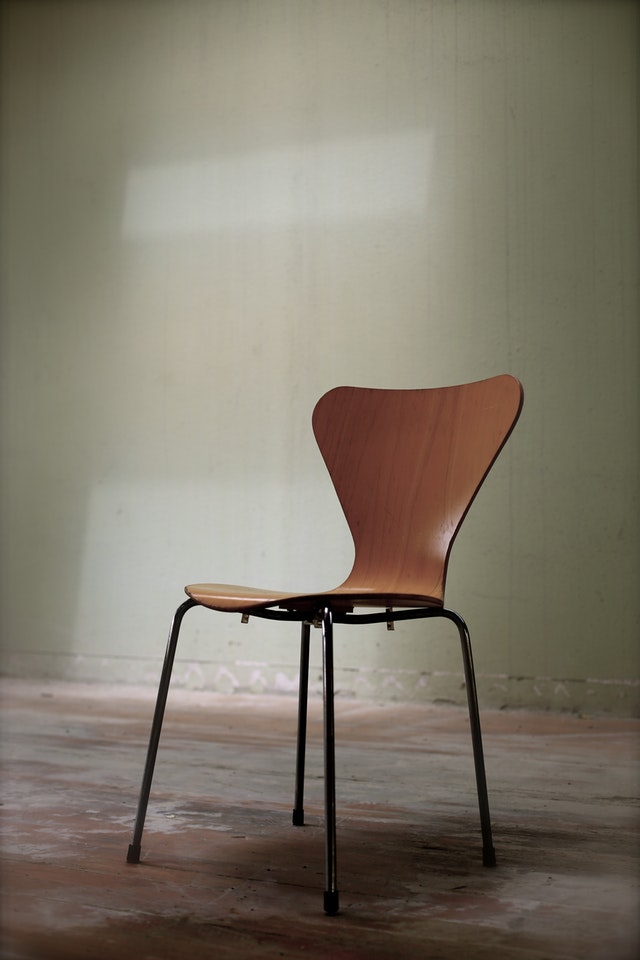

  • THE CHAIR

    THE CHAIR

    I have a confession.

    I love the Real Housewives franchise, particularly New York and Beverly Hills.  It’s my guilty pleasure.  I know, I know…I can practically hear you judging me as I say it, but trust me, you can’t even come close to how hard I judge myself for it.

    Truthfully, when I get to sit down and watch reality TV,  it’s one of the few times I can stop my brain from having to work so hard.  I can just zone out.  And it makes me feel better about my life because, while these women have seemingly endless amounts of money and perfect lives, the back-stabbing, gossiping, and infighting make any skating club (and, by association, my career) look like a cakewalk.

    This week, one of the characters, named Erika, really took the piss (that’s for my Scottish friend Anne) out of a housewife named Teddy.  Now the stink of it was Erika is ALL about girl power…I mean, she’s freaking girl power on steroids.  Yet she seems to enjoy snarking at Teddy and putting her in her place as often as she can.  I mean, there is really NO sense of her extending any helping hand of friendship, acceptance, OR empowerment to this poor woman.

    The timing of this episode was fortuitous because it coincided with a tug-of-war I have been having internally in relation to one of my past coaching experiences.  Truth be told, I’m not sure what triggered this particular memory, but it has been playing over and over in a recurring loop with no resolution to be found.

    I’d like to share with you an incident that I have yet to reconcile within myself as to whether I was right or wrong; whether I over-reacted or under-reacted, whether I was defending myself or being petty, whether I was calling out someone for trying to take me down a peg or whether I was actually the one who made her feel bad.

    So, dear reader, maybe you can be the judge.

    It all went down like this.

    As most of us know, in any coaches’ room, there is a pecking order.  Or at least, back in my day – when this specific incident occurred – there was.  Every coach usually has a specific spot they sit and place their skate bag, coats, teaching aids, books, purses, etc.  Over time, these specific areas become permanent and were silently acknowledged as that coach’s “spot”.  I have been in some clubs where you would literally be taken to school for sitting in another coach’s chair.

    Back in the mid-2000, I had well over a decade of figure skating coaching under my belt, had started running my own intensive summer program with the help of an incredible team of friends, and had several provincial medallists to boot (see what I did there?).  So, while I wasn’t the best of the best in coaching terms, I had put in my time, paid my dues, made MANY sacrifices, and gained, at the very least, a modicum of experience and credibility.

    I had been coaching at a little club on the outskirts of Calgary for a few years.  I was the relative newcomer, and the first thing I did when I started using the coaches’ room was to make damned sure I did not sit in any other coach’s spot.  I even asked a friend who worked there with me who usually sat where so I could make sure to find a chair that didn’t offend anyone.

    You see, I’m old school.  I believe you show respect to those who went before you. 

    I believe that you should show deference to coaches who have put in the time and sacrifice to get to where they are. 

    Without those successful coaches who have paved the way for us, I firmly believe we would have had a harder time of it. 

    And I also believe, more and more fervently with each passing year in my profession, that it is our job to kick in doors, shatter stereotypes and help empower the next generation of coaches in their journey as they follow our example.

    Now, some of you may say this is outdated thinking.  Some may think that respect should be earned and not given freely.  And to some extent, I agree.  One of the lessons I have learned over time is to withhold my respect and trust until new colleagues earn it, BUT, I want to stress, I still feel it is important to be kind, polite, and respectful whenever and wherever possible.

    So, time passed as I worked at this small club, and eventually, this chair became my spot.  Now, I wasn’t a senior coach in the club, but I felt I worked hard and deserved the same respect as anyone else.

    Around this time, a new coach was hired.  Let’s call her Monica.  Now Monica was a young coach, just starting out. She was very green and very young. But she seemed nice, and since I was only at the club a couple of days a week, I really didn’t have much interaction with her.  The first week with Monica working with us came and went with no problems.

    Then came the day that I arrived at the rink early and was out on the ice before Monica. When I came back in to change my skates, Monica was sitting in my chair.  “Well”, I thought, “no problem”.  So, I picked up my bag (which was next to the chair), my coat (from the back of the chair), and my boots (which were under the chair) and moved to an empty seat.  (Yes, there were empty seats in the room she could have sat in, but she was new, and she was young and just starting out, so I figured she may have been flustered and not remembered that’s where I usually sat).

    As I grabbed my stuff, she seemed confused and said, “oh, I’m sorry, is this your spot?” I quietly responded, “no problem,” and moved.

    In my head, I was thinking, “well, DUH, of course, it’s someone’s spot since all their stuff is on it, in it, or around it, not to mention you’ve seen me sitting here all week,” but I kept quiet and told myself to chill out.

    After this incident, I had a private conversation with one of my coaching friends in the dressing room.  I found it odd that with the empty chairs, Monica had chosen mine, even though my stuff was all over it, and she MUST have seen me sitting in that chair. And my friend told me that on her VERY FIRST DAY when she entered the coaches’ room, Monica had asked my friend(duh-duh-DUUUUUHHHH)…..“WHO SAT WHERE”?

    My friend had gone through who sat in each chair, so Monica already knew who sat where and where the empty seats were.

    This seemed odd to me.  Monica already knew who usually sat in each spot.  There were empty chairs.  But rather than take an empty chair or any of the FOUR other coaches’ chairs who also used that room, Monica chose to target me.

    Of course, because I wanted to be nice, I told myself I was being paranoid.

    I let it go.

    Sure enough, the next week, it happened again…. empty seats in the room, lots of choices of where to sit, aaaannnnnnnddddd sure enough, Monica targets my seat.

    I called her bluff.

    As she looked up at me, she asked, “Oh, I’m sorry, is this your chair?”  I said yes and stood there.  She grabbed her stuff and went to an empty chair.

    I said thanks.

    That night I got an email from Monica.

    She was genuinely hurt.  She expressed herself quite eloquently, explaining in DETAIL how I had embarrassed and devalued her because I had made her move. How I had hurt her feelings. How could I do that to her?

    I read the email a second time.

    I poured myself a very large glass of red wine.

    I re-read the email over and over and over, trying to digest what I was reading and reconcile it with my perception of the situation.

    I had another glass of wine.

    I started about 12 different responses, then deleted each one.

    I finished the bottle.

    I realized that I would never want to be the one to make anyone feel bad about themselves, and I really, truly tried to look at it from her point of view.

    • True, she knew I sat there and chose to single me out twice and make me move. 
    • True, this felt like a calculated move to take me down a peg.
    • True, it felt like she was identifying the competition in the room and trying to neutralize it.
    • True, I was over-analyzing the situation to death.
    • True, I was likely paranoid based on my experiences so far in the figure skating and coaching world.

    I went back and forth in my head, arguing each side of the argument.  Was I being over-dramatic and seeing shadows that weren’t there?  Were my instincts correct, and was this a targeted move on her part?  It is well documented that women are overtly competitive with their peers in their workplaces…. this could be one of those times.

    In the end, I couldn’t dismiss one inescapable fact.

    It was JUST. A. DAMNED. CHAIR.

    So, I wrote her an email.  I apologized if I made her feel bad.  I tried to express the fact that I have always respected older coaches, the battles they have fought, and the experiences they have had, and for this reason, I always tried to not take their places in coaches’ rooms because they had earned the right to those spots.

    In the end, though, I said it was just a chair, and if that was where she felt she needed to sit then I said she could knock herself out, and I would move.

    I even invited her out for a beer, so we could have a good laugh about it.

    Confident that I had diffused the situation, I pressed send.

    The email I got back was no longer sad or hurt.

    SHE. WAS. NOT. HAVING. IT.

    She went UP one side of me and DOWN the other.

    According to her, I was condescending and egotistical, and a few other things I don’t care to repeat. I mean….  how DARE I talk to her like that? Who did I think I was?

    And it went on and on and on.

    I still shake my head when I think about how badly she had misinterpreted the tone of the email and how angry she was.

    I also shake my head at the fact she took absolutely no accountability for her part in ANY of it.

    She was the victim.  I was the aggressor.  In her eyes, it was case closed.

    I had had enough, so I forwarded the entire exchange to the club president.  She sent out an email the next day telling everyone that there were no assigned seats in the coach’s room.

    This, of course, was NOT true.  But the president was a much older lady who, while sweet, was not in the loop when it came to the politics at work within her club.  So, it seemed that every other coach got to keep their chair, and Monica had succeeded in demonstrating her power and co-opting mine.

    Even though I had already conceded the battle, it was clear I had also lost the war.

    Life went on at the club, Monica and I co-existed, I was pleasant, and she was cordial, but it was clear we would NEVER be besties.

    To this day, I still think about that chair.

    I still don’t know if I was right or wrong.  Did I stand up to a woman who saw me as a competitor and was trying to cut me off at the knees?

    Or was I the one disrespecting a new coach and being the antithesis of everything I had hoped to stand for?

    I’ll let you be the judge on this one. 

    Have you ever felt a colleague was trying to stealthily take you down a peg?  Share your experiences in the comments.