Tag: figure skating

  • Clearer Here….or Here? How We Fail Neurodivergent Kids in Sports

    Clearer Here….or Here? How We Fail Neurodivergent Kids in Sports

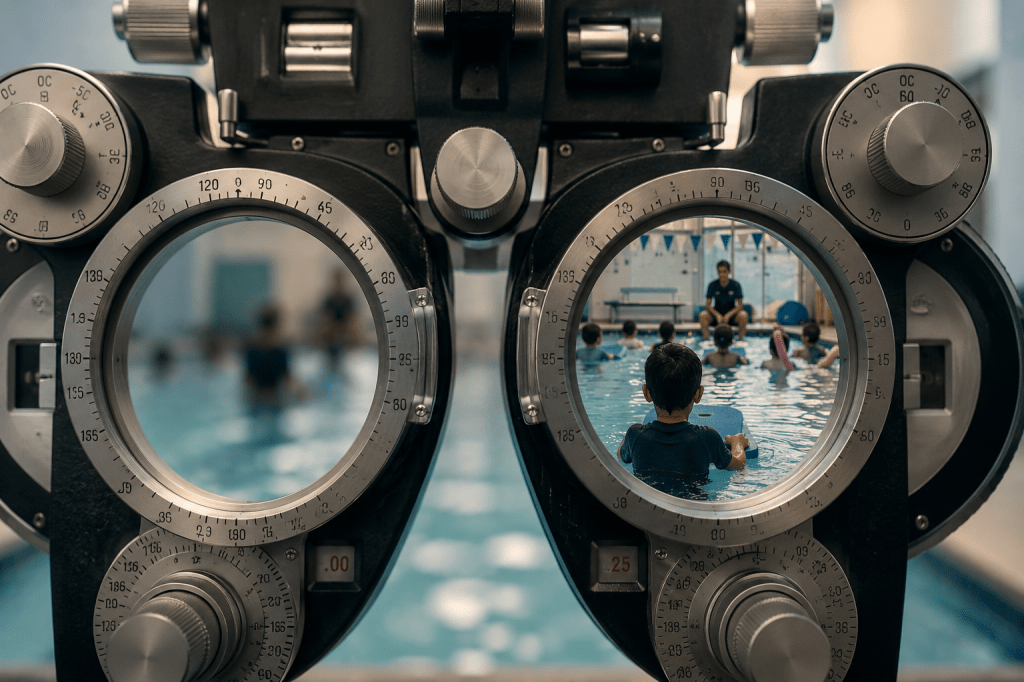
    Images created by AI

    My dad is a retired optometrist, and I remember him using a machine on people that helped sharpen their vision. It was a cumbersome thing, two huge steel circles side by side, akin to the eyeballs of some otherworldly praying mantis. He’d put it up to your face, as close as you could stand, and while you were wearing these colossal frames, he’d switch the lenses for each eye until you had perfect vision between them.

    Always in his calm, soothing voice: “Is it clearer here?” Flip lens. “Or here? How about now, better here?” Flip. “Or here?”

    Through this process, you could suddenly see things with more sharpness and acuity, noticing details like shading and definition that were so subtle, you were unaware you were even missing them.

    I noticed a few of those details today.

    Since my own neurodivergent diagnosis, each day seems to hold some sort of new awakening, an awareness of just how hostile the world around us can be to people who don’t experience things the same way. I was watching my daughter during her swimming lessons and marveling at how well she was doing. In my head, I was, once again, coming to the realization of just how differently she sees, and more importantly FEELS, the world around her. And how much confusion, overstimulation, and even pain all of those sensory inputs can cause her.

    As I was (yet again) reminding myself of her tenacity and bravery, my attention shifted to the other end of the pool.

    The Kid Who Couldn’t Sit Still

    There was a young lifeguard, maybe 16–17ish, give or take (at my age, they all look so young!), teaching a group of seemingly five-to-eight-year-olds. They were backed against the pool’s edge in the shallow end, holding their flutterboards in front of them while he gave instructions.

    What caught and held my attention was the instructor shouting, “Jordan, listen to me. Stop messing around or you won’t get to go.”

    The kiddo in question was obviously fidgeting, dunking under the water, and having trouble sitting still long enough to listen. As I watched, I saw the instructor demonstrate that he wanted the kids to push the flutterboard in front of them with straight arms and practice their scissor kicks behind them. Of course, he was about 10–15 feet away from the kids, and with all the sights, sounds, and sensations they were experiencing in the pool, it was likely difficult for some of them to pay attention.

    But that wasn’t what caused my ears to perk up with a “Wuh-ohhh,” à la Scooby-Doo.

    He then proceeded to tell them he wanted them to practice the technique and swim to him, one at a time. Given that each child took several minutes to swim to the instructor and back to the wall, the result was that the children at the end of the line were standing still, doing nothing, in the hot sun, for many minutes at a time.

    But what really creamed my corn and baked my cheese (it’s lunchtime and I’m getting hungry) was that instead of letting Jordan go first, because this was the child who was obviously having the hardest time standing still and seemed to require movement to attend, he rewarded the kids who had been standing quietly and listening.

    And this broke my heart.

    First, as a figure skating coach of nearly 30 years, who is NCCP Level 3 certified and Level 4/5 trained, and who spent the better part of my career not only learning best practices for coaching but teaching them to others, no child should be standing around waiting their turn for that long. There were a million ways this young instructor could have engaged all the students at once.

    He could have had them perform the skill together without venturing into the deep end, so they could simply touch down in the shallow end. He could have given the waiting kids a skill or fun game to practice in the water, perhaps holding onto the side of the pool and practicing their kicks 20 times, then grabbing their board, swimming out to him and back, where he could give feedback as they went.

    This is a fairly standard coaching faux pas. But it’s made worse when you consider that out of those five kiddos, statistically there’s a decent chance at least one of them was neurodivergent.

    Take one guess which kiddo had caught everyone’s attention.

    And suddenly, all my daughter’s dance practices came flashing back to me. The ones where the kids who could sit still and take instruction were rewarded, and the ones who couldn’t were punished. Kids with invisible conditions like ADHD, ASD, AuDHD, and a myriad of others can struggle with these skills through no fault of their own.

    You wouldn’t ask a hard-of-hearing child to just listen more carefully. You wouldn’t expect a child with a physical disability to simply try harder to make their body do something it cannot do. So why do we get upset and attribute a child’s struggle to follow directions, sit still, regulate their body, or pay attention to a behavioural problem when their brain may literally process those demands differently?

    Yet as coaches, instructors, teachers, and parents, we do it all the time.

    I know I did it before I became the mom of a neurodivergent child and then was diagnosed myself, at 57, with ADHD and ASD. And I STILL do it in moments of frustration and exhaustion. When it’s the end of a very long day, I sometimes have to consciously remind myself of that familiar phrase: she’s not giving me a hard time. She’s having a hard time.

    And suddenly my entire history came rushing back. Being a figure skater in group lessons. The instruction I received in my coaching courses that failed to prepare me for virtually ANY type of neurodivergence. And, more heartbreakingly, all the coaches and instructors who have worked with my daughter who, however well-meaning, and however well they THOUGHT they understood neurodivergence…did not.

    My daughter quit dance because of this. Something she was good at, something she loved, and something that was soooo good for her on so many levels. She got tired of watching neurotypical kids who could attend, focus, and progress more quickly receive more attention. And, of course, more attention fostered faster progression, which meant kids like my daughter never had an even playing field.

    So, as I mentally prepared the blog I was going to write in my head after this realization, my daughter finished swimming and we came home (after our McDonald’s run, obviously).

    As soon as I walked into the house, the smell of burnt plastic assailed my daughter and me. It was so strong when we walked into our mudroom that we almost choked. My kiddo immediately went downstairs to her room, but I, of course, went into threat-response mode. As you do.

    I went into the kitchen, where my mom was heating a huge pot of water on the stove. My mom dismissed my sense of smell, telling me nothing smelled and she was just boiling water. The smell wasn’t as bad in the kitchen, but when I went back into the mudroom, there it was again: a melting, burning, plastic smell that made me wary.

    Of course, I did a circuit of the house, all the while my mother telling me nothing smelled. But it wasn’t just what she was saying. It was the way she was saying it. As if I was crazy. As if there was nothing to be worried about. As if, yet again, I was making too much out of nothing. As if my concern that something might actually be burning was too much and a bother to her.

    As if I was a bother.

    So I went upstairs to my room and proceeded to put laundry away. In the process, I got distracted and ended up Marie Kondo-ing my closets, which took the better part of an hour.

    (And yes, my daughter and I still live with my parents, and I’ve decided I’m going to stop feeling guilty about that. I needed help raising a neurodivergent kiddo on my own, and now I’m helping care for my father, taking on more responsibilities around the house and yard to make sure everything is okay, and giving my mom longer breaks when she needs them. And I’ve always paid our own way and helped with household bills.)

    Anyhoo…where was I before I attempted to justify my existence yet again? Hello, ADHD much?

    Oh, right.

    After my closets were sufficiently bare, I went back downstairs, and there was the smell again. Just as strong and just as worrisome. So I did another inspection, again to just as much judgment and criticism from my mother.

    Boom. Second epiphany.

    How many times have kids like Jordan, or even people like me when we were younger, been berated or dismissed because of our extraordinary senses? Sensory differences are incredibly common among autistic and otherwise neurodivergent people. Sounds can be louder. Lights can be brighter. Smells can be overwhelming. Textures can hurt. Things other people barely register can hit our nervous systems like a truck.

    How many times each day, in schools, sports, workplaces, and homes, were we made to feel like the way we experienced the world was made up? All in our heads? Too much? Attention-seeking? Misbehaviour? Something we were doing to cause problems for other people?

    How many times did we receive the message that we were bad?

    How many times were we ignored, dismissed, or punished for our inability to fit neatly into a world that can be profoundly hostile to people whose brains and bodies work differently? And is it any wonder that I now sometimes feel crippling levels of loneliness and a sense of being “othered,” even within my own family?

    I remember often feeling like I didn’t fit in. I didn’t share similar interests, struggled to relate on a fundamental level, and couldn’t simply shed injustices or slights the way my brothers seemed able to. And because I couldn’t, the message was always that I was too much.

    Which brings me back to Jordan. How many kids like him have been punished instead of accommodated?

    Maybe Jordan Wasn’t the Problem

    I can tell you that in nearly 30 years of coaching with Skate Canada and going through the NCCP system, there was minimal content devoted to invisible disabilities. Sure, there is an entire branch of coaching designed for Special Olympics, but newsflash: kids like my daughter, who don’t have an intellectual disability, do not qualify.

    So where do they go? Are they accommodated in our mainstream coaching systems? What about testing and competitive systems? Are accommodations and scaffolding provided for those kids? Because expecting equality without providing equitable support isn’t actually equality.

    Are coaches taught how to recognize when a child isn’t refusing to listen, but can’t process the instruction in the environment we’ve created? Are we changing the environment, or are we trying to change the child?

    Because if one child can stand quietly against the wall for ten minutes while another needs to move, why is standing quietly the behaviour we’re rewarding? If one child learns by listening to a verbal explanation while another needs to see it, do it, repeat it, move through it, or receive the instruction one-on-one, why have we decided the first child is the “good listener”?

    Maybe Jordan wasn’t the problem. Maybe the lesson was.

    And as it became ever more obvious to me today, this world, and so many of the activities within it, still aren’t safe or equitable places for kids with invisible disabilities. It’s as if because you can’t see their disability, it doesn’t exist, and therefore accommodating it is optional.

    It isn’t.

    Maybe that’s what diagnosis has been doing for me. It’s like my dad’s giant optometry contraption has been sitting metaphorically in front of my face, flipping lenses one at a time.

    Is it clearer here? Or here?

    And every day, something else comes into focus: my daughter, Jordan, my coaching career, my childhood, my family, myself.

    Things that were always there, but whose edges I couldn’t quite see. And now that I can see them clearly, I don’t think I can ever unsee them.


  • The Importance of “Culture” in Our Youth Sport Organizations

    The Importance of “Culture” in Our Youth Sport Organizations

    With thirty years of coaching experience, and ten years as a sport parent, I have been afforded many opportunities to create, implement,  observe, and critique different organizational cultures.

    If I am being entirely honest, one of the reasons I retired from coaching was my complete disillusionment surrounding the never-changing landscape of the culture we work in as figure skating coaches.

    Full disclosure: While I always did my best to create a positive culture, I have also been responsible for creating less than positive environments through mistakes I have made, either by reacting inappropriately to what I percieved as injustice or unfair criticism, or being so outspoken about organizational issues as to burn bridges behind me.

    Throughout my coaching life, I have worked for clubs with organizational cultures that felt so supportive and progressive I have deeply enjoyed coming to work because I felt so valued in my organization.  I cannot tell you how thankful I am that these clubs exist and I have had the pleasure of working in them. 

    I have worked in other clubs where the culture was simply average; drama and divisiveness with one executive, then support and cohesion with the next. This is more often the norm in figure skating clubs in Canada simply because of the nature of their structure.  For more on this, read my blog on some of the hardships endured by skating coaches in Canada.

    I have also had the displeasure of working with a couple of clubs that were quite toxic. 

    Photo by Kat Jayne on Pexels.com

    I cannot overstate enough the stress I experienced working with these clubs. One, in particular, stands out.  The anxiety I felt day in and day out was so bad it resulted in sleeplessness, nervous tics, weight gain, depression, self-doubt, and eventually burn-out. 

    Where I used to love going to work and didn’t even consider my coaching job as a “job,” I eventually became afraid to go to the rink because I always felt under attack. Even worse, it was plain the values I held dear were nowhere in evidence.

    The hardest part of all was to try and diagnose the problem.  Why was the club so toxic?  Was it me?  No matter how hard I tried to model clarity, to try to include people in my ideas, and to try to show professionalism, I seemed to fail at every turn.

    What made my slow descent into disenfranchisement even worse is that I could see that people in the organization were doing the best they could.  Yet somehow, the club became a place of division and strife. In the end, clarity in communication became non-existent, and trust had eroded to the point of being completely absent. There was little organizational structure to depend on, and skaters were leaving in droves.

    I speak often about how important the “culture” of any organization is, but when it comes down to it, it is a complicated concept that few people understand, and, in my humble opinion, even fewer value it as an important factor in the success of skating clubs.

    Before going any further, I want to give a shout-out to those clubs that do have wonderful, supportive, open, clear, and progressive cultures.  You can tell those clubs that put in the work; they are the ones that produce confident athletes, seem to have happy coaches who remain with the club for a long time, and in general, you just feel good being there. 

    Sadly, in my experience, you have a 50/50 shot of finding a skating club in Canada with a positive club culture.

    So what exactly IS organizational or club culture?

    Photo by Polina Zimmerman on Pexels.com

    Well, after consulting my wise colleague Google, there seem to be several similarities between the many definitions of “organizational culture.” 

    You can pare down the commonalities of organizational culture to these things:

    • There is a collective agreement on what things are important to that particular club or youth organization. This means that the leaders in the club gather and determine which things they wish to make a focal point for the day-to-day running of their organization.  These can include assumptions, beliefs, values, and practices.
    • The leaders of the organization are the ones that help to create and model these agreed-upon values or practices.
    • Workers in the organization are provided support in order to uphold these common beliefs or values, often in the form of incentives and also sometimes in the form of…ahem…punishment.
    • Leaders and workers alike work together to implement and maintain these beliefs, assumptions, values, or practices in order to create a harmonious and successful organization.

    So there it is, sounds easy right? 

    BWAH-HA-HA-HA……!  I hope that sound of my laughter in your ears isn’t too deafening.

    Creating and maintaining a strong and positive club or organizational culture is one of the most difficult things to do ever. 

    Full stop.

    With so many moving parts present in a figure skating club, like coaches, volunteers, parents, athletes, executive members, and administrative staff, just trying to get people to collectively commit to one set of shared values is nearly impossible.

    A full concerted effort has to be made by every single person in that skating club to commit to modeling the core values of that culture, as well as following the processes and procedures set in place in order to maintain these values.

    As someone who has always been fascinated by leadership styles (indeed, I am guilty of reading more books on leadership, mindset, and motivation by business leaders than your average bear), I have spent years trying to learn the “secret” to creating a positive club culture.

    I’ve had some success and just as many failures, but I can tell you from experience these are the things that every club needs to possess in order to create a positive culture.

    Clarity

    As someone who is late to hop on the Brene Brown train, I admit to always being skeptical of anything that smacks of self-help…but wow, this lady (sorry….Doctor!) blew me away.  Listening to her book “Dare to Lead” left me open-mouthed and wide-eyed from the sheer force of the multiple “a-ha” moments it provided.  (not to be confused with multiple orgasms, that’s another book and an entirely different type of author).

    While it would take too long to list all of the takeaways provided by this first-class researcher on vulnerability, courage, and shame in relationships AND in the workplace, one of the concepts that resonated the most deeply with me is: “clear is kind, and kind is clear.”

    Dr. Brown repeats this rule like a mantra, and indeed, it should be the mantra at every skating club or youth sports organization.

    Too often, we are too afraid to say what we are feeling. When we have a problem in our club, we hesitate to speak up for fear of sounding weak or, worse, like an emotional woman.

    Too often, we let wounds fester in our skating clubs, leaving rumours unaddressed and allowing issues to grow until the resentment between coaches or executive members is so great there is no hope of meeting with an open heart or mind, as Brown often recommends.

    I have always been clear. Perhaps too clear, and if I’m being candid, my delivery is not always as gentle as it could be. It has always been my belief that we have to name issues and do the hard work required to solve them in order to move forward productively.

    Unfortunately, everyone in the club has to “buy in” to this belief, and if you are the only one or one of the few who believes that “clear is kind,” then you will often find yourself in “unkind” waters for attempting to be transparent.

    Organization

    In order to have a successful club culture, there must be a system in place that everyone understands and trusts implicitly. For example, it is no use attempting to team coach when you have coaches who haven’t bought into the process and do everything in their power to undermine the program.

    Everyone in a productive organization must know their jobs and have the support necessary to carry them out to the best of their abilities. This leads me to my third point.

    Value Each Other

    Photo by Lisa Fotios on Pexels.com

    I can’t tell you how much a simple thing like “thank you” changes my day. Yet words like “thank you” or “I appreciate the job you did today” are very seldom used. When they are, they stand out.

    To value your fellow coaches and executive members means that you also trust them to do their job without micromanaging them.

    A club with a positive culture gives professionals and executive members alike the space they need to do their jobs well and the resources they need to do it.

    They also pay these individuals what they are worth and respect their time outside of the rink.

    A positive club culture is one that allows members to set healthy boundaries and maintain a work/life balance.

    Opportunity for Mentorship and Growth

    Every member of an organization or club needs a chance to grow within that organization. Opportunities for education and promotion should be regularly provided in order to keep members challenged and fulfilled in their careers.

    Novice coaches should be assigned a senior coach as a mentor to provide them support and guidance. The knowledge and experience mentor coaches can provide up-and-coming coaches are invaluable—particularly for female coaches—and will increase coach retention in the long run.

    Openness to Feedback

    No one likes receiving negative feedback. Myself the least of all. But in order to maintain and nurture a positive club culture, it is critical that all members in a skating club take a step back from their own egos and really LISTEN to feedback when it is offered. When members feel safe to open up about their concerns and feel valued and heard, the entire dynamic of the organization changes for the better.

    As an example, my daughter used to dance at a studio where I felt like I was always overreacting or being a hysterical female when I brought up my concerns to her instructors or the director. (I want to be accurate; there were two instructors that went over and above to help my daughter and recognized that she needed modifications; they were the reason we remained as long as we did).

    While lip service was paid to my concerns, nothing was ever changed, and I felt alienated and devalued, much like my daughter was feeling.

    As I later found out, my daughter was diagnosed with special needs, and we left that studio for one that has one of the best organizational cultures I have ever seen. Every time I have approached any of the teachers or the owner of our new studio about any concerns, I have been met with absolute openness and care, and best of all, action was immediately taken.

    This is what inspires people to remain loyal to your organization.

    Constant Vigilance

    As I mentioned above, it is not enough to simply write a mission statement about what the main values are for your organization. Now you have to “walk the walk.” This is where most organizations fall down.

    Photo by fotografierende on Pexels.com

    With so many changes in our executive members and sometimes coaching staff, the values and beliefs that are so integral to each figure skating club require constant care and follow-up in order to maintain. Positive club cultures are not a “one-and-done” thing.

    Another practical yet ground-breaking idea from Brene Brown is the idea of “rumbling with vulnerability.” Simply put, this is a meeting (on a continuous basis—I would recommend weekly) where everyone comes together with a total commitment to complete openness and vulnerability.

    Everyone is required to share a viewpoint and back it up; no one is allowed to sit back and coast. The idea is to set aside ego and come together, in understanding and vulnerability, to find workable solutions to any issues.

    I can’t state strongly enough how much I wish we had these at the skating clubs I have worked at. And yes, for those of us in the profession long enough, we are supposed to have coaches’ meetings, but are those really open?

    Do people feel they can be vulnerable and will be supported in sharing their issues? Are the executive members present at these meetings too? Shouldn’t they be?

    As you can see, creating and maintaining a positive culture in your youth sports organization or figure skating club can be a difficult process, but it is well worth it.

    If you are a club executive member, skating school director, dance studio owner, or club coach, I highly recommend reading any of Brene Brown’s books, particularly “Dare to Lead.” It may help you create a more positive club culture in your organization.

    If you want to hear more about organizational culture in youth sports, watch for our “Coaches on Edge” Podcast, where we dissect our experiences and thoughts concerning organizational, club, and studio culture. You can find us on Anchor, Spotify, Google Podcasts, Breaker, Overcast, Pocketcasts, and RadioPublic!

    We’ll be joined by Shawna Kwan, Owner of Elan Dance Arts: Dance Teacher, Choreographer, Business Mentor, and Entrepreneur, as we discuss the things we do to maintain a positive culture for our athletes.

    If you have any questions, comments, or pointers for creating your own positive culture you’d like us to discuss on our podcast, let us know in the comments below!

  • 6 Things I Learned from Starting a Podcast

    6 Things I Learned from Starting a Podcast

    I never thought I would be a retired skating coach. Skating was my passion, my life and my reason for getting up in the morning. Coaching quickly became my new passion after university, and I had always envisioned myself as one of those coaches sitting on a stool teaching from the boards at 90, still loving it and giving back.

    Circumstances changed, and demanded I “pivot” from my 30 year career in coaching. Truthfully, it was a struggle. So much of my identity was wrapped up in seeing myself as “coach” that when it was stripped away, I didn’t recognize myself.

    Even though I’d found a gig that paid my bills, it didn’t feed my soul and challenge me the way coaching did, and I floundered away from the sport. I knew I had more to say, but I didn’t know how to say it.

    One day, as I was aimlessly flipping through the available apps on my phone, I came across Anchor, an app designed to let anyone start their own podcast with zero cost and minimal equipment.

    After floating the idea by a couple of coaching friends we were in business and we are now three podcasts in and loving the process.

    Along the way, I’ve learned a LOT about myself and thought I would share some of my realizations with you. So without ado, here are 6 things I have learned about myself by recording a podcast.

    1. My Imposter Syndrome is Alive and Well

    Photo by Ibolya Toldi from Pexels

    I’ve always suffered from low self-esteem and imposter syndrome. Therapy, self-talk and affirmations (things every coach is VERY familiar with) have helped me with my self-image to the point where if I’m having a bad day, I can “fake it” perfectly with no one the wiser.

    There is always a little voice inside my head that surfaces when I am trying something new or putting myself out there that asks, (in it’s insipid voice), “who do you think you are?” or, “why do you think people would want to listen to you?”

    When you podcast, you’re sharing a little bit of yourself to the entire world (well, at the very least, our 5 subscribers…hey…we’re new!) It’s scary to be that vulnerable, knowing that you could be opening yourself up to criticism. Each podcast gets a little easier, but it’s still there.

    2. My Love of Skating is NOT Dead

    I’ve made no secret concerning my opinions on the issues I see systemically within our sport system in Canada, particularly for coaches working in smaller centres. After thirty years of coaching, and in particular the last nine years in a place that seems to be a hotbed of rumor, back-channeling, and toxicity, I was drained and disillusioned.

    I felt that there MUST be something wrong with me, because no matter how hard I worked, or how hard I tried, I couldn’t seem to make things better. As the saying goes, “same shit, different pile.” There is nothing worse than doubting yourself at every turn and walking on eggshells. When you add to that a history of chronically being undervalued and underpaid, as so many of us are, it results in burnout.

    Over a year ago, I made the decision to NOT return to coaching, and it was like a weight had lifted off of my chest. I had no idea how much I had let the culture around me affect my mental and emotional health. And to be frank, I didn’t have much good to say about our profession in general.

    I now know that was the depression and anxiety talking, and that my love of the sport is NOT DEAD; the lessons I have learned from doing it, and how I FEEL when I help young athletes learn, have kept my passion and interest alive. By sharing my thoughts, concerns and feelings in a safe environment with my trusted coaching friends, I am slowly finding my love of the sport again.

    3. I Needed Grown-Up Time

    Not that we need reminding, but, this year has felt like a zombie-fucking-apocolypse y’all, and the isolation was really starting to get to me. Like, having-entire-conversations-with-my-daughter’s-LOL-dolls and breaking-into-show-numbers-from-Hamilton-at-any-given-moment kind of getting to me.

    Just being able to schedule an hour of intelligent, constructive, ADULT conversation with friends who absolutely “get” the world of coaching is GOLD.

    4. I Need to Learn to Enunciate

    I had always thought of myself as fairly articulate, both in the written word AND speaking. Turns out…not so much. In our last podcast we were chatting and comparing the two skating styles of the US skater Nathan Chen, and our Canadian icon Patrick Chan.

    Now, I KNOW that their last names are “CHEN” and “CHAN” respectively, and I know when we were chatting about these two skaters I said Nathan Chen and Patrick Chan, but upon listening to the playback, I quickly realized that I was not very clear when it came to pronouncing the short “A” sound in Chan.

    SIGH…..diction lessons for me it is. You will find me reciting “the rain in Spain falls mainly on the plane” a la “My Fair Lady” for the next little while. The irony is I actually teach English as a second language every morning and spend countless hours helping young kids learn how to properly pronounce those same sounds!

    So for anyone listening to our third podcast, I am in fact saying “Nathan CHEN, and Patrick CHAN”….. but you just can’t tell.

    5. I Am Blessed to be Surrounded by Intelligent Friends

    I am blessed in my life. Every single one of my friends teaches me something every time I interact with them, and my co-hosts on our podcast are no exception. I learn something new about myself, the sport of figure skating, and coaching in general by our frank discussion.

    Photo by APG Graphics on Pexels.com

    I’ve always been a believer that sharing ideas and opinions is the best way to learn and grow, and this podcast has only reinforced that belief. Picking topics and sharing viewpoints, whether you are in agreement or not, opens your mind and helps you grow as individuals.

    6. It Really Matters to Me That This Podcast Can Inform and Inspire New Coaches

    As you get older, you always wonder what you will leave behind. Have I made life better for at least one person? Have I made a difference in the lives of my students, my friends, or my child?

    With each podcast I realize I have a forum that my friends and I can utilize to inform others about the positives and negatives related to professional coaching. I’m hopeful we can do it in a funny, candid and constructive way, and provide some degree of mentorship and inspiration.

    As senior coaches, and particularly as women in coaching, it’s our job to open doors and support those coming after us. It’s the least we can do for our sport, and to repay those that helped us along the way.

    It’s always scary to put myself out there, but I’m so glad I did. I’m enjoying creating our podcast so much, and I encourage you to listen and become part of the conversation!

    Check us out: Coaches On Edge on Anchor, Spotify, Google Podcasts, RadioPublic, Breaker, PocketCasts, and Overcast.

    Have you stepped out of your comfort zone with any new ventures lately? Share your experience and what you’ve learned in the comments!

  • Sports Parents Get a Bad Rap

    Sports Parents Get a Bad Rap

    Several years ago, I signed my daughter up for the summer soccer league in town.  The price was right, and I thought it would be a good summer activity for her to try to get rid of her boundless energy. I showed up enthusiastically on the designated meet-the-coach day only to wait 30 minutes for anyone to show up at her table.  When he finally did show up, I asked him the usual questions I would normally ask any coach who is working with my daughter like:

    1.  So I assume you have played soccer before ?  (he hadn’t)
    2. How long have you been coaching (not long)
    3. What certifications do you have (minimal)
    4. Do you have a police clearance (he actually WAS a police officer, so at least there was THAT)

    The biggest observation I took away from that day was the disbelief in his voice when I actually asked him these questions.  It was obvious that no other parent had asked him these before. 

    When I got home, I spoke to my brother, who is a high school physical education teacher and who coaches (and plays) multiple sports.  He looked at me like I was crazy for asking the questions I had asked.

    I shouldn’t have been surprised. 

    I have been a figure skating coach for well over 25 years.  I am nationally certified and continue to this day to update my certifications and my coaching toolkit. I have easily worked with thousands of kids in the sport of skating, both recreationally and competitively.  I have run intense training programs and worked within our system my entire life.

    Do you know how many parents have asked me if I have a police clearance?

    Take a guess.

    None.

    What do you think about the number of parents of new students who ask me about my coaching philosophy?

    Yup, you guessed it.

    None.

    This exchange with my daughter’s former soccer coach has been foremost in my mind these past few days because I read a Facebook post from a friend entitled “Why Coaches Hate Over-Involved Parents” by Amy Carney.

    This is a well written article, carefully stating the things that parents should never debate or contact their child’s hockey coach about. Things like playing time, issues with teammates and team strategy are mentioned as basically off limits. The overall theme of the article is to let the coaches coach, the kids play, and the parents stay out of it.  It speaks to the athlete taking accountability for their actions, stepping up to be their own advocates, and proving themselves before expecting to gain playing time or their desired position.

    While I HEARTILY agree we need to make our athletes responsible, accountable and capable of communicating effectively with their coaches, I think that, ESPECIALLY IN THESE TIMES, we have to be more careful than ever with our children. 

    Look:  I have had some humdingers as sports parents.

     I mean, irrational, never-happy, always-criticizing-or-second-guessing-your methods-no-matter-HOW-much-information-you-give-them kind of parents.

    But those parents are the exception, not the rule.  And as I grew into my coaching career, I realized that the more I informed my figure skating parents of my philosophies, the more they were inclined to give me their trust.

    The more I explained the strategies, time tables and reasons behind my tactical decisions for their children, the more they left me alone to coach their children.

    So, as I read this article about how parents shouldn’t email, complain or talk to their players coach about issues, I must respectfully disagree.

    You see, coaches are people too. This means that coaches are subject to the same character flaws, foibles and behaviours that we all have, including bias, prejudice, ego, disorganization and many more not-so-great behaviours.

    Add to this that many coaches in the amateur sports systems are volunteers, and this takes away all accountability.  Don’t get me wrong.  Volunteers are a mainstay for youth sport, and I have the utmost admiration for those that give selflessly of their time for our children.  But there are good and bad volunteers. 

    And just because you volunteer to coach DOES NOT MEAN YOU GET A PASS TO DO A POOR JOB.

    I’m sorry, if my 10 year old child feels that their coach is biased against them, and has done everything in their power to work hard, advocate for themselves, speak up and earn their spot, and I see there is a discrepancy between either their skills and their playing time, or perhaps an unfair allotment of playing time,  why shouldn’t I ask the coach in a polite email to explain their strategy and why they aren’t playing my child?

    If my child feels they aren’t being heard or worse, are being ignored or disrespected, it’s our job as caring adults to help them navigate those tricky waters.

    And as a coach that spends hours sending out information, newsletters, and videos, as well as organizing and sitting in countless meetings with parents and coaching colleagues, shouldn’t that coach have gone the extra distance to share his/her strategy of who she/he is selecting and why?  Shouldn’t that coach have called for a parent meeting with regard to his/her coaching philosophies at the beginning of the year, so all members of the team are on the same page and know what is expected of them? 

    I have an eight-year-old daughter who is in her fourth year of competitive dance at her dance studio.  Dance is her happy place, and she excels at it.  But she has been bullied continuously at school and has developed low self-esteem and continuous anxiety because of the exclusion and ostracism.  She also has ADHD, anxiety, possible sensory processing issues and poor executive functioning, not to mention giftedness, so social cues are difficult for her to read.

    So, you had better believe that if I see behaviour from her dance teachers that runs contrary to creating a positive learning environment, and it happens continuously, I am going to speak up. 

    Because that’s my job as her parent.  To make sure she is safe both physically and mentally at the one place she feels strong and powerful and confident, so she can continue to have a positive learning experience with this one area of her life.

    I can assure you that verbal abuse, emotional abuse and yes, physical and sexual abuse are rampant in our sport system.  As I write this, I can think off-hand of at least two rumors of high level coaches who have slept with their athletes, albeit, when these athletes were of age of consent, but still, the imbalance of power is the issue.

    Coaches are in a complete and absolute position of power over our children, whether on the field, the court or on the ice. So much happens that we as parents don’t see, or can’t hear, or can’t feel because we aren’t on the field of play with our children. 

    But too often, we don’t support our children if they “feel” something is off.

    As a young athlete who experienced emotional abuse and transactional coaching (find out how transactional and transformational coaching differ by reading my book report on InsideOut Coaching) when I was younger, I can assure you, we (young athletes) don’t share everything our coaches say and do because of the power they have over us. 

    Shame and fear convince young athletes that they deserve to be pushed aside, or told they aren’t worthy. And this can and DOES create trauma as they grow older.

    Blindly thinking that we can trust coaches in any sport system without following up and asking questions about strategy, tactics, philosophies, or just asking why they were hard on our child today can lead to this:

    Larry Nassar

    And this (Graham James)

    And this (Bertrand Charest)

    And this (Richard Callaghan)

    Look, no coach likes to be second guessed.  But for the most part, all a parent wants is information and communication.  As a former elite athlete, an experienced competitive coach and a mother of a competitive dancer, I think it is dangerous to suggest that we muzzle communication between coaches and parents.

    Parents can be our biggest allies as coaches.  It is OUR job as coaches to figure out how to communicate effectively with them, set the parameters for expectations for them and what they can expect from us, and create a positive learning environment.

    If a coach has done all these things, then I find the incidence of problematic parent behaviour tends to decrease dramatically.

    So how about we stop giving parents a bad rap?  And maybe do a better job as coaches educating, informing and looking at our own behaviours before we start pointing fingers outward.

    If we work together and make parents feel part of the team, then everyone benefits.

    If you enjoyed this post, do me a favor, share it and follow me!

    Feel free to share your parent or coaching stories in the comments below!

  • Coaching Advice to My Younger Self

    Coaching Advice to My Younger Self

    I have a couple of little skaters competing in a competition this weekend in the Star 1 category.  This is the first time competing for one of them, and the other has only competed once previously.  I always look forward to these competitions with my littlest skaters because they are such a great opportunity to have fun and learn so much about themselves as people and athletes.

    My skaters are ready.  They have been fully prepped on the elements they need to perform.  We have worked extensively on knowing what they need to do to get the highest marks, and we have emphasized the small details like presentation and finesse.

    I’ve sent out emails double checking and verifying schedules with their parents, as well as our competition check list so they have a concrete list they can use to help them organize themselves.

    In short, we are fully prepared to handle just about anything that may or may not happen on the day, and it’s a good feeling to know that all the HARD work is done and now they get to simply go and enjoy their skate.

    As the weekend draws closer, I can’t help but think back to all the other competitions at the many different levels I have attended.  It’s been a rewarding and exciting coaching journey so far, and I hope it continues forever.  As I look back this week, I am realizing how much I have changed as a coach from the mistakes I have made and the experiences I have been lucky enough to share with my students.

    If I could go back in time and give advice to my younger coaching self as she was starting out, here are the things I would tell her.

     The Longer You Coach, the More You Will Realize You Know NOTHING About Coaching

    Our sport is ever evolving and always changing, a statement fully illustrated by the infuriating number of updates we must read and study each year as the never-ending list of amendments filter down to us from the powers that be. Just when you think you have the rules memorized for spin, jump or program requirements for a level, they will change. 

    Get used to it and stop stressing about it.

    Also, there will ALWAYS be new techniques to learn for each skill you teach.  Someone, somewhere will come up with a new exercise, or a new way of packaging an old technique that will be ALL the rage for a few years.  Embrace it, learn it, add it to your coaching tool kit, but do NOT forsake all the old techniques, they are useful too. The more you can pull out of your toolbox when you are in the field, the better you will be able to get results from your athletes.

    There is NO Right Way or Wrong Way to Teach a Skill

    Of course, the basic bio-mechanical principles and the laws of physics will hold true for everything you teach.  What I’m talking about are the coaches that steadfastly teach their jumps (or spins, or field moves, or any other skill) one way, and will not attempt to modify their approach if it isn’t working.  If you have tried for 4-6 weeks (which coincidentally is about the length of time of a small to average macrocycle when you start to periodize your training)  to make progress with a student in a jump, spin or any other element, and it’s not happening, then you had better find another way to teach it, describe it, or show it to that student. 

    I am going to tell an athlete whatever it takes to get results in that skill, no matter how wacky it may sound.  Why?  Well…this is where the next point is important.

     Every Student is Different, and You Must Adapt Your Instruction and Teaching Style Accordingly

    Well, DUH, you are probably thinking.  But this point is SO important it bears repeating often and adamantly.

    No two students are alike and will differ in every possible way: from size, to shape, to muscle fibre type, to learning styles, to aggressiveness, to their stage of development, to how quickly they process information, to how sensitive they may be, to confidence, to anxiety levels, to kinesthetic awareness, to strength to flexibility…..and on…..and on…..and on….

    So why on earth would you teach the same thing in the same way to each student. The answer is, you can, but it won’t get you results from each student. 

    Some students I am loud, vivacious, gregarious and jokey with and they respond to this teaching style. I may teach an axel with an “h” position on the take off simply because when I teach the karate kick or get-on-the-horse method they aren’t bringing the free knee through at all.

    Some students I am serious, firm but kind with and this is the teaching style that works best with them.  And I may teach the axel to these students by telling them not to move their free leg at all because they can’t control the swing or the trajectory of it and that’s the technique that works best for them.

    Others are extremely sensitive, and I must treat ever-so-softly so they are nurtured and supported every step of the way.  And you know what?  I may teach the axel in a completely different way to these students if that is what they require to attain proficiency in the skill.

    It’s your job to adapt to them, not their job to adapt to you.

     Some Students and Parents (and even other coaches) Will Love you, Some Will Hate You, and That’s OK

    You be you.  Keep growing, learning and striving to be the best coach you can be and the best person you can be.  Learn from your mistakes, but don’t beat yourself up about them, just own them and do better next time. Identify and work with the people who you respect and who respect you. 

    As for the rest?  Don’t sweat it, there are enough students out there to keep every coach busy, and frankly, if someone doesn’t like you and see all you have to offer, it’s their loss.

     Change is Part of The Game

    If you are lucky, you will have the honor of guiding some of your skaters for a long period of time. Some  for a decade or more.  But, this is not the norm.  As our sport evolves, skaters change coaches more and more.  This is simply how the learning process works.  Spend the time you have with each of your charges wisely.  Do your best, teach them to the best of your abilities, support them and help them grow as people and wish them well when they move on.  The best feeling in the world is to look back on your time with an athlete and KNOW that you gave them the best you had to give. 

     Set Your Boundaries Early and Be Firm

    From finances, to free time, to discipline on the ice.  It is EASY to be EASY and HARD to be HARD.  Always start out being FIRM.  Set rules for payment, fees, discipline, and expectations early and CLEARLY in your relationships.  Follow these rules and do not allow your parents or your students to take advantage of them.

    Too often you will want to overlook money owed to you, or bad behaviour on the ice because you want to help others, even at your own expense.

    DON’T.

    It is human nature to push boundaries.  Students will act out as much as they can to test their boundaries.  Parents will allow an invoice to go unpaid as often as they can until you impose restrictions on your time or late fees because of it.  An executive will pay you as little as they can get away with because it will help the bottom line for their club IF YOU ALLOW IT. Speak up, set the rules and stick with them.  Trust me, this will save you untold amounts of grief and financial hardship.

     Skating Ain’t Life, Find Other Interests

    You can love skating, you can love coaching, but you had better work hard to find other interests in your life outside of skating.  It is too easy to be caught up in the drama that seems to always go hand in hand with our sport and our profession. 

    But there is so much in this world that is so much more important. 

    Spend time with your friends.  Cherish your family time and guard it zealously. Find your tribe of coaches you trust and when you get together, make sure you talk about things OTHER than skating. Find a balance in your life and work hard to maintain it.  This will keep you a more grounded and happier person and a better coach in the long run.

    These are a few of the things I WISH I had known when I first started coaching all those many years ago.  As my journey continues, I look forward to the new lessons I will learn and the students I will get to meet.

    What advice would you give your younger self about coaching? Share below in the comments!

  • THE CHAIR

    THE CHAIR

    I have a confession.

    I love the Real Housewives franchise, particularly New York and Beverly Hills.  It’s my guilty pleasure.  I know, I know…I can practically hear you judging me as I say it, but trust me, you can’t even come close to how hard I judge myself for it.

    Truthfully, when I get to sit down and watch reality TV,  it’s one of the few times I can stop my brain from having to work so hard.  I can just zone out.  And it makes me feel better about my life because, while these women have seemingly endless amounts of money and perfect lives, the back-stabbing, gossiping, and infighting make any skating club (and, by association, my career) look like a cakewalk.

    This week, one of the characters, named Erika, really took the piss (that’s for my Scottish friend Anne) out of a housewife named Teddy.  Now the stink of it was Erika is ALL about girl power…I mean, she’s freaking girl power on steroids.  Yet she seems to enjoy snarking at Teddy and putting her in her place as often as she can.  I mean, there is really NO sense of her extending any helping hand of friendship, acceptance, OR empowerment to this poor woman.

    The timing of this episode was fortuitous because it coincided with a tug-of-war I have been having internally in relation to one of my past coaching experiences.  Truth be told, I’m not sure what triggered this particular memory, but it has been playing over and over in a recurring loop with no resolution to be found.

    I’d like to share with you an incident that I have yet to reconcile within myself as to whether I was right or wrong; whether I over-reacted or under-reacted, whether I was defending myself or being petty, whether I was calling out someone for trying to take me down a peg or whether I was actually the one who made her feel bad.

    So, dear reader, maybe you can be the judge.

    It all went down like this.

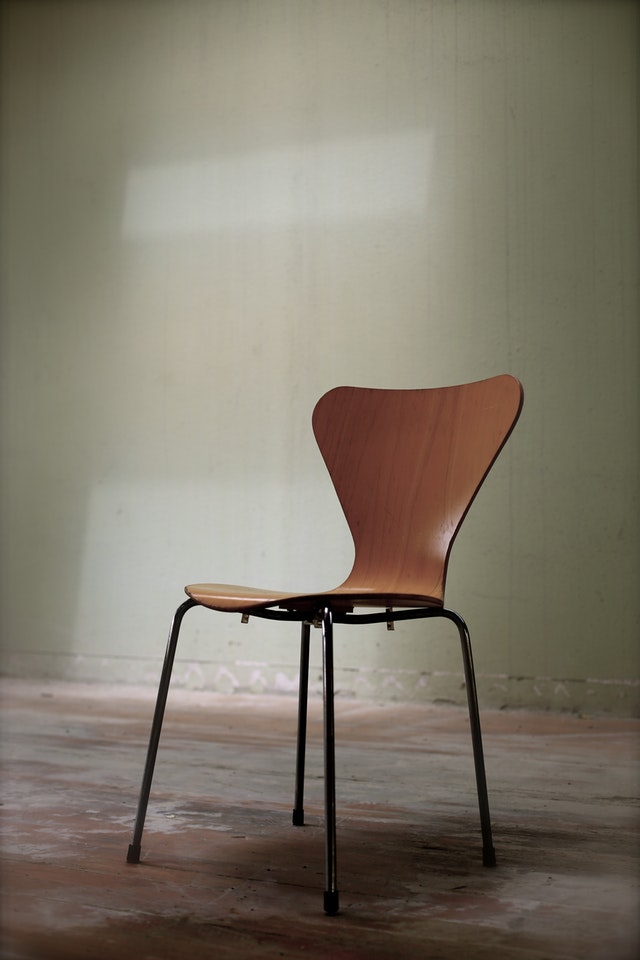
    As most of us know, in any coaches’ room, there is a pecking order.  Or at least, back in my day – when this specific incident occurred – there was.  Every coach usually has a specific spot they sit and place their skate bag, coats, teaching aids, books, purses, etc.  Over time, these specific areas become permanent and were silently acknowledged as that coach’s “spot”.  I have been in some clubs where you would literally be taken to school for sitting in another coach’s chair.

    Back in the mid-2000, I had well over a decade of figure skating coaching under my belt, had started running my own intensive summer program with the help of an incredible team of friends, and had several provincial medallists to boot (see what I did there?).  So, while I wasn’t the best of the best in coaching terms, I had put in my time, paid my dues, made MANY sacrifices, and gained, at the very least, a modicum of experience and credibility.

    I had been coaching at a little club on the outskirts of Calgary for a few years.  I was the relative newcomer, and the first thing I did when I started using the coaches’ room was to make damned sure I did not sit in any other coach’s spot.  I even asked a friend who worked there with me who usually sat where so I could make sure to find a chair that didn’t offend anyone.

    You see, I’m old school.  I believe you show respect to those who went before you. 

    I believe that you should show deference to coaches who have put in the time and sacrifice to get to where they are. 

    Without those successful coaches who have paved the way for us, I firmly believe we would have had a harder time of it. 

    And I also believe, more and more fervently with each passing year in my profession, that it is our job to kick in doors, shatter stereotypes and help empower the next generation of coaches in their journey as they follow our example.

    Now, some of you may say this is outdated thinking.  Some may think that respect should be earned and not given freely.  And to some extent, I agree.  One of the lessons I have learned over time is to withhold my respect and trust until new colleagues earn it, BUT, I want to stress, I still feel it is important to be kind, polite, and respectful whenever and wherever possible.

    So, time passed as I worked at this small club, and eventually, this chair became my spot.  Now, I wasn’t a senior coach in the club, but I felt I worked hard and deserved the same respect as anyone else.

    Around this time, a new coach was hired.  Let’s call her Monica.  Now Monica was a young coach, just starting out. She was very green and very young. But she seemed nice, and since I was only at the club a couple of days a week, I really didn’t have much interaction with her.  The first week with Monica working with us came and went with no problems.

    Then came the day that I arrived at the rink early and was out on the ice before Monica. When I came back in to change my skates, Monica was sitting in my chair.  “Well”, I thought, “no problem”.  So, I picked up my bag (which was next to the chair), my coat (from the back of the chair), and my boots (which were under the chair) and moved to an empty seat.  (Yes, there were empty seats in the room she could have sat in, but she was new, and she was young and just starting out, so I figured she may have been flustered and not remembered that’s where I usually sat).

    As I grabbed my stuff, she seemed confused and said, “oh, I’m sorry, is this your spot?” I quietly responded, “no problem,” and moved.

    In my head, I was thinking, “well, DUH, of course, it’s someone’s spot since all their stuff is on it, in it, or around it, not to mention you’ve seen me sitting here all week,” but I kept quiet and told myself to chill out.

    After this incident, I had a private conversation with one of my coaching friends in the dressing room.  I found it odd that with the empty chairs, Monica had chosen mine, even though my stuff was all over it, and she MUST have seen me sitting in that chair. And my friend told me that on her VERY FIRST DAY when she entered the coaches’ room, Monica had asked my friend(duh-duh-DUUUUUHHHH)…..“WHO SAT WHERE”?

    My friend had gone through who sat in each chair, so Monica already knew who sat where and where the empty seats were.

    This seemed odd to me.  Monica already knew who usually sat in each spot.  There were empty chairs.  But rather than take an empty chair or any of the FOUR other coaches’ chairs who also used that room, Monica chose to target me.

    Of course, because I wanted to be nice, I told myself I was being paranoid.

    I let it go.

    Sure enough, the next week, it happened again…. empty seats in the room, lots of choices of where to sit, aaaannnnnnnddddd sure enough, Monica targets my seat.

    I called her bluff.

    As she looked up at me, she asked, “Oh, I’m sorry, is this your chair?”  I said yes and stood there.  She grabbed her stuff and went to an empty chair.

    I said thanks.

    That night I got an email from Monica.

    She was genuinely hurt.  She expressed herself quite eloquently, explaining in DETAIL how I had embarrassed and devalued her because I had made her move. How I had hurt her feelings. How could I do that to her?

    I read the email a second time.

    I poured myself a very large glass of red wine.

    I re-read the email over and over and over, trying to digest what I was reading and reconcile it with my perception of the situation.

    I had another glass of wine.

    I started about 12 different responses, then deleted each one.

    I finished the bottle.

    I realized that I would never want to be the one to make anyone feel bad about themselves, and I really, truly tried to look at it from her point of view.

    • True, she knew I sat there and chose to single me out twice and make me move. 
    • True, this felt like a calculated move to take me down a peg.
    • True, it felt like she was identifying the competition in the room and trying to neutralize it.
    • True, I was over-analyzing the situation to death.
    • True, I was likely paranoid based on my experiences so far in the figure skating and coaching world.

    I went back and forth in my head, arguing each side of the argument.  Was I being over-dramatic and seeing shadows that weren’t there?  Were my instincts correct, and was this a targeted move on her part?  It is well documented that women are overtly competitive with their peers in their workplaces…. this could be one of those times.

    In the end, I couldn’t dismiss one inescapable fact.

    It was JUST. A. DAMNED. CHAIR.

    So, I wrote her an email.  I apologized if I made her feel bad.  I tried to express the fact that I have always respected older coaches, the battles they have fought, and the experiences they have had, and for this reason, I always tried to not take their places in coaches’ rooms because they had earned the right to those spots.

    In the end, though, I said it was just a chair, and if that was where she felt she needed to sit then I said she could knock herself out, and I would move.

    I even invited her out for a beer, so we could have a good laugh about it.

    Confident that I had diffused the situation, I pressed send.

    The email I got back was no longer sad or hurt.

    SHE. WAS. NOT. HAVING. IT.

    She went UP one side of me and DOWN the other.

    According to her, I was condescending and egotistical, and a few other things I don’t care to repeat. I mean….  how DARE I talk to her like that? Who did I think I was?

    And it went on and on and on.

    I still shake my head when I think about how badly she had misinterpreted the tone of the email and how angry she was.

    I also shake my head at the fact she took absolutely no accountability for her part in ANY of it.

    She was the victim.  I was the aggressor.  In her eyes, it was case closed.

    I had had enough, so I forwarded the entire exchange to the club president.  She sent out an email the next day telling everyone that there were no assigned seats in the coach’s room.

    This, of course, was NOT true.  But the president was a much older lady who, while sweet, was not in the loop when it came to the politics at work within her club.  So, it seemed that every other coach got to keep their chair, and Monica had succeeded in demonstrating her power and co-opting mine.

    Even though I had already conceded the battle, it was clear I had also lost the war.

    Life went on at the club, Monica and I co-existed, I was pleasant, and she was cordial, but it was clear we would NEVER be besties.

    To this day, I still think about that chair.

    I still don’t know if I was right or wrong.  Did I stand up to a woman who saw me as a competitor and was trying to cut me off at the knees?

    Or was I the one disrespecting a new coach and being the antithesis of everything I had hoped to stand for?

    I’ll let you be the judge on this one. 

    Have you ever felt a colleague was trying to stealthily take you down a peg?  Share your experiences in the comments.