Tag: figure skating

  • A Product Review for the Fitbit Alta HR Monitor

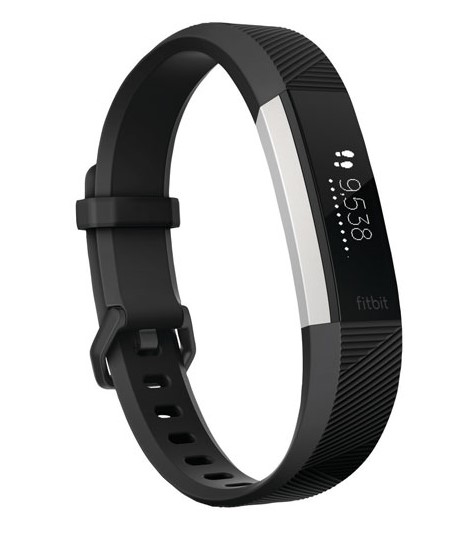
    A Product Review for the Fitbit Alta HR Monitor

    Product:  Fitbit Alta HR Monitor

    Price:  $129.29 CDN

    Cheapest Place to BuyAmazon.ca

    My Rating:  10/10

    Overview:  I’ve seen the Fitbit monitors around for a couple of years, and finally decided it was time to find out what all the fuss was about.  I’m so glad I did.  I love my Fit bit with all of it’s many features. In the tap of a finger I can see the steps I have completed each day, my heart rate, the calories I have burned, my activity per hour and even the different sleep cycles I had the night before.  As a single mother and busy coach, sometimes we put our needs last when it comes down to taking care of our health and the Fitbit Alta HR Monitor is the perfect antidote to this.  In addition, there is a handy app you can download that gathers and assimilates all the information from your device wirelessly, gives you an incredible amount of information, provides goals and motivation, AND connects you with other users.  What’s not to love?

    Best Feature: This device works because it increases your AWARENESS of your daily habits and gives you the tools and information you need to lead a healthy lifestyle.  If you aren’t moving enough each hour, you will get a gentle reminder from your device to move.  If you reach your step goal for the day, your Fitbit Alta HR celebrates with you.  This device is the best way to condition your behaviour, create healthy habits, and maintain those habits.

    Pros:  As a newly diagnosed Fibromyalgia sufferer, the sleep stages function has been invaluable to me.  As anyone with Fibromyalgia, depression or both knows, there is a direct link between sleep, chronic pain and illness.  Being able to track the hours I sleep, the time spent in wakefulness, light sleep, deep sleep and REM sleep is invaluable to me.  I can greater predict flare ups when I know I’ve had a bad night and very little deep sleep.  And the app takes this data one step further, by giving me a 30-day average for my sleep, as well as comparing my data with the average percentages for my age group.  On top of this, both the device and the corresponding app are incredibly user-friendly and easy to navigate.

    Cons:  Sometimes I don’t like to wear a watch or bracelet, which makes it difficult to track my habits.  I would love to see a version of this device as a necklace or choker. Also, I find sometimes you must tap the screen in J-U-S-T the right way to get it to respond, however, this is not a problem that takes away from my enjoyment of the device.

    Conclusion:  There is a reason this device and corresponding app is so popular.  The Fitbit Alta HR is a great way to monitor your lifestyle and adapt your habits for a healthier you!

  • SUPERS.T.A.R GOAL SETTING:                                         A step by step primer on how to set your goals for figure skating or dance.

    SUPERS.T.A.R GOAL SETTING: A step by step primer on how to set your goals for figure skating or dance.

    Part One: Setting your Goals

    “Plan the work, and work the plan.”

    The first step on any journey is to know where you are going. 
    Goal setting is the first step on your journey in skating!

    Learn How to Goal Set Like a SuperS.T.A.R.

    S.T.A.R. stands for:

    Specific: You can’t achieve it if you can’t describe it in detail! Break your goal down into manageable chunks, and attack it one chunk at a time.

    Trackable: If you can’t measure it so you can keep track of it you won’t know when you’ve achieved it. Make sure each goal has a quantity attached, or a quality, as well as a time element. These things will  help you track your progress.

    Attainable:  I’d like to play in the NBA.  I’m 5’4” and can’t jump high. I’m also 50 years old. Even if I could quit my job and train 5 days a week to get a great jump shot, I will never grow any taller. 


    My goal of playing in the NBA is NEVER going to happen.  Enough said.

    Realistic: It may be attainable, but are you willing to put in the work and make the sacrifices to make it happen?  THIS is when it gets real.

    As we work through our goal setting process together, I am going to ask you to always come back to these principles. 

    Ask your self constantly, is this goal specific, is it trackable, is it attainable, and is it realistic. If not, adjust your goal to make it so.

    GOAL SETTING IS A SKILL, THE MORE YOU PRACTICE IT, THE BETTER YOU GET!

    SuperS.T.A.R. Goal Setting Strategy

    The first step in any goal setting process is sometimes the scariest.  You have to DARE to dream. Don’t worry about anyone making fun of you.  These are your dreams, and you’re allowed to have them!

    So, when you dream about skating, where do your dreams take you?

    Use the space below to write out some of your dreams when it comes to your skating:

    Now that you’ve dared to dream, you have to do something even harder.  You have to ask yourself some hard questions about your dream.

    ACTIVITY #1: Try using these questions to help you assess if your dream is realistic.
    (Using a blank piece of paper, spend some time thinking of the answers to the questions
    , and write them down.

    1. How realistic is this goal?  Check out the internet, google how many people have achieved it. Read about their journey, find out how long it took them and the obstacles they encountered.

    2. Am I really ready to make the changes necessary in my life to achieve this goal?

    3. Am I ready to make sacrifices along the way to achieve this goal?

    4. Am I ready mentally to handle the ups and downs/successes and failures I will encounter along the way as I work toward this goal?

    5. Will I have a good support system around me to help me achieve this goal? This includes, family, friends, coaches and teachers.

    6. Are the necessary facilities and coaching readily available in my area to achieve this goal, or do I have to look elsewhere for them?

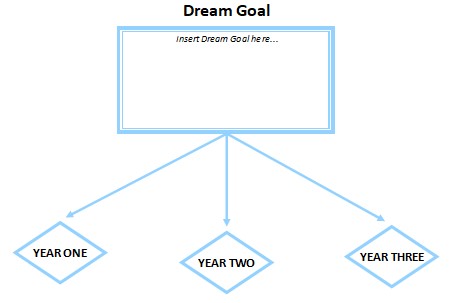
    For our next step, take a look at the picture below and insert your DREAM GOAL.

    Now divide your dream goal up into do-able chunks by years to start.  We will use a three year plan here, but anything goes! Take some time and list the things you need to accomplish along the way to get there.

    Year One:  Steps Necessary to Achieve Your Dream Goal

    Year Two:  Steps Necessary to Achieve Your Dream Goal

    Year Three:  Steps Necessary to Achieve Your Dream Goal

    Note:  If you need more years to break your dream goal down, use a blank piece of paper or a journal to write down your thoughts.

    We’ve spent all this time thinking about our goals, and breaking them down into yearly steps, or increments.  So far so good!

    Here’s the next step:

    Now that we’ve painted in the larger strokes of our goal setting, it is time to follow our SuperS.T.A.R. guidelines once again and get even more specific.  For this phase, you now need to do your research, chat with your coaches and parents, and find out a whole lot of information.

    ACTIVITY #2: Using the Yearly Planning chart found after these questions, we are going to plan the dates and major events for each season. 

    Things you will need to know, or at least have a rough idea of are:

    · Start and end dates for each season. Make sure to start with the month that your year starts in, if you are competitive and skate/dance year round, this would be May/June  If not, this might be September/October.

    · Major life events, such as holidays, school trips, exams, or anything else that may require some of your time and focus away from skating (these are called INTERVENING VARIABLES) and you need to plan for them whenever possible and adjust your training schedule accordingly.

    · Test Days/Exam Days

    · Competitions—these can be divided into two groups:

    1. TRAINING competitions: where the whole idea is to go and get some feedback.  This means you will not be varying your training overly much to produce what we call a “peak”

    2. QUALIFYING competitions: These competitions are the priority, where you will be adjusting your training leading up to the event in order to help you feel ready and rested so you have every chance to turn in your absolute best performance. Put a star beside these on your Yearly Planning Chart!

    · Choreography, when is the best time for you to start working on new programs?

    · Dates you set aside in order to check your equipment, such as if you need your skates sharpened, or if you need new skates or dance shoes, or a new costume.

    · Dates you set aside to monitor your progress. (More on this a little later)

    These dates will help you as you plan your training for each season, so circle the important ones on the Yearly Planning Chart so you know when they are coming and where they sit in your year.

    Yearly Planning – Important Dates

    Year:   

                            The Importance of Assessment Days    


    Before we move on, we need to remember a crucial part of goal setting and planning:  ASSESSMENT DAYS!

    These are the days that you SPECIFICALLY SET ASIDE so you can go back through your week, month, season, or year, and take stock of how you did.

    This is part of what we call SELF-MONITORING – which is the ability for you to look at your strategy, and “tweak it as you go” so you can be more successful.

    Those people who are able to look at their strategies, analyse them, and tweak them are the people who end up seeing the most success and happiness in their careers.

    So, how do we know if we’ve achieved our goals?

    Ask yourself these questions:

    · Did you pass the tests/exams you had wanted to?

    · Did you achieve the performances you wanted to?

    · What about the specific elements in your skating or dancing, did you achieve those in the time frame you wanted to?

    IF YES, CONSIDER THESE THINGS:

    Did you achieve these things right on time, or WAY ahead of the time frame you allowed yourself? Did you feel a sense of accomplishment with your goals? If you achieved your goals too easily, you might want to make your next set of goals a little more difficult.   

    If you don’t challenge yourself, you limit your ability to grow and really see what you can do!

    IF NO, CONSIDER THESE THINGS:

    WHY didn’t you achieve the goals you wanted to accomplish? What do you need to change in terms of time, effort or strategies in order to complete these goals?

    Use failure to achieve goals as FUEL for the next round, and be more realistic in your next round of goal setting! There are assessment sheets at the back of this module, use them after every season!

    Now that we have our list of important dates, we can move forward with breaking down our first year!

    AGAIN: It’s important to  pick the season where your year starts.  Example, for a competitive skater, the year starts in the spring.  For a recreational skater, your year may start in the summer if you summer skate, or in the fall if you do not.  This is where it’s important to know what you can give and commit  in order to make your dreams come true. We are going to pick YEAR ONE.

    ACTIVITY #3: Using the following template, break into groups, or pairs and help each other fill out ONE TEMPLATE PER SEASON.

    Use this template to write out your goals for each season.  Take your time and really break things down.

    Hint:  It helps to work backwards, if you know you want to be able to land an axel 3/3 attempts by your third skating season, (if you only skate three seasons a year) then by the end of your second season you should be able to land 2/3 axels clean and by the end of the first, you should aim for 1/3 landed.

    SEASON ONE:                    

    Date Begins:                                        # of Weeks:                          

    TEST GOALS:                                                                                                                                                                        

    COMPETITIVE GOALS:

    PROCESS GOALS: (goals you want to achieve as you work every day toward your larger goals)

    JUMP ELEMENTS:

    SPIN ELEMENTS:

    PROGRAMS:

    OTHER:

    EQUIPMENT/COSTUME NEEDS:

    INTERVENING VARIABLES:

    (these are things that may disrupt your training, like exams, vacations, etc, so adjust your goals accordingly)


    As you set out your goals for each season, make sure to revisit your SuperS.T.A.R. goal setting guidelines!

    Now that you have all of your goals for every season planned out, the next step is to use these goals to break down each season into monthly and weekly sections so you can more easily keep track of your progress and you can adjust your training as you go.

    Keep your eyes peeled for the “SuperS.T.A.R. Goal Setting Part Two” blog when it comes out for more information about how to organize your skating or dancing year so you can be the best skater you can be!

    Note:  make sure that at the end of every season you sit down either by yourself, in a group or with your coach and use the assessment sheet template provided below to really see how you’re doing, what’s going really well, and what you can do better. 

    Assessment days are a real opportunity to gain valuable feedback about your training and how you can tweak it to progress faster!

    I hope this blog and the goal setting ideas and exercises help you to better plan your skating or dancing journey, and help you enjoy the ride! Remember, these principles apply to any sport, and can easily be applicable for competitive cheerleading and gymnastics too!

    Do you have any helpful goal setting tips you’ve used for your athletes? If you’re an athlete, what works best for you in terms of goal setting?

  • A Product Review for Maybelline New York Dream Fresh BB Cream

    A Product Review for Maybelline New York Dream Fresh BB Cream

    Product:  Maybelline New York Dream Fresh BB Cream

    Price:  $9.96

    Cheapest Place to Buy: Amazon.ca

    My Rating:  9/10

    Overview:  As arguably one of the worst morning people in the world, I used to dread getting up to coach on morning ice. (Spoiler alert: I’m a figure skating coach.) Maybelline Dream Fresh BB Cream was my go-to product every morning to simplify the process.  As simple as 1-2-3, I cleansed, applied the BB Cream with my fingers over my entire face, and was out the door, ready for the morning. This cream not only corrects and hydrates, it also brightens and enhances your skin tone.  I find, particularly for the cold environments we encounter for hours at the rink, this cream really does the job of a moisturizer and foundation in one, providing a natural, minimal make-up look.  Creamy and smooth, this beauty balm glides on gently, blurring imperfections and blending with your skin tone beautifully.

    Best Feature: As a more mature woman (cough, cough), I’ve tried every product under the sun to cover up my under-eye wrinkles and bags.  This product is by far the best because it hydrates my under-eye area as it camouflages, taking years off my face every time I use it. The cream is build-able, so if you need more coverage, you simply apply another layer for an even more perfected look.

    Pros: This cream is simply the best on the market I have tried in terms of covering all the bases.  It feels like several products in one: a moisturizer, a corrector, an illuminator and a foundation.  I find my skin looks softer and more hydrated after I have used this product; I love the smell, look and feel of it, and I really like the easy-to-squeeze tube it comes in which makes for quick and easy applications. I also like the dewy finish it leaves on my skin, which makes my skin look plumper and younger. Made with soy extract, a powerful natural antioxidant, I found my skin tone to be more even, and my wrinkles diminished over time.

    Cons:  There are only five colors/tones to this Cream:  Light, Light/Medium, Medium, Medium/Deep and Deep, however, I usually use medium but blend with a dot of Medium/Deep over the summer when I have a slight tan.  Also, while there is a version of the product made with an SPF included, it has yet to be made available in my area of Canada…..so boooooo Maybelline for that!

    Conclusion:  Maybelline Dream Fresh BB Cream is simply a no-brainer for anyone looking for a quick, effortless and affordable skin care regime. It packs so much punch in a little tube it really makes life easier for us on-the-go coaches looking for the complete package with our skin care products.

  • Fibromyalgia:  The Other “F” Word

    Fibromyalgia: The Other “F” Word

    Karma’s a bitch. 

    Years ago, when I was young and nubile and oh-so-ignorant, I remember having a conversation with my mother during one of my visits.

    We were discussing an acquaintance of hers that had been ill with this new, “phantom” disease called fibromyalgia. According to my mother, this friend had been battling sore joints and constant pain, and had not been able to find any physical cause for her discomfort.

    And I, in ALL my self-righteous glory, and clearly still brainwashed with the put-up-or-shut-up training mentality beaten into me from my years of training as a figure skater in the seventies and eighties, said with a side eye and more than just a little sarcasm;

    “Sounds like it’s all in her head.”

    I still cringe when I remember that conversation.

    Cut to more than 20 years later, and my life has been irrevocably altered from fibromyalgia.  I wonder if it’s the fates’ way of teaching me a lesson in empathy, or just dumb luck. 

    Either way, it’s no picnic.

    So, you may ask…… 

    What exactly is fibromyalgia?

    Short answer

    Fibromyalgia is PAIN.

    EVERYWHERE.

    Now, for the long answer, I’ll put on my “scholarly cap” and quote the Mayo Clinic definition of fibromyalgia for those of you who like more scientific jargon.

    According to the Mayo Clinic website, “ Fibromyalgia is a disorder characterized by widespread musculoskeletal pain accompanied by fatigue, sleep, memory and mood issues. Researchers believe that fibromyalgia amplifies painful sensations by affecting the way your brain processes pain signals.” (Aug.11,2016)

    The key symptoms I have encountered with my fibro are:

    Photo by Kat Jayne from Pexels
    • Chronic pain and stiffness in my joints, particularly in the morning.  I’m not talking just a little bit of stiffness.  I’m talking put-on-a-suit-of-armor-and-try-to-walk-down-the-stairs stiffness.
    • Chronic muscle aches, and, just like my joint pain, this can be ANYWHERE.  Sometimes my fibro attacks my hips, sometimes my hands, fingers and ankles, sometimes my neck and spine….it’s always a new and exciting surprise to see where my fibro will attack each day.
    • Fatigue through out the day. The pep talks I have to give myself to get vertical each morning are getting longer and more ridiculous as the months go by.
    • The inability to get a restful nights sleep. There is nothing worse than sleeping for 8 hours and waking up feeling even less rested than you were the night before. Often, my body feels like I’ve been hit by a Mack truck.
    • Fibro flare ups that can last anywhere from 4 days to 4 months. When I overdo it, I pay for it. The worst flare I ever had lasted 4 months. You know the pain you feel when you’ve had a really hard work out? Now take that, multiply it times ten, and make it last for 120 days without any relief.

    Yup, that’s a fibro flare up.

    Good times.

    • Incredible tenderness to the touch in some not-so-convenient areas. My hips often become so tender to the touch I can’t sleep on my side for more than 5 minutes before the pain and pressure becomes too intense. And DON’T GET ME STARTED on how it feels to wear a bra when you are a fibro sufferer!
    • Fibro fog. Basically, you are so freaking tired that even linking one thought to the next can be difficult. Say bye-bye to executive function and hello to a non-existent short-term memory. To be fair, I’ve had two concussions in the past five years, so some of those deficits are also linked to these events. (Yay for me!)
    Photo by icon0.com from Pexels

    The “experts” will tell you that fibromyalgia is simply your body’s pain signals gone awry. When a house is on fire, a siren sounds so the firemen can come out to extinguish the flames. When your body is in trouble, your nervous system sounds the “pain” siren to let you know there is a problem.

    Fibromyalgia is your brain thinking there is a four-alarm fire and ringing the alarm, even though nothing is wrong.

    Why does your body do this? Well, there are many possible theories, though nothing has been proven beyond a reasonable doubt. There are definitely pre-cursors that seem to be linked to the onset of fibromyalgia, disease or trauma being the most prevalent.

    For myself, in the five years before I developed fibro I experienced, in chronological order:

    Infertility

    Divorce

    A high risk pregnancy with morning sickness so severe I had to be hospitalized.

    A head injury from falling on the ice when I was 5 months pregnant.

    A move across country when I was 6 months pregnant.

    A difficult birth and raising a special needs child (as a single mother) who never slept for the first 2 years of her life.

    A second head injury from a fall on the ice.

    Even with all of these pre-cursors to fibromyalgia in my medical history, when I brought up my symptoms to my doctor and REPEATEDLY told her something was wrong, it was very evident she did not believe me. Sadly, many doctors still do not believe in fibromyalgia to this day, which causes so much pain and suffering for those who suffer and go without the support they need.

    For a more in-depth synopsis of the causes and symptoms of fibro, check out WebMD.

    So, is there a cure? No. Some anti-depressants and anti-seizure medications are prescribed because, for some reason they tend to decrease the pain and fatigue in fibro patients. I’ve tried two of them, and both times, the side effects outweighed the benefits to the point I simply couldn’t continue.

    And don’t get me started on the withdrawal from these meds.

    WORST I have EVER felt physically.

    Honestly, when I’m not in a flare up, life is not bad. I’m a little more tired than I used to be, and I have never slept well in my entire life, so I don’t know any differently.

    Photo by Pixabay from Pexels

    But, here’s the kicker, you live in constant fear of provoking a flare.

    If I do too much, if I stay on my feet too long, if I exercise the wrong way (anaerobic exercise is a no-no now) I pay for it.

    And pay.

    And pay.

    And no one knows or believes you are suffering, because you still look the same. I might walk slower when I have fibro, but here is no outward sign of the disease, and that’s the stink of it all.

    So for me, fibro is my new F word. It rules how I live my life, and dictates what I can do, and for how long I can do it.

    Every. Single. Day.

    FU#@!

  • Skating Clubs: What Makes a Good Executive?

    Skating Clubs: What Makes a Good Executive?

    A skating club executive sets the tone for the rest of its membership; how the people on the executive treat each other, the skaters, the coaches and the parents who participate in their club determines the climate and culture for the entire organization.

    I have noticed over my years teaching in many different clubs there are certain things that successful club executives have in common. 

    After compiling a list, I’ve whittled it down to ten important traits for any skating club executive to create, grow a and nurture a positive and successful culture.

    •  They Listen

    Successful club executives listen to their membership.  Even if they don’t agree with everything they hear, they are always ready to listen, understand and empathize.  To know that your opinion is respected and valued by those at the highest level of any organization is a powerful thing.  It fosters good will from all members and encourages them to have more ownership in the direction and success of that organization.

    • They Know They Don’t Know Everything

    Successful club executives realize they don’t know everything about figure skating, and that’s okay. A healthy Board of Directors is always willing to learn new things and grow in new directions, and they aren’t afraid to ask for help and advice, particularly utilizing the extensive knowledge found within their coaching staff.  If the people at the top levels of the organization have a growth mindset, this will filter down to all levels of membership. Check out more about Mindset by reading my book review here

    •  They Don’t Lose Sight of the Forest for the Trees

    A successful club executive realizes that sometimes the spirit of the law is more important than the letter of the law.  Sometimes, blind adherence to rules and regulations that restrict an athletes’ ability to gain the ice time they need or participate in the programs necessary to progress can be detrimental to skaters, coaches and the health and longevity of the club in general.  The bigger picture must always be taken into consideration.

    •  They Defer to the Coaches in All Things Skating

    Would you go to your child’s school and sit in on the teacher’s class, critiquing the curriculum and their teaching methods?  A strong executive doesn’t micromanage their coaching staff.  They allow them to develop and implement the programs as they see fit, and they support them along the way.  When coaches feel valued and appreciated, their loyalty, commitment, and job appreciation grows exponentially.

    •  They Do their Jobs Well

    If a skating club is to be run well, those at the executive level must know the roles and responsibilities of their positions and execute those duties efficiently.  This means attending meetings regularly, and educating themselves in the role they have been elected for. When everyone knows what they are supposed to do, a club runs at maximum efficiency.

    •  They Communicate Regularly and Effectively

    A strong youth organization will spare no expense to communicate to its members in a timely, organized and knowledgeable fashion.  When people have the information they need, before they even realize they need it, they trust that their needs are being met and are more likely to stick with that organization.  Knowledge of procedures, registration dates, session regulations, etc. creates a feeling of security and control and makes for a club that runs like a well-oiled machine.

    •  They Acknowledge and Reward Good Work

    There’s nothing worse than feeing like you are not seen, heard or valued for your efforts and contributions.  Those clubs that recognize initiative, creativity, dedication, hard work and loyalty create a workplace for coaches and a training environment for athletes that is dynamic, supportive and positive. This positivity and support encourages people to continue stepping outside of the box, creating new programs and initiatives that further the sport.  In short, positivity breeds positivity, creating a self-fulfilling prophecy in any organization.

    • They Always Look at the “Big Picture”

    Call it vision, call it a mission statement, but whatever you call it, it matters.  A successful board of directors of any skating club will spend some time on creating a shared vision for it’s members, and they revisit this vision on a regular basis, making sure to communicate this mandate to their membership often and consistently.  Every decision must then be compared with the goals and philosophy of the club’s vision, and every decision must benefit as many people as possible.  It sounds like a simple thing, but having a shared vision is vital to the longevity, growth and success of every single skating club or youth organization.

    • They Lead by Example

    There are two types of people in this world; those who talk the talk, and those who walk the walk.  If you want to create a club where everyone treats people with honour, integrity and respect, then you had better lead by example and treat your membership this way.  As coaches, we are always aware that we must model the behaviour we would like to see from our students; club executives need to do the same.  If you lead with kindness, integrity and inclusiveness, these values will trickle down to every part of the club structure.

    • They are Transparent

    Nothing good ever grows in the dark.  (except maybe, mushrooms, I LOVE mushrooms, especially in a great white wine and garlic sauce…but I digress) The Executive of ANY youth organization needs to be absolutely and utterly transparent in every part of it’s process.  Reasons for decisions made need to be made public, along with milestones achieved, money spent, and any other topic or issue that affects the membership in any way.  It’s simply good business.

    As simple as these ten characteristics sound, it is rare to find a skating club that incorporates them on a regular basis.  Those that do stand out.  Those that don’t fail to thrive, often cycling through coaching staff and losing skaters on a regular basis.  It would be beneficial of every new club executive to thoroughly educate themselves on the sport AND these attributes if they want to provide an optimum climate for athletes to enjoy their skating journeys.

    Do you have any other characteristics you’ve found that make for a supportive and growth minded skating club? Share in the comments below!

  • A Book Review of “InSideOut Coaching, How  Sports Can Transform Lives” by Joe Ehrmann

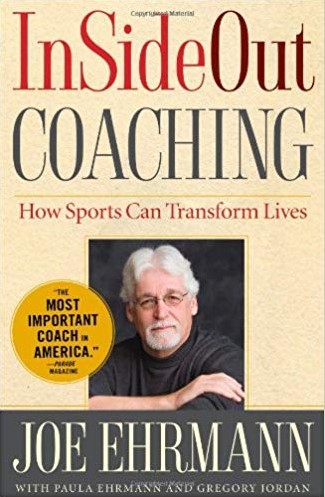
    A Book Review of “InSideOut Coaching, How Sports Can Transform Lives” by Joe Ehrmann

    Product:  InSideOut Coaching, How Sports Can Transform Lives by Joe Ehrmann

    Price:  Kindle Price CDN $24.99

    Cheapest Place to Buy Amazon.ca

    My Rating: 9 /10

    Overview:  Anyone who has ever grown up inside the belly of organized sport can attest to the many valuable lessons taught daily to those who participate.  Sports, both competitive and recreational, can impact young bodies and minds in ways that are immeasurable. 

    However, sport also provides an arena where harm can and often is meted out to those who play by those who often have the greatest influence on them: their coaches.

    Joe Ehrmann dissects the good, the bad and the ugly in organized sports specifically in the field of coaching. Through sharing his own experiences in life and in sport, Ehrmann achingly details how young and fragile youth can be further victimized by well meaning but unwitting coaches; coaches who are trying to work out their own issues but instead end up projecting these issues on players.

    Thought provoking and often disturbing, (warning; there may be triggers for sexual assault victims in reading this book), the author courageously illustrates how certain pivotal and traumatic life events created a foundation of vulnerability and sadness, which left him open to be influenced for the greater good, or, unfortunately, greater harm by his coaches.

    Joe Ehrmann leaves no stone unturned as he navigates the complicated waters of inter-relationships in sport.  Between outdated stereotypes of masculine and feminine roles, win-at-all costs sport culture, the stresses of the times we live in, familial dysfunction, and lack of values-based coaching, he paints a comprehensive picture of the problems young athletes face today and what coaches can do to help them successfully chart their own course.

    Starting with each coach turning their reflection inward by focusing on their own personal demons, and finishing with a complete road map for how to create your own InSideOut Coaching culture, this book shines a light on every nook and cranny of the coaching world.

    Best Feature of the Book:  The author writes this book in a very organized step-by-step way, first detailing the turning point in his life that started him on the “InSideOut” journey, next breaking down the positive and negative interactions and revelations into thoughtful and easy to understand categories within the sport continuum, and finally, detailing the steps he took to re-create the sport model with his newfound knowledge. This provides a very easy to follow narrative with a clear road map to incorporating the ideas he presents.

    Pros:  There are very few books that deal specifically with the coach-athlete interaction and the profound affect it can have on young people.  Ehrmann takes his wealth of experience and helps each of us see (either through the lens of the athlete or the lens of the coach) our own strengths and weaknesses.  Ehrmann then helps us clarify what we need to fix, and gently leads us to our own conclusions about the steps we can take to be better, simply by setting the example for us to follow.

    Cons:  While I enjoyed Ehrmann’s writing style, I found sometimes he spent too long on topics, often to the point of redundancy.  There were times where I as a reader had received the message and was ready to move on to the next chapter, and he was still fleshing out the point at hand with more examples.  However, this is more likely attributed to my get-it-done attitude than anything else and certainly did nothing to take away from the overall message.

    The other con I found while reading this book is it will trigger some negative memories.  As a victim of abuse, both inside and outside of sport, and more specifically, as someone damaged by transactional coaching, reading this book did bring back some of the old fear, anxiety, guilt and sadness related to those memories. However, just knowing that I wasn’t the only one that had these experiences was enough to help me get through them with some valuable insight and understanding.

    Conclusion:  If you want to be a better coach, for yourself, and for all the young men and women you can and will influence over the course of your career, you need to read this book.