Author: Jill Wismer

  • SkateCanada Canskate: Has It Lived Up to the Hype?

    SkateCanada Canskate: Has It Lived Up to the Hype?

    As a coach with 30 years experience working in the Canadian figure skating system, and a skater of 47 years who also amateur coached, (I can’t be that old, can I?) I’ve seen and coached in nearly every variation of learn-to-skate program offered by SkateCanada. From the N.S.T. program, to Parent-and-Tot, to Learn-to-Skate, and EVERYTHING in between, I’ve seen them, coached them, and in some cases coordinated them all.

    This latest iteration is simply called Canskate, and has been presented to the SkateCanada membership as something akin to the second coming of Christ. Now, at nearly a decade since its introduction, we’ve all had a chance to get to know the program inside and out. After coaching the program for several years, and running it this past year, I thought I’d like to list my review of the best, and worst features of this heralded program. (in my humble opinion)

    Interested in finding out if SkateCanada Canskate is worth the hype? Read on!

    Organization

    As the person who nearly orgasms just by walking into Staples at the beginning of the skating year with visions of file folders and binders and training plans -oh my!!-I have to admit, I am truly impressed with the level of organization the Canskate program brings to the table.

    SkateCanada has created a manual that provides the clubs and coaches with everything you need to know to administrate the program, such as:

    • Founding philosophies behind the program.
    • An intensive list of “who” should be doing “what” and “when.”
    • Templates for EVERYTHING from program assistant (otherwise known as PA) training, to parent newsletters, to suggested time allocation for groupings depending on the length of your session, and so on and so on.

    Seriously. Kudos to SkateCanada for the thought and level of organization they put into this program and the Canskate manual they created so the program can be re-produced by the clubs it is meant for.

    As someone who thrives on organization (indeed, I am often accused of doing TOO much for my programs) the SkateCanada Canskate program hits a home-run with its level of organisation. If you have the resources, all you need to do is study the manual, follow the plan, and literally reap the rewards of a happy membership.

    Rating for Organization 10/10

    Fun

    This program, done right, is CRAZY fun for the students. With the colorful props, constant movement, easy to follow circuits, group activities for warm-up and cool down, not to mention stimulating music, there is endless color, motion and challenge for young skaters.

    Done correctly, the Canskate program should be a fun ride for neurotypical kids with no disabilities. However, if you are a child who struggles with sensory issues, neurodiversity, or disabilities, then this program may not be for you.

    As the parent of a neurodiverse child, and a coach with years of experience, I can tell you that this program is simply “too much” for many children who are simply bombarded by all the sensory stimulation. Think of it. If you are already wired to perceive loud noises, lights, or too much movement as painful, then the Canskate program would be incredibly overwhelming.

    We see this in many of the pre-skate students who are just starting out. Often, the slipperiness of the ice, the huge size of the surrounding space, the loud music we play for warm-up and the fluorescent lights are simply too much for them to process and they shut down.

    Sadly, the prevailing attitude from many parents and many coaches is to let a child sit on the ice and cry rather than let them skate back to their parents at the boards for a much needed break. They think it’s tough love, or dealing with problematic behavior, often not realizing that some children may not actually have the capacity to listen, pay attention or regulate their emotions.

    I feel strongly that blaming this behavior on the child for “being bad” or blaming the parents for a lack of stern parenting is simply…….well…..being ignorant of these issues.

    Note: This never, ever happens on my watch. In my humble opinion, letting a child sit on the ice and cry until they skate, particularly for a child with unique needs and challenges, is nothing less than child abuse.

    While some of this behaviour may indeed be acting out for “normal” kids (I use the term normal very warily, there really is no “normal” anymore), SkateCanada dropped the ball by not providing any information about how to recognize possible neurodiversity or disability.

    Yes, I can already hear the defenders saying, “but there are waivers that parents are expected to sign before signing up for the Canskate program, and there certainly IS a question that asks for disclosure of special conditions!”

    For that argument I would pose three statements.

    1. Many parents don’t disclose their child’s special needs.
    2. Many parents don’t know their child has special needs yet as they are still searching for a diagnosis.
    3. Most coaches and certainly most program assistants are not trained or qualified to coach special needs students.
    4. Often there is simply not enough man-power or volunteer helpers to give children requiring extra attention the help they desperately need.

    All in all, while tailor made to be TONS OF FUN for typical kids, sadly, many kids that aren’t so typical may not find it as much fun.

    Rating for Fun 5/10

    Effectiveness

    Next to fun for the skaters, this is perhaps the most important category. Does the SkateCanada Canskate program teach children how to skate effectively?

    Well, YES……and…..no.

    With it’s constant movement, the Canskate program is designed to keep the kids moving at minimum 90-95% of the time. This is a wonderful goal, given what we know about children’s attention spans these days. The Canskate program keeps the kids constantly learning and practicing their skating skills by virtue of carefully drawn out circuits, which the students follow repeatedly, with direction from their program assistants.

    The sticking point here is not that they are moving or practicing, but that they are not purposefully practicing.

    Here’s what we know about motor learning.

    When we learn a new skill, we form connections from our brain to the muscles required to perform that skill. This connection is called a motor neuron. Think of it like a computer program.

    Every time we perform that skill, the neuron we use to do so is coated with a fatty sheath called myelin.

    Myelin makes the nerve signal travel faster down the motor neuron. The more we perform the skill, the more myelin is sent to encase that neuron, the easier and faster we are able to perform that particular skill. Not to mention more signals can now travel down that neuron because it keeps getting bigger.

    If you’ve ever heard the terms “muscle memory” or “automaticity” then you’d realize that myelination is the mechanism by which we achieve the state of flow in our performance where we don’t actually have to think to accomplish a skill.

    BUT HERE’S THE CATCH. IF YOU PERFORM THE SKILL INCORRECTLY, THE NEURON YOU USE FOR THE INCORRECT MOVEMENT WILL BECOME MYELINATED MORE THAN THE MOTOR NEURON FOR THE CORRECT TECHNIQUE.

    This means you are developing a bad habit, because the brain and nervous system will always choose the faster, bigger, more myelinated neuron to perform the skill.

    Bad habits acquired in Canskate will follow skaters through the rest of their career unless countless hours of practice are spent in constant repetition of the CORRECT technique.

    Look, the optics are GREAT when there are 60 kids on the ice all moving around and never sitting still, but the truth is, for smaller clubs, often there is only one coach available, therefore the students are only receiving qualified instruction for 1/3 to 1/4 of the time.

    The rest of the time skaters are left in the hands of program assistants whose job is expressly stated in the Canskate manual as “to guide” but “not to coach.”

    This worries me. This means that for MOST of the time each skater performs a skill on a Canskate circuit, they may be performing it incorrectly, or with poor technique, therefore myelinating those sub-optimal pathways.

    Given that most clubs have only fully implemented the new Canskate for approximately 8 years now, we haven’t seen the new crop of competitive elite skaters who have graduated from the program. It will be interesting to compare competitive results of those who started their skating careers in this new Canskate program with those who came before it.

    Look, parents want their kids to be moving. As a parent of a competitive dancer AND a competitive coach, I expect to see my daughter moving instead of standing around. But, it’s the quality of instruction that we should also keep in mind. We need a program that allows us to provide an affordable way for kids learn to skate that is appealing to ALL involved.

    This is how we build the base for club programs, and it is critical for a skating clubs survival that it is done effectively.

    I realize that realistically, only a handful of skaters will continue from the Canskate program to StarSkate or the Competitive program, but surely, quality should start from the very beginning of our instruction?

    If you are interested in learning more about how myelination affects motor learning, check out the book “The Talent Code” by Daniel Coyle. You can read my book review here.

    (I do NOT receive any money for reviewing books or advertising them. It’s incredibly important that I only recommend books that have helped me with my coaching journey and I feel could help you.)

    Rating for Effectiveness 7/10

    Ice Usage

    I love, love, love the way the Canskate program is laid out on the ice. Done correctly, the program covers the entire ice by virtue of a well thought out structure and design.

    Perhaps my favorite innovation in the SkateCanada Canskate program is the use of both inside circuits and outside circuits, so ALL areas of the ice are maximized for the skaters use.

    For example, one circuit will be drawn outside the perimeter of the square of ice from the blue-line to the boards, providing one group of students a set of skills to follow and practice, and another circuit will be drawn utilizing the inside area of that square for a second group to use.

    This allows coaches to put a maximum number of skaters in a small area in a safe and organized way. This is crucial for the success of programs in small clubs, for in order for them to be sustainable, they need to maximize participants to offset ice cost.

    Combine the use of inside and outside circuits with a fast track surrounding the perimeter for use for warm-up, speed drills, transitions, and anything else the coordinator wants to use it for, and it makes for a tight, effective design for ice usage.

    Some tips that we found that might help, ( I can’t take any credit for thinking of these things myself, I’ve been lucky enough to work with wonderful and innovative people than ensured the program ran smoothly.)

    1. When using inside and outside circuits, draw them on the ice with different colors of marker or bingo dabber, otherwise it’s too difficult for the kids to follow.
    2. Always allow a few feet between the inside and outside circuit so beginning skaters with little control don’t run the risk of colliding.
    3. Make sure you draw the start of the circuit CLEARLY and in big letters with BIG arrows for the direction of flow, then make sure to put the START of the inside and outside circuits that are sharing the same space in DIFFERENT places. If they are too close together, the skaters (and the PA’s) will get confused.
    4. During warm-up for the fast track for the Canskate students, take the Pre-Canskate students to a dressing room where they can practice basic skills like falling down, getting up, balancing on two feet, and marching on the stable ground in a quiet environment before hitting the ice. When the Canskate warm-up is done, and the students are in their groups and off the fast track, then it is safe and easy to guide the Pre-Canskate students across the fast track and into their allotted lesson area.

    All in all, the SkateCanada Canskate program scores max points for ice usage. This is one smartly and efficiently designed program in terms of ice flow and usage.

    Rating for Ice Usage 10/10

    Implementation

    Out of curiosity, I decided to download a time tracking app and track the time I spent outside of the regular Canskate lesson time for things such as set-up, take-down, organizing the weekly schedules, keeping track of PA’s, writing e-mails, creating music playlists, printing and updating attendance lists and group records, writing report cards, preparing for PA training and actually PA training, communicating with coaches, writing newsletters for parents, etc., etc., etc..

    Want to know how much time it takes to run a Canskate program well? (Yes, we ran a stellar Canskate program, I could be humble here, but……why?)

    For every hour on-ice for Canskate I was spending an average of 6 hours off ice to coordinate it.

    Yes, you heard me, one hour on, and six hours off.

    Even if you are getting paid an increased hourly wage of $40 or even $60 per session, that still works out to a shitload of work for WAAAAAYYYYYY less than minimum wage.

    This is why IMPLEMENTATION is the area of greatest concern for me, and possibly for some of you that have struggled to deliver this program as it is outlined.

    I’ve taught and coordinated a LOT of programs in my life, and this one was by far the most work I have ever encountered. With the drawing of circuits, to the daily retrieval and storage of huge amounts of props and learning aids, to keeping track of daily lessons and rotations, the list is never-ending and it takes a huge toll, both physically and mentally.

    Now add to that the other issue when it comes to implementation.

    You need to have enough people to do the Canskate program properly.

    This means you NEED to have enough coaches on the ice, you NEED a coordinator, and you need TONS of good PA’s who are willing to learn, take direction and are committed to the training required to be a program assistant.

    I think you can see where I’m going with this?

    Look, with the increase in the cost of living, affordable housing skyrocketing and both parents in families working more and more, that means there is less time for volunteering and less ability for people to get their kids out to volunteer opportunities.

    Not to mention, (and I know I may offend some people), but not all volunteers are created equal, and not all coaches are either. As coordinator, it is a never-ending and often thankless task to try and figure out how to best keep your volunteers happy so they will keep coming back, but to also make sure the lessons are taught with the coach or volunteer who is best suited to that level or that task.

    Often, just managing the PA’s or volunteers, (some of whom are amazing and you wish you had 10 more of, and some of whom are never on time, never follow direction and require constant monitoring), is a job in and of itself.

    The worst feeling in the world is looking at a full sheet of ice, knowing you have to draw 6 circuits, set up props for those circuits and re-organize your coaches, all within 5 minutes!

    Now, add in the fact that you know your coaches and PA’s will be angry because they only want to teach their circuit. Why? Well, because it is within their comfort zone and they only want to be the “master” of their circuit, but you have no other choice because one coach has just called in to say they aren’t coming, three volunteers aren’t able to show, and you are now missing 5 PA’s with the flu.

    Never mind that your back is breaking from the strain of already lugging all the props and materials out of storage, and you’re not getting anywhere near enough of the pay you should be for this, yet it’s all on you to figure it out for the 45 skaters who are about to hit the ice and expect a good lesson.

    Oh yeah, and be supportive and set a good example for everyone while you’re doing this, ok?

    Never-mind that after the fact everyone (parents and board members alike) will be a critic and feel they can weigh in on your performance, even though they have not even a tenth of an idea of how much work this program is to pull off.

    See where I’m coming from?

    Look, (and I’m looking squarely at you SkateCanada), this isn’t a club-level problem, it’s a problem with how you’ve got the club system set up and the way you expect coaches to be remunerated for their jobs for programs like Canskate.

    Canskate coordinators do not get near enough pay for what they are doing, and I will say the same about any coach for group programs. It is customary for coaches to only charge half their hourly on-ice fee for off-ice work.

    To this I say BOLLOCKS! Coaches with years of experience and solid credentials are highly skilled and rare individuals and should be paid what they’re worth both on and off the ice at the same rate.

    When you pay a highly skilled individual only half the amount they should be paid for off-ice work, you de-value their work. When you incorporate things like “mandatory volunteer hours” into their contracts, it becomes exploitation, pure and simple.

    So, all in all, while I am a big fan of this program, the systems in place to support it in most small to medium-sized clubs just aren’t there, and the expectation that coaches should work for nothing is frankly, unacceptable.

    SkateCanada needs to do better. Yup, I said it, and I’ll keep saying it until changes are made.

    Rating for Implementation 3/10

    Buy-In

    What does “buy-in” mean? Well, this means that the club membership, from coaches, down to board members all have to buy-in to the Canskate program and decide it is worth the effort it takes to run it, and worth the money it takes to pay for people to coordinate it and coach on it.

    I personally think the Canskate program is the most important program the club has, and should be thought of as ‘long-term investment” for the longevity and success of the club.

    I love the Canskate program. I believe that with a few minor tweaks, it could be phenomenal for helping young skaters develop a life-long love of skating, and even better, it could ignite that competitive spark for those who develop a passion for it, like I did.

    The problem is, there are so many hurdles to overcome in order to run this program. When you factor in the workload, the volunteers and manpower required, and the knowledge and training that are mandatory to make it successful, many clubs either can’t run it the way it was meant to be run, or to be honest, some clubs and coaches simply choose not to run it.

    SkateCanada has gone over and above with promoting the Canskate program. Opportunities for training abound, plus there are tons of incentives for those who run a great Canskate program, but let’s face it, even though they say that clubs are expected to follow the program as it was intended, and we know that a club could have it’s sanction revoked for not following it….this hasn’t happened yet.

    Quite frankly, I don’t think SkateCanada has the money or the means to make visits to clubs and monitor and police how they implement their Canskate programs, and just as frankly, they shouldn’t have to.

    But the sad fact is, many clubs, coaches and yes, even board members haven’t bought in to the benefits of this new program.

    I hope in time this will change, I’ve seen the benefits it can have, and with the cost of ice increasing rapidly, the future of small clubs may come to depend on their ability to move away from single coaching and toward a group coaching format that can pack as many bodies safely on the ice for training.

    I guess we’ll wait and see.

    Rating for Buy-In 6/10

    Content

    When I say content, I am talking about the skating skills we teach on Canskate and the different areas of focus, such as warm-up and cool down.

    My favorite thing about the SkateCanada Canskate program is its focus on teaching skating skills for all ice sports, so when a skater is done, they may choose figure skating, hockey, ringette, or speed skating. I love this approach, and salute the creative team who put together the stages, fundamental areas and skills. This is a well thought out and easily follow-able pathway to skating competency.

    I love the way the Canskate program utilizes the fast track for developing speed, and I also love the circuits themselves, they are fun, and colorful.

    One note I have found over the years, is that we shouldn’t allow the skaters to stay in a fundamental area on the same circuit for more than about 5-7 minutes. Kids these days simply get too bored and need more stimulation, so I have found that it’s better to do more rotations each session than the manual actually prescribes.

    Keep in mind, this differs for differently-abled children or neurodivergent children who may need an entirely different learning plan than the one followed by the masses.

    Another note: I found if you want to utilize the fast track during each allotted stage/circuit time frame, you might want to have large cardboard arrows placed on the glass around the rink with sticky putty, and as coordinator, you can switch these arrows during warm up and during each rotation to show the direction of movement on the fast track so everyone stays safe.

    My only big concern with the content of the Canskate sessions is there is no allotted free time for the kids. Look, these little kids are structured from the moment they get up, throughout their school day, and for our entire Canskate session. Whey not allow for some free time for them to practice what they learn, explore the space they are in, and learn how to interact with each other for 10 minutes at the end of the session.

    The science backs me up.

    According to study after study, scientists are shouting from the rooftops about the need for unstructured play, and its benefits both socially, emotionally and cognitively cannot be understated.

    I like this quote from Time Magazine: The Secret Power of Play best:

    But scientists have learned that free play isn’t just something children like to do—it’s something they need to do. It exercises their minds and their creativity. More than anything else, play teaches children how to work together and, at the same time, how to be alone. It teaches them how to be human.”

    Time Magazine: The Secrets of Childhood, Inside the Minds of Our Younger Selves

    So while I love nearly everything about the content of the Canskate program, I would love to see some time allowed for fun, unstructured play for its participants.

    Rating for Content 8/10

    Opportunities for Mentorship

    This topic is near and dear to my heart. I strongly feel that it is our duty to help mentor and guide young coaches as they start on their journey. Coaching is not an easy profession, and there are often more negatives than positives.

    Canskate provides the perfect opportunity for young coaches and skaters to test the waters as they learn basic coaching techniques surrounded by supportive mentors.

    In theory, every club should have a supportive culture and a philosophy of empowerment, but in practice, this is harder than it looks.

    I feel that there should be more attention placed on the mentorship and guidance aspect of the Canskate (and the Star Program) and those coaches involved should be provided with paid leadership courses which can give them the tools necessary to create a positive and nurturing culture for PA’s and fledgling coaches alike.

    Leadership ain’t easy. As a person who struggles with it, I can attest to the fact we need more emphasis on how to be positive, encouraging and supportive leaders for our membership. This would only benefit us all.

    Interested in mentorship in coaching, why it’s important, and how you can get on board? Check out the Guide from from Coach.ca.

    Rating for Membership Opportunities 6/10

    Summing It All Up

    As you can see, I am a fan of the SkateCanada Canskate program, but after working as a coach on it, and implementing it as a coordinator, I would love to see some small tweaks to both the program itself AND the underlying club system supporting it.

    If feel that if we REALLY want to look toward the future growth and sustainability of our sport as we see prices rise and wages drop, we need to get more creative than ever, open ourselves up to feedback, and work together to make the SkateCanada Canskate even better for everyone involved.

    Final Score for the SkateCanada Canskate program: 6/10

    Any Canskate coaches or coordinators out there? What are your thoughts on the program? Do you agree with any of these ratings? Disagree? Sound off in the comments below and share to your friends! Let’s start a conversation!

  • A Book Review of “Smartcuts: How Hackers, Innovators, and Icons Accelerate Success

    A Book Review of “Smartcuts: How Hackers, Innovators, and Icons Accelerate Success

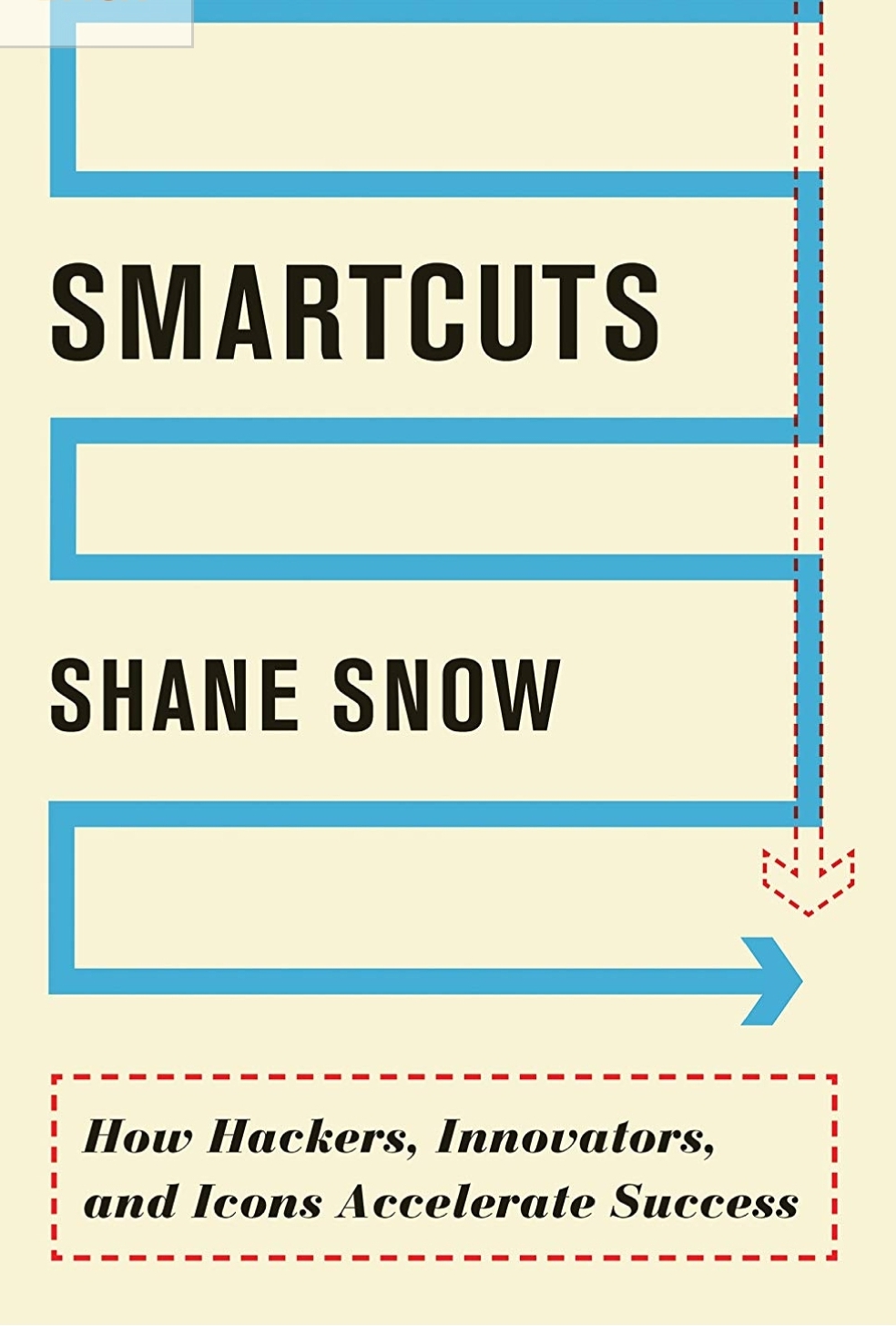
    Product: “Smartcuts:  How Hackers, Innovators, and Icons Accelerate Success” by Shane Snow

    Price:  Kindle Price $17.99

    Cheapest Place to BuyAmazon.ca

    Note: I do NOT currently receive any perks or money from my reviews. My goal is to give my HONEST opinion about books and resources that can help anyone be a better coach, administrator, mentor or parent.

    In time when I build up membership, I may participate in affiliate marketing, but, I will only recommend products on my site that I believe to be the best quality and the most educational.

    My Rating for “Smartcuts: How Hackers, Innovators and Icons Accelerate Success“:  9/10

    Overview:  For any coach who has wondered if there was a better way of teaching a skill, or for any club administrator who spends hours trying to find new and innovative ways to schedule programs for maximum efficiency this book is for you. 

    For those of you who don’t like to challenge the status quo, and who believe in doing things as they have always been done….. well…. this book may change your mind.

    As the author, Shane Snow, writes: Smartcuts is a book that studies the “patterns through which rapid successes and breakthrough innovators achieved the incredible.” Snow explains that through his studies of pioneers in various fields, he has created a “framework for breaking convention” which “explains how people do so much with less.”

    Sound interesting? Perhaps appropriate for youth sport organizations?  Read on.

    As coaches, we all ascribe to the conventional wisdom of working our way up the ladder, both in our careers and in how we train our students. Smartcuts debunks this theory, suggesting that instead of climbing the ladder, we should create our own ladder and develop the self-awareness to determine when it is time to make our lateral move over to it.

    This is only the first method Snow uses to illustrate all the ways people can create spectacular successes in their lives and each consecutive method will spark light bulb moments of either recognition from your own experiences of past triumphs, or discovery of new ideas that may propel you to the next level in your career or life.

    For those of you who feel constrained by our conventional systems of learning in sport, and in life, this book outlines why YOU may actually be the next great pioneer simply by challenging the status quo.

    Smartcuts speaks to the rebel in all of us.

    Best Feature of this Book:  Snow has whittled this book down into 9 basic strategies for creating a smarter, more efficient way to success, and explains each strategy through entertaining anecdotes of real success stories.  This personal touch allows the reader to become engaged in each tactic, and identify with each story, driving home the lesson encased in each chapter.  

    Pros:  Snow is obviously an expert in the subject matter, and his intelligence and passion for the subject matter reaches out from the page and captures the interest of the reader from start to finish. Every person can find a little bit of themselves in the narrative, and will finish the book feeling inspired for their next adventure or project.

    Cons: Many of the principles in this book relate more to business practices than athletics, however all of the theories listed for success are easily modified and adapted in order to increase chances of success, and decrease the time it takes to achieve that success for coaches, skaters and organizations alike.

    Conclusion:  Smartcuts is an excellent and eye-opening read that will leave you inspired, invigorated and chomping at the bit to create your own Smartcut to a more successful you. I highly recommend Smartcuts: How Hackers, Innovators, and Icons Accelerate Success for anyone looking to take a firmer hand in their own destiny.

    Have you ever had to create your own ladder? Share stories of your SMARTCUTS in the comments below!

    If you like my blog, share with your friends!

  • Single Mom

    Single Mom

    A year or so ago, a celebrity gave an interview to a trashy tabloid news magazine (for the life of me, I can’t remember the name of the celebrity, suffice to say, I have T-shirts older than her) and in that interview, she referred to herself as a single mother because her NHL hockey player husband was away for weeks at a time.

    The internet exploded.  Single mothers everywhere saw red…..then purple……then pretty much every other color of the spectrum as they threw fits of rage and spewed venom. 

    It was spectacular.

    Then came the “us” against “them” brigades, trying to dictate who had the right to call themselves a single mother and who didn’t.

    I read quietly from the cheap seats and bit my tongue.

    There were even memes on Facebook cataloging just how hard it was when married women (or men) had a spouse that traveled extensively, again citing the fact that they felt like they were single parents and how difficult it was to hold everything together.

    Some of the people who shared these memes are people I consider good friends and whom I respect deeply, so it didn’t bother me.

    The thing that did bother me was the fact that, yet again, woman was turning against woman, trying to shame, explain, ridicule, and devalue someone else’s experience because it wasn’t the same as theirs.

    It really saddened me.

    Throughout millennia, women have been oppressed.  We have been beaten, branded, stoned, burned, subjugated, brushed aside, marginalized, and exploited. Every inch of progress we have gained as a gender we owe to the women who have gone before and have suffered so much and sacrificed all.

    And yet, it took one question to put us back at each other’s throats.

    Where does this come from?

    I have an eight-year-old daughter, and with her, it started in Junior Kindergarten.  For two years, she had a frenemy that was, in turn, kind one day and sneaky and cruel unkind the next.

    My daughter was ostracized and excluded to the point where she suffered from anxiety which manifested itself in physical symptoms.  She didn’t want to go to school and was in pain EVERY. SINGLE. DAY.

    Why are young girls conditioned to be cruel to each other? Is it because we don’t have the physical strength of men, so instinctively, we realize we must utilize covert means to get what we want?

    If so, why does it manifest so early in our young women? I wish I had the answers.  If you go online you will find a plethora of information, papers, and theories that will attempt to explain the phenomenon of girl-on-girl crime, but nothing will really give any concrete way to solve the problem.

    Either way, the “single mom” debate inspired some real animosity from both sides.

    And I don’t get it.

    I’m a single mom.  I’m the type of single mom that does it all.  My babydaddy child’s father lives across the country, and although he is a good man, we don’t see him much.  When I was pregnant, I saw him even less and had to go through the whole process alone.

    My experience as a single mom has been one of bone-deep weariness, gut-wrenching anxiety, loneliness, crushing responsibility, and endless….and I do mean endless amounts of guilt…that I am continuously fucking messing up.

    But it’s also the experience of raising a beautiful, bright, funny, awesome little human who is, in SO many ways, a gift from the Universe.  Every single day, I have moments where I know it was all worth it because she is the greatest love I will ever know.

    So, just because I define my “single mommyhood” with these parameters, does that give me the right to judge others who call themselves single mothers?

    I don’t think so.  After all, isn’t it about perspective?

    • To the mother in a loving marriage who must hold down the fort while her husband is away for weeks at a time, YES, you are a single mom.
    • To the mother that has 50/50 custody of their children who works like a fiend when her kiddos are at her ex’s because she doesn’t want to be still long enough to realize how much she misses them, YES, you are a single mom.
    • To the mother that has to drive her children two hours to their spouse’s house every other weekend so they can get quality time with their father, because even though the round-trip drive is exhausting, you know how important it is for them to have time with their father, YES, you are a single mom.

    We are all single moms. 

    There is room enough on that pedestal for all of us.

    P.S.  There’s also room for all of you single dads too.

    Got any single mom stories? Share in the comments below, and let’s support each other!

    And do me a favor, and help me reach more people by sharing my site with your friends (only if you like it, of course.)

  • Here’s to the Coaches

    Here’s to the Coaches

    I recently made the decision to step away from coaching. It wasn’t an easy decision to make. I have loved skating, and loved coaching for as long as I can remember. I love everything about being on the ice with my athletes, interacting with them, guiding them, planning their training, reassuring them when needed, and laughing with them.

    The simple fact is, I got TIRED. I will write more on WHY I stepped away and how I felt after I made the decision in another blog. In this one, I want to pay my respects to the many amazing coaches I have had the opportunity to work with.

    I have been incredibly lucky to practice my craft alongside some of the best coaches in the world; coaches who care, and go the extra mile for their students, time and time again. Coaches who have inspired me, challenged me, and taught me so very much. So as I step away from the world of coaching, I wanted to say a thank-you to all my fellow coaches.

    So, here’s to the coaches who give everything so that their skaters can succeed.

    Here’s to that first coach that carried us onto the ice on our first day of skating; drying our tears, wiping our noses, and picking us up over and over and over until we could, finally, get up by ourselves and stand on our own.

    Here’s to the coach that helped us develop our abilities from the very beginning, often for years, giving us the foundation we needed to excel later in our career, until we decided it was time to move on and had to say good-bye.

    Here’s to the coach who gave us that last bit of finesse, polish, and competitive push we needed to succeed at the highest levels of competition.

    Here’s to the coaches who found us a dress for our first competition when our mom forgot.

    Here’s to the coaches who lectured us on taking responsibility for packing our own skate bag, tying our own skates and bringing our own water bottle, even while re-tying our skates EVERY session for us until our fingers could FINALLY tie them on their own.

    Here’s to the coaches who spent countless hours finding program music, cutting said music, (12 hours or more for one cut, amiright?) finding or designing the perfect costume, and then, as if that wasn’t ENOUGH…. choreographing those programs.

    Here’s to the coaches who pick up students and take them to and from the rink, even though they know they shouldn’t, and are making themselves legally liable if anything happens during that drive, but if they don’t, their skater won’t be able to participate in the sport they love.

    Here’s to the coaches who find a second job, so they can afford to coach when the hours they get at their small club just won’t cut it.

    Here’s to the coaches who find a second job so they can afford to coach when the small club they work for refuses to pay them what they are worth. (You ALL know it happens.)

    Here’s to the coaches who place their skaters over their own children and family, re-scheduling family vacations, weekend get-a-ways (Ha! WHAT weekend get-a-ways?) and after-school activities to accommodate their athletes’ skating schedule.

    Here’s to the coaches who risk their marriages because their spouses don’t understand the stress of coaching and are tired of hearing us complain about work.

    Here’s to the coaches who teach in small clubs, yet somehow manage to find the off-ice programs, extra-ice, and equipment needed to help their skaters succeed even when the skaters themselves can’t afford it.

    Here’s to the coaches at large clubs who deal with competitive pressures every day and manage to navigate political waters like champs.

    Here’s to the coaches who feel like if they EVER see another hotel room again it will be too soon.

    Here’s to the coaches who desperately need that glass of wine to take the edge off after standing for 14 hours on the cold concrete at a competition and taking an emotional ride with EVERY student.

    SKATING PARENTS. Enough said.

    Here’s to the coaches who spend more than they can afford on books, seminars and courses to give their very best to their clients.

    Here’s to the coaches who stay awake at nights worrying and wondering why they just can’t get their skater to LAND. THAT. DOUBLE AXEL!

    Here’s to the coaches who don’t let the politics get them down; who stick to the plan and trust their instincts and their athletes.

    Here’s to the coaches who know when it’s time to move on and provide support and encouragement through-out all phases of a skater’s career.

    Here’s to coaches that know that while their time with an athlete may be small, their impact is great, and strive to be the best influence they can be.

    Here’s to the coaches who spend hours and hours pouring over technical announcements and strategizing program content to make sure they give their skaters the best chance they can during a competition.

    Here’s to the coaches who lessen the sting of defeat by bolstering confidence and emphasizing the lessons learned from failure.

    Here’s to the coaches who teach winning with grace and dignity, and set THAT example EVERY. SINGLE. DAY. for their skaters.

    Here’s to you coach, WE SEE YOU.

    Got any stories you want to share about how your coaches inspired you? Any funny coaching stories? Share with the class in the comments below. While you’re at it, do me a favor, and share this with your friends!

  • A Product Review of “Raddish:  A Cooking Club for Kids”

    A Product Review of “Raddish: A Cooking Club for Kids”

    ProductRaddish Cooking Club for Kids

    Price

    • 24 USD monthly subscription
    • 22 USD monthly for a 6-month subscription
    • 20 USD monthly for a 12-month subscription
    • Free delivery in the US
    • International shipping 7 USD monthly

    Cheapest Place to BuyRaddishKids.com

    My Rating:  9/10

    Overview:  I promised myself this year I would lead the homeschool charge from a place of strength when planning our curriculum.  So often, we try to work on the things we see “lacking” in our children instead of focusing on what they can do WELL.

    With this in mind, I wanted to think “outside the box” in terms of the programs and subjects I introduced to my daughter. As many of you know, it isn’t easy to homeschool a child who is differently wired, you are always balancing the need for structure with the need for newness in order to maintain your child’s motivation and get ANYTHING done.

    I’m blessed with a wonderful, curious, and passionate daughter who, aside from being fantastically creative, also has ADHD, anxiety, and giftedness, so our days are always a fantastic (and sometimes frustrating)  blend of challenge and discovery.

    Picky eating often comes with the territory when you have neuroatypical kiddos, and my daughter is certainly no exception.  Nowadays, after adding the appetite-suppressing effects of Concerta into the mix, food intake has become an even larger source of concern in our household.

    This is where Raddish Kids comes in.  I had seen Raddish Kids advertised on Facebook and was interested right from the start.  I don’t cook much anymore as a single mother, I’m simply too busy. Plus, frankly, I have to make a separate meal for my picky eater, so I usually run out of steam when it comes to cooking another meal for myself.

    Having already researched everything I could about picky eaters when my daughter was a toddler, I knew that one of the strategies used to encourage children to try new foods is to have them help prepare the food. The premise is if they prepare it, they will be more likely to try the food and eventually (fingers crossed) eat it.

    So, I decided to take the plunge.  I hesitated because it was yet ANOTHER monthly charge for homeschooling to add to my ever-growing list, but in the end, I bit the bullet and signed up for the 6-month subscription. 

    I gotta tell you, I’m glad I did. So far, we are two shopping trips and two completed dishes in, and I LOVE this program. Keep reading for the best features of Raddish Kids, and check out the video to see what we received in our first delivery here. (Please excuse the amateur production values, I am still learning my way around YouTube)

    Best Feature of Raddish Kids:  There are many wonderful features of Raddish Kids Cooking Club, but the most important one for me is the gift of time.  This program gives me time to spend with my daughter, where we are working together toward a common goal without the stress of timetables or assessments. 

    The times we spend in the kitchen have been incredibly bonding and allow us to make a connection where it doesn’t feel like we are learning (even though we are).  I love how organized the materials are, they arrived with my daughter’s name on the package within a couple of weeks of signing up.

    The materials are educational, each package containing three recipes centered around a certain country (we are currently working our way through Argentina) or a theme (can’t wait to try the Game Day Chile recipe!) 

    I love how Raddish Kids gives you valuable information about the culture and geography of each country you are focusing on each month, and they even go one step further, providing an adorable apron, a specific cooking utensil, and table-talk activities for when you sit down as a family to enjoy your meal.

    This is a well-thought-out program with lots of lessons both inside and outside of the kitchen.

    Pros: The material is very well organized and kid-friendly.  Formatted with cute and easy-to-follow graphics and big fonts, each recipe is written separately on laminated pamphlets that do NOT damage or stain easily. It is a cinch to follow each recipe and create wonderful meals. 

    I particularly like the shopping list they provide for each recipe, which I give my daughter to do each week. (With me, of course, I don’t just drop her off at Walmart and let her run around by herself, although…there are times I’d like to, if I’m being honest:)

    Learning to follow the list, check off each ingredient found, pay and make change (yes, people still know how to do this without technology…gasp) is, in itself, a life lesson.  I also really appreciated how Raddish identifies the cooking skills taught in each lesson and emphasizes cooking tips to remember, such as letting the meat cool after cooking for a few minutes so it retains its juices.

    Cons: You have to pay for this in US dollars, so I’m not a fan of that, PLUS you have to pay an extra $7 monthly for shipping.  With the exchange rate, it’s not a cheap program to have, but it is definitely worth the money.

    Conclusion:  If you are looking for a creative way to incorporate cooking into your homeschool curriculum, or if you just want an amazing way to connect with your kids as you make delicious meals and learn about other cultures, Raddish Kids is the way to go.

    I love the way I connect with my daughter when we cook together, and you will love the way you connect with your kiddo, and isn’t connection what life is all about?

    P.S. You’re probably wondering if my picky child ate the food we made?  So far, that’s a HARD NO, but we had so much fun making these dishes, in my mind, it’s still a WIN

    Not to mention me, my mother and father LOVED them.  Plus, I’m not giving up yet, I’ll wear her down eventually, and hopefully, Raddish Kids will help me do it!

    Did you try Raddish Cooking Club for Kids? Let me know your thoughts in the comments below, and share this review if you liked it!

  • Why We Judge

    Why We Judge

    I’ve been thinking lately about judgment.  What it is, how often we do it, WHY we do it to others, and how it makes us feel when others judge us.  The sad fact is, as a parent to a child with special needs, and in particular a neuro-diverse child where the disability is on the inside and not apparent from the outside, I have experienced more than my fair share of judgment.

    According to the great God Google, judgment is defined as “the ability to make considered decisions or come to sensible conclusions”.  I find this rather ironic, since more often than not, the conclusions made about single parents, and particularly single parents of children with ANY type of exceptionality contain neither consideration or common sense. 

    Judgment is not necessarily a bad thing.  Let’s face it, we make 1000 judgments a day just to stay alive and maintain a peaceful existence. We judge if we have enough time to make the light safely before it turns red, we judge what food is safe to eat in our refrigerator and what could have spoiled and therefore give us food poisoning, we judge if it is safe to go outside during a thunderstorm, and we judge if it is the right time  to ask our boss for that raise based on her mood that day.

    Thousands of judgments. Every day.

    These types of judgments are necessary for survival and the propagation of the human race, after all, 50,000 years ago, our prehistoric ancestors made the judgment:

    SABRE-TOOTH TIGERS=BAD

    RUNNING AWAY=GOOD

    ……..thus ensuring our existence today. Judgment is necessary for us to navigate the world we’re in and reduce stress.  Hopefully judgments allow us to relate to each other and foster healthy relationships with like minded people.

    Yet, the judgment on my mind is that other kind of judgment.  The malicious kind.  The kind where someone decides that they know better than you, despite knowing nothing about your circumstances, your history, or your challenges.  The type that makes you question yourself and your actions.

    You all know what I mean, because every one of you reading this has been the victim of this kind of judgment.

    I remember when my daughter was three.  She was very musically inclined, so I enrolled her in a musical exploration class in town.  The class was wonderful, mothers and fathers, sitting in a group with their toddlers, singing songs, pantomiming, marching, playing with numerous toys and instruments that had been strewn about.

    The instructor was also lovely, and made a point of asking parents not to interfere or “tell” our children what to do, but to simply model the songs and dances required and allow them to explore and determine what they wanted to do.

    During one exercise the toddlers were expected to sit on our laps as we sat in a circle singing a song.  For one particular part of the song, we were required to help the children jump up and down in front of us.

    The instructor asked for my daughter to demonstrate.  Now, I have always known my daughter had excessive energy, even from birth, she now has an official diagnosis of ADHD, anxiety, plus the possibility of giftedness with, I suspect, some sensory processing issues.  Needless to say, she was a handful, and I was doing the best I could to navigate and guide her behavior to the very best of my ability.

    So, when the instructor in this small musical gathering asked for my child to demonstrate the song and sit on her lap, I was nervous, but I did my best to follow her instructions about not getting too controlling.

    Well, my daughter jumped alright, even when she wasn’t supposed to.  I watched as this poor woman did her best to control my kamikaze munchkin as she pistoned up and down on her legs, alternating between crazy bursts of height and then collapsing and giggling like a rag doll in her arms.  I didn’t know whether to take my daughter from her arms or not; I was of course embarrassed (and slightly bemused) by her behavior. I was a spectator, frozen, wincing at my daughter’s antics, and not knowing what the teacher wanted me to do.  So, I watched, mortified, until the song was done.

    Hurriedly, I rushed in to grab my daughter from the red-faced and obviously frustrated teacher. I quietly mumbled, sorry, she has a LOT of energy. She took a breath, and very loudly, in front of everyone in the group declared. “You have GOT to learn to control her.”

    I sucked in my breath, stunned, holding my daughter and feeling assaulted. Everyone in the room was watching.  I could feel my cheeks getting red. 

    Keeping my cool the best I could, I said, “I control her quite well, thank you very much.”

    I’m sure the look on my face was something to see, because she immediately looked away and continued with the lesson.

    I left that class feeling worthless as a mother.  I had been judged and found wanting, and worse; I had been called out in front of my peers.  Even though intellectually I knew I had done the best I could to monitor and control my daughter’s behavior her entire life, all it took was one comment from someone who knew nothing about my daughter, or our struggles, to make me doubt myself.

    Where does this come from?  Why do we do this to each other?  I know I’ve done it, despite my best efforts. It’s easy to decide something about someone based on YOUR experiences and YOUR knowledge, and hard to actually take a SECOND to put yourself in THEIR shoes. Let’s face it, who has time to ask someone about their life experiences before making a split-second decision about their behavior? We are all guilty of passing judgment.

    According to Elizabeth Dorrance Hall, Ph.D., from Psychology Today, these judgments are termed “attributions” and are basically thoughts we have that help us explain the reason behind others behaviors.

    As we go through our day, we tend to form two different types of attributions:

    Situational Attributions, where we make allowances for a person’s situation as the cause of their behavior. This allows for some fluidity, as a person’s situation can change, and gives us permission to look more favorably on a person or judge them less harshly.

    Personality Attributions, where we see the person’s personality as being the cause of the particular behavior. This tends to be a more fixed attribute, after all personality doesn’t change much does it? (I won’t get into all of the different theories of personality here, it’s been a loooong time since my personality psych class)

    So far so good. 

    This makes sense, right?

    But the article goes on to explain some pitfalls we encounter because of our tendencies to create these attributions.

    It seems that with strangers, we tend to give more weight to their personality being a factor in their behavior rather than the situation they are in. Since a person’s personality is more fixed and less fluid than their situation, this makes for some pretty damning attributions being made about that person.

    Conversely, we tend to give more weight to the situational explanations or attributions for things than personality attributions when we are dealing with the behavior of friends and family.

    So, in plain speak, we tend to give our friends the benefit of the doubt….. strangers…. NOT SO MUCH.

    And from here it gets even worse. When we have already established negative personality attributions or causes for behavior from someone we do not know well, we tend to subconsciously look for further proof to validate our beliefs when we see them again. This is called “confirmation bias“, where we unconsciously look for things that “confirm our existing beliefs.

    Accordingly, we filter out good behavior that would allow us to make positive attributions, and only attend to negative personality attributes for poor behavior, which we see as fixed and unchanging. This then only solidifies our judgement of them and sets us up to only focus on negative or personality attributes in the future.

    And so, the vicious cycle begins.

    In short, we see what we want to see, to hell with the truth.

    This brings me back to two questions, why do we make judgments about others, and why has it been on my mind so much recently?

    • Well, for one, I lost a good friend of mine just recently over her judgment of me and my parenting.
    • That same week an acquaintance of mine on Facebook was brought to tears at a baseball game.  As a single mother, she finally felt her 12 year old was old enough to leave at her ballgame while she went for a run.  Upon return, she was openly and loudly lectured and berated by an official from the team.  Needless to say, she was devastated.

    Both of these cases involved people who made judgments before even attempting to put themselves in our shoes.

    In the case of my close friend, who has a loving husband, a great job, a steady and large income, and gets to be a step-parent with the help of her husband and the other parents they share custody with, she felt she could judge me and my parenting by spending two days with my daughter and I and only slightly understanding the challenges I was facing.

    It all came about after we had too many cocktails our final night together. She made the very generous offer of flying myself and her to Mexico on her dime the following month. I was very thankful and told her so, but I needed to look at our commitments, and figure out when I could find adequate child care for my daughter. In addition, since I’m a contract worker, I have to figure out where I can find other work to balance the time I take off so I don’t lose too much income.

    She couldn’t understand why I couldn’t just leave my daughter with my parents for 5 days, even though they are 75 and my daughter is a handful on the best of days. I calmly asked her if we could talk about it when we were sober, but she then hinted that I should fly my daughter across the country to her fathers house to stay with him. My daughter talks to her father often on the phone, but has not spent more than a weekend with him at any one time, and only once yearly at that, so I thought she would understand why I was hesitant to fly my special needs daughter across the country to stay with him.

    She was having none of my “excuses” as she called them. And it escalated from there. She started spewing venom at me that became more and more hurtful the longer her diatribe against me went on.

    In her eyes, I was a failure, trust me, she made it clear……she actually, flat-out called me a failure.  (I believe she also called me fat, and a waste.)  She asked what had happened to me.  She screamed that everything was about my daughter and my life had gone nowhere.  And she ended it with a drunken “fuck you and fuck your daughter.”

    I kid you not.

    I’m still in shock about the ferocity and aggressiveness of the encounter.  I have another friend as a witness to the whole exchange, and she was also stunned. 

    In the end, my decision was easy.  I have no room in my life for someone who can’t understand what it is like to be the single parent of a special needs’ child.  She can’t understand the decisions I have to make every day, the self-doubt I harbor, or the struggle it is to provide the kind of monitoring, mentoring and advocating you have to provide EVERY.DAMN.DAY to a child that is hypersensitive, anxious, and struggles with focus, self-regulation and executive functioning. 

    I was more concerned about my acquaintance on Facebook, and the unfair treatment she had received at the hands of someone who was supposed to be promoting all the values of youth sport like team-work, understanding, guidance, balance, and patience.  You see, I know this woman, and she is fully invested in her child.  I see how hard she works to provide for her child, and how much she cares.

    Most importantly, as a single mother myself,  I KNOW how hard it is to find the time for self-care. 

    For her to try to look after herself, to FOR ONCE put herself first, and then to have to face the very public tirade of shame she was subjected to is simply unacceptable.

    Moms and dads everywhere.  Let’s make a pact.  Let’s only allow people in our lives that refuse to pass judgement on others. And when we see someone having their darkest day, let’s shine some hope, and attribute their behaviour to difficult circumstances.

    Let’s offer a hand, a shoulder, and some hope, instead of being THAT person who simply puts others down.

    “He that is without sin can cast the first stone.” John 8

    Have you ever been the victim of unfair judgments?  Let me know in the comments section.

    If you like my blogs, please, share with your friends!